Yadgir District, Karnataka: Top Attractions, History, Temples, Weather & Things to Do
Yadgir district occupies a position of remarkable historical density in northeastern Karnataka — a region that has been continuously controlled by an unbroken succession of major South Indian dynasties: the Satavahanas, the Chalukyas of Badami, the Rashtrakutas, the Bahmani Sultanate, the Barid Shahis, the Adil Shahis, and finally the Nizams of Hyderabad. Locally called “Yadavagiri” by residents, the district takes its name from the Yadava dynasty connection, and was briefly the capital of an early Muslim kingdom of South India from 1347 to 1425 CE.
Formed as Karnataka’s 30th district on 26 December 2009 — making it one of the state’s newest administrative units — Yadgir was carved primarily from Kalaburagi (Gulbarga) district. Its fertile black cotton soil along the plains of the Krishna and Bhima rivers has supported human habitation since the pre-historic period, with archaeological remains found at Hunasagi, Budihal, and Rajan Koulur, and Stone Age rock bruising and paintings discovered at Balichkra. The district’s most dramatic historical chapter belongs to the Nayaks of Shorapur, who ruled the region from 1639 to 1857 and whose last ruler, Raja Venkatappa Nayak, fought against British interference in his principality’s internal affairs.

Yadgir District, Karnataka — Quick Overview
| Feature | Details |
| State | Karnataka |
| District Headquarters | Yadgir town |
| District Formed | 26 December 2009 (Karnataka’s 30th district) |
| Local Name | Yadavagiri |
| Borders | Kalaburagi (N); Raichur (S); Vijayapura (W); Telangana (E) |
| Key Rivers | Krishna, Bhima |
| Famous For | Yadgir Fort, Mailaralinga Temple, Shorapur Fort, Bonal Bird Sanctuary, Venugopalaswami Temple, Basavasagar Dam |
| Soil/Crops | Fertile black cotton soil; Jowar, Paddy, Cotton, Sunflower, Groundnut, Sugarcane (the “Daal Bowl” of Karnataka for red gram) |
| Nearest Airport | Kalaburagi Airport |
| Railway Station | Yadgir Railway Station |
| Best Time to Visit | October to March |
| Summer Temperature | Up to 45°C |
| Winter Temperature | ~22°C minimum |
History of Yadgir District
Yadava Capital and Early Muslim Rule
Yadgiri, mentioned in ancient inscriptions, was once the capital of the Yadava kingdom — the source of its popular local name “Yadavagiri.” More significantly, Yadgiri became the seat of one of the earliest Muslim empires of South India, with rulers governing from this location between 1347 and 1425 CE. This makes the town’s fort and surrounding settlement one of the foundational sites in the spread of Deccan Sultanate power across South India, predating the later, better-known Bahmani and Bijapur capitals.
Successive Dynasties — A Continuous Historical Thread
Following the early Muslim kingdom period, Yadgir came under a remarkable sequence of dynasties: the Satavahanas (ancient period), the Chalukyas of Badami (6th-8th century CE), the Rashtrakutas (8th-10th century CE), the Barid Shahis, and the Adil Shahis of Bijapur. In 1504, Yadgir (then part of Gulbarga territory) was permanently annexed to the Adil Shahi kingdom of Bijapur. In 1657, with the invasion of Mir Jumla, the region passed into Mughal hands. Subsequently, with the establishment of the Asaf Jahi (Nizam) dynasty of Hyderabad in 1724, Yadgir and Gulbarga came under Nizam rule, which continued until 1948.
The Nayaks of Shorapur (1639–1857)
The most distinctive political entity in Yadgir district’s history is the Nayak dynasty of Shorapur (Surapur), which ruled as an independent principality from 1639 to 1857. The Nayaks built Shorapur city complete with two palaces, and earlier established a fort at Vaginagera (Wagangera) — though this fort was destroyed by an attack from the Mughal Empire under Aurangzeb. The Wagangera fort, situated on the Shorapur hill range, was a significant power centre in the pre-Nizam period.
The last ruler of the Shorapur principality, Raja Venkatappa Nayak, took a stand against British interference in his kingdom’s internal governance — a notable instance of Deccan princely resistance to expanding colonial control, occurring in the same general period as the 1857 uprising elsewhere in India.
Administrative Formation in 2009
The modern district of Yadgir was formed through a formal Gazette Notification on 26 December 2009, making it Karnataka’s 30th district — separated from the larger Kalaburagi (Gulbarga) district for more focused local administration. Prior to this, Yadgir had existed as one of the talukas under Gulbarga district since the 1956 reorganisation of Indian states.
Top Attractions in Yadgir District
Yadgir Fort
Yadgir Fort, one of the largest forts in Karnataka, sits atop a hill in the middle of the district headquarters town and is described as offering a breathtaking view of the surrounding landscape. The fort, originally constructed during the Yadava dynasty period and subsequently fortified and used by successive rulers, contains the Jumma Masjid within its walls — a noteworthy monument preserved in well-maintained condition. The fort’s hilltop position made it strategically dominant over the surrounding plains, and its historic walls, gates, and structures offer visitors genuine insight into the region’s military history across multiple ruling dynasties.
Sri Mailaralingeshwar Temple (Mailapur)
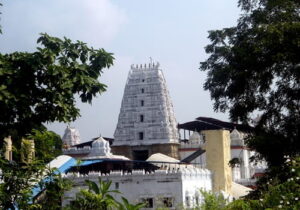
The famous Shri Mailapur Mailarlingeshwar Temple in Yadgir Taluka is one of the district’s most significant pilgrimage destinations, attracting lakhs of devotees every year during Makara Sankramana (mid-January) from across the state of Karnataka. The temple’s annual festival draws crowds from a wide geographical area, making it one of northeastern Karnataka’s most important regional pilgrimage events.
Sleeping Buddha Hill, Shahapur
On the route from Gulbarga to Bangalore, near Shahapur, a self-manifested hill formation creates the striking visual impression of Lord Buddha in a sleeping posture, recumbent across the hill silhouette. This natural geological formation has drawn the attention of Buddhist devotees from around the world who travel specifically to view this unusual natural phenomenon — a rare instance of a landscape feature taking on profound religious significance through visual resemblance alone.
Shorapur — Nayak Palaces and Venugopalaswami Temple
Shorapur (Surapur), the historic capital of the Nayak principality, contains significant heritage architecture from the dynasty’s rule between 1639 and 1857. The Venugopalaswami Temple in Surapur, constructed by Raja Pitambar Bahari Pidda Nayaka (reigning 1693-1726) in 1705, stands near the beautiful Devara Bhavi (a stepped well). British officer Philip Meadows Taylor — who served as an administrator in Shorapur in the 19th century — built a notable bungalow here in 1840, an architecturally remarkable structure featuring 27 doors across just four rooms, reflecting both colonial-era construction techniques and the administrative significance the British attached to this princely territory.
Wagangera Fort
Situated on the Shorapur hill range, Wagangera Fort was a power centre in the pre-Nizam era, predating the later Shorapur palaces built by the Nayak dynasty. The fort was ultimately ruined by an attack from the Mughal Empire under Aurangzeb. Its ruins on the hill range offer both historical interest and scenic views over the surrounding terrain.
Gogi — Chanda Hussaini Dargah
Gogi, located 12 km from Shahapur, is a place of significant historical and religious importance, popularly known for the Chanda Hussaini Dargah — a Sufi shrine that draws pilgrims and devotees from both Muslim and Hindu communities, reflecting the syncretic devotional culture common to Deccan Sufi sites. The dargah’s regional importance places Gogi among the notable religious destinations of the district.
Siddalingeshwar Temple
The Siddalingeshwar Temple is a distinctive Panchakuta temple featuring four separate garbhagruha (sanctum sanctorum) chambers — an intricate architectural arrangement uncommon in standard temple design. This four-shrine configuration represents a sophisticated medieval temple-building tradition specific to the region’s Chalukya-influenced architectural heritage.
Basavasagar Dam
Located 22 km from Surapur, the Basavasagar Dam constructed across the Krishna River is described as a “boon” to Yadgir and neighbouring districts, providing essential irrigation water across this fertile agricultural region. The dam and its reservoir offer scenic value alongside their critical agricultural function, supporting the district’s significant production of jowar, paddy, cotton, and red gram.
Bonal Bird Sanctuary
The bird sanctuary and wetland near Bonal village in Shorapur taluka is described as the second-largest bird sanctuary in the region after Ranganathittu Bird Sanctuary near Mysore. The wetland habitat supports significant bird populations and offers an important ecotourism counterpoint to the district’s predominantly historical and architectural attractions, though visitor infrastructure remains basic and developing.
Kodekal — Dakshina Kashi
Located 20 km south of Shorapur, this site was historically an Agrahara (educational centre) during the period of Chalukya king Vikramaditya VI, and was known in ancient times as “Dakshina Kashi” (the Kashi of the South) — a designation that attracted both Hindu and Muslim devotees. The village of Kodekal, also known historically by names including “Srivolalu,” “Dharmadha Mane,” and “Adi Pattana,” dates back to the Satavahana dynasty period. The village is associated with the saint Kodekal Basawanna, known as a “saint of truth” who wrote “Kala Gnana” — a text describing prophesied future events — at a site called Pyati Gudi within the village. Approximately 20 temples remain in the village today, including the notable Nagaiah and Nannaih temple complex with its Shivalinga sanctum and an unusual four-and-a-half-foot statue of eight-armed Harihara.
Yevur
Located 32 km northeast of Surapur, Yevur preserves inscriptions from the 11th-12th centuries belonging to the Kalyana Chalukyas and the Kalachuris, providing valuable epigraphic evidence of the medieval dynastic succession that shaped the region’s political and cultural history.
Temples of Yadgir District
| Temple | Location | Deity | Key Feature |
| Sri Mailaralingeshwar Temple | Mailapur, Yadgir Taluka | Lord Mailaralinga (Shiva form) | Lakhs of devotees during Makara Sankramana |
| Siddalingeshwar Temple | Yadgir district | Lord Shiva | Panchakuta style with 4 separate garbhagruha sanctums |
| Venugopalaswami Temple | Surapur (Shorapur) | Lord Krishna (Venugopala) | Built 1705 by Raja Pitambar Bahari Pidda Nayaka; near Devara Bhavi |
| Nagaiah-Nannaih Temple Complex | Kodekal | Lord Shiva + Harihara | Oldest temple complex in the village; rare 8-armed Harihara statue |
| Bhalabhima Sena Temple | Shahapur Taluk | Lord Bhalabhimasena | Lakhs of devotees during January Sankramana |
| Vishwaradhya Temple | Yadgir Taluk | Vishwaradhya (Lingayat saint tradition) | Lakhs of devotees during Shivarathri (Feb-March) |
| Chanda Hussaini Dargah | Gogi, 12 km from Shahapur | Sufi shrine | Hindu-Muslim syncretic pilgrimage |
Weather in Yadgir District
October to March — Best Time: The recommended visiting period according to most tourism sources. October-November is post-monsoon and pleasant. December-February sees winter minimum temperatures around 22°C — comfortable for fort visits, temple circuits, and outdoor exploration. The Makara Sankramana festival period (mid-January) at Mailapur is one of the best times to experience the district’s largest pilgrimage gathering.
April to June — Summer: Peak heat reaches approximately 45°C — among the hottest conditions in Karnataka given the district’s interior Deccan plateau location. Outdoor sightseeing should be limited to early morning hours.
June to September — Monsoon: Moderate rainfall supports the district’s agricultural cycle for jowar, cotton, and red gram. The Krishna and Bhima rivers swell, and the Basavasagar Dam reservoir fills significantly.
Things to Do in Yadgir District (2026)
Yadgir Fort Hilltop Visit — Climb to the fort for panoramic views over the town and surrounding plains. Combine with a visit to the Jumma Masjid within the fort walls.
Mailapur Mailarlingeshwar Temple at Makara Sankramana — Time a mid-January visit for the major annual festival, when lakhs of devotees gather from across Karnataka.
Shorapur Heritage Circuit — Visit the Nayak-era palaces, the Venugopalaswami Temple (1705), the Devara Bhavi stepped well, and the Philip Meadows Taylor bungalow with its distinctive 27-door, four-room design.
Sleeping Buddha Hill, Shahapur — A roadside stop on the Gulbarga-Bangalore route to view this naturally formed geological resemblance to a reclining Buddha — a quick but visually memorable detour.
Basavasagar Dam and Krishna Riverfront — A scenic half-day at the dam, observing the irrigation infrastructure that sustains the district’s agricultural prosperity.
Kodekal Temple Village Walk — Explore the approximately 20 temples remaining in this ancient “Dakshina Kashi” village, including the unusual eight-armed Harihara statue.
How to Reach Yadgir District
By Air: Kalaburagi Airport is the nearest airport. Rajiv Gandhi International Airport in Hyderabad (~165 km) is an alternative for some routes.
By Train: Yadgir Railway Station is well-connected to Bengaluru, Hyderabad, and Kalaburagi (Gulbarga).
By Road: Regular bus services connect Yadgir to Bengaluru (approximately 120 km) and other major Karnataka cities, with National and State highways providing good connectivity.
Conclusion
Yadgir district carries an unusually continuous historical thread — from Stone Age rock paintings at Balichkra through Satavahana, Chalukya, and Rashtrakuta rule, into the early Muslim kingdom period when Yadgiri itself served as a capital, through Bahmani, Adil Shahi, and Nizam control, to the distinctive 218-year independent rule of the Nayaks of Shorapur. For a district formed as recently as 2009, Yadgir’s depth of historical layering — forts, dargahs, temples, and the Sleeping Buddha hill formation — offers Karnataka’s northeastern Deccan plateau in genuinely concentrated form.
FAQs About Yadgir District, Karnataka
Q: What is Yadgir district famous for?
A: Yadgir is famous for Yadgir Fort (one of Karnataka’s largest forts), the Sri Mailaralingeshwar Temple (drawing lakhs of devotees during Makara Sankramana), the historic Shorapur palaces of the Nayak dynasty, the Sleeping Buddha hill formation near Shahapur, the Basavasagar Dam on the Krishna River, and its rich layered history spanning the Satavahanas through to the Nizams of Hyderabad.
Q: Why is Yadgir called “Yadavagiri”?
A: Yadgir is popularly called “Yadavagiri” by local residents because the area was once the capital of the Yadava kingdom. The town was also the capital of one of the earliest Muslim empires of South India from 1347 to 1425 CE, making it historically significant well before the establishment of the better-known Bahmani and Bijapur sultanates.
Q: Who were the Nayaks of Shorapur?
A: The Nayaks of Shorapur (Surapur) ruled an independent principality with Shorapur as their headquarters from 1639 to 1857. They built Shorapur city with two palaces. The last ruler, Raja Venkatappa Nayak, resisted British interference in his kingdom’s internal affairs, making him a notable figure of Deccan princely resistance to colonial control.
Q: What is the Sleeping Buddha hill formation near Shahapur?
A: Near Shahapur, on the Gulbarga-to-Bangalore route, a naturally self-manifested hill formation creates the visual impression of Lord Buddha lying in a sleeping posture. This unusual geological resemblance has drawn the attention of Buddhist devotees from around the world, making it a unique pilgrimage and curiosity stop in the district.
Q: When is the best time to visit Yadgir district?
A: October to March is the recommended period, with winter temperatures around 22°C providing comfortable conditions for fort and temple visits. The mid-January Makara Sankramana festival at the Mailaralingeshwar Temple in Mailapur is one of the best times to experience the district’s largest annual pilgrimage gathering.