Bhadradri Kothagudem District, Telangana: Top Attractions, History, Temples, Weather & Things to Do (2026)
Bhadradri Kothagudem district in south Telangana carries a name that encapsulates its dual identity in four words. Bhadradri refers to Bhadrachalam — the pilgrimage town on the banks of the Godavari that houses one of the most revered Rama temples in south India, the Sri Sita Ramachandra Swamy Temple. Kothagudem refers to the coal-mining industrial town that serves as the district headquarters. Together they represent a district where ancient Ramayana-era mythology, Adivasi tribal culture, protected Dandakaranya forest, and modern heavy industry coexist across a forested landscape on the border of Telangana, Chhattisgarh, and Andhra Pradesh.
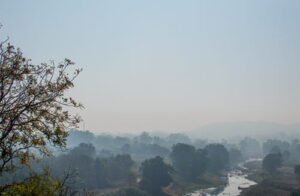
The district was formed from the erstwhile Khammam district when Telangana was reorganised into 33 districts in 2016. It shares borders with Bhoopalapalle, Mahabubabad, and Khammam districts of Telangana, and the states of Andhra Pradesh and Chhattisgarh. The Godavari River runs through the district’s heart, and the dense Dandakaranya forests — part of the same forest system referenced in the Ramayana — give the district its distinctive landscape.
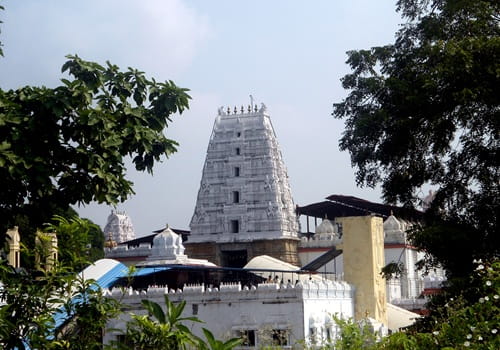
Bhadradri Kothagudem District, Telangana — Quick Overview
| Feature | Details |
| State | Telangana |
| District Headquarters | Kothagudem |
| District Formed | 2016 (from erstwhile Khammam district) |
| Revenue Divisions | Kothagudem and Bhadrachalam |
| Number of Mandals | 23 |
| Borders | Bhoopalapalle, Mahabubabad, Khammam (Telangana); Andhra Pradesh; Chhattisgarh |
| Key River | Godavari |
| Famous For | Bhadrachalam Temple (Sri Sita Ramachandra Swamy), Parnasala (Ramayana site), Kinnerasani Wildlife Sanctuary, Bogatha Waterfall |
| Major Industry | Singareni Collieries Company Limited (SCCL) — coal mining |
| Nearest Airport | Rajahmundry Airport (~185 km); Hyderabad (~300 km) |
| Railway Station | Bhadrachalam Road Station (~40 km from Bhadrachalam town) |
| Best Time to Visit | October to March |
| Summer Temperature | 28°C – 44°C |
| Winter Temperature | 12°C – 28°C |
| Local Language | Telugu |
History of Bhadradri Kothagudem District
Ramayana Connection — The Dandakaranya Forest
The historical and mythological foundation of Bhadradri Kothagudem is the Ramayana itself. The Dandakaranya — the great forest that Lord Rama, Sita, and Lakshmana entered during their 14-year exile — is now understood to cover this region of south Telangana and neighbouring Chhattisgarh and Andhra Pradesh. Bhadrachalam is on the banks of the Godavari, and local tradition holds that Rama built his forest hermitage at Parnasala, 32–35 km from Bhadrachalam. It was from Parnasala that Ravana abducted Sita in the guise of a golden deer (Maricha’s deception).
The name Bhadrachalam is derived from Bhadragiri — “the mountain of Bhadra” — who according to legend was a child of Meru (cosmic mountain) and Menaka. The hillock on which the main temple stands, encircled by the Godavari flowing southward, is identified as this Bhadragiri.
Bhakta Ramadasu — The Temple Builder’s Story
The Sri Sita Ramachandra Swamy Temple at Bhadrachalam was built in 1630 CE by Kancherla Gopanna, a Tahsildar (revenue officer) of Bhadrachalam, who is revered as Bhakta Ramadasu — Rama’s devoted servant. Gopanna used state treasury funds to build the temple, believing it was his religious duty. The Golconda Sultans — who ruled this region — did not share his conviction and imprisoned him in a dungeon at Golconda Fort, suspecting misappropriation of funds.
The story takes a miraculous turn: according to tradition, Lord Rama himself appeared before the Sultan and paid back the money Gopanna had spent, securing his release. Bhakta Ramadasu’s devotion, imprisonment, and miraculous release are the emotional and spiritual core of the temple’s history — and his songs composed during imprisonment remain among the most celebrated keertanas in Telugu devotional music. The temple he built is now one of Telangana’s most visited shrines.
Coal Mining and the Singareni Legacy
The industrial dimension of the district’s history begins with the Singareni Collieries Company Limited (SCCL), a joint venture between the Government of Telangana and the Government of India. The coal mines around Kothagudem have been operational for over a century, and SCCL remains one of the oldest and largest coal mining companies in India. The Kothagudem thermal power station, connected to the Kinnerasani Dam project, forms another pillar of the district’s industrial infrastructure.
Top Attractions in Bhadradri Kothagudem District
Sri Sita Ramachandra Swamy Temple, Bhadrachalam
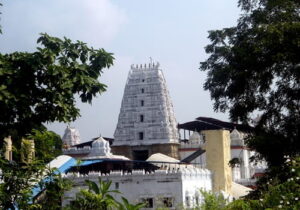
The Sri Sita Ramachandra Swamy Temple — popularly known as Bhadrachalam Temple — is the most important destination in the district and one of the most significant Rama temples in south India. Situated 2 km from Bhadrachalam bus station on the right bank of the Godavari River, the temple’s idols of Rama, Sita, and Lakshmana are believed to be swayambhu — self-manifested — rather than human-made. This distinction gives Bhadrachalam a rare spiritual status among Vaishnava temples.
The temple was built by Bhakta Ramadasu in 1630 CE. The Godavari flowing around the sacred hillock creates a natural moat-like setting. The temple premises house several mandapams (halls) and subsidiary shrines. Thousands of devotees visit daily; during Sri Rama Navami (celebrated as the cosmic wedding of Rama and Sita each year), the numbers swell to lakhs. The Sitarama Kalyanam at Bhadrachalam on Ram Navami is one of the most celebrated annual religious events in Telangana.
Parnasala — The Ramayana Forest Hermitage
Located 32–35 km from Bhadrachalam, Parnasala is the site most directly connected to the Ramayana’s forest exile narrative in this district. According to tradition and local belief:
- Lord Rama, Sita, and Lakshmana built their forest hermitage here during the 14-year exile
- This is where Ravana abducted Sita after sending Maricha as the golden deer to lure Rama away
- This is where Maricha was killed by Rama
- The Seethavagu (Sita’s stream) where Sita bathed is identifiable here
- Naracheeralu — the place where Sita dried her clothes on the “Radhagutta” — is pointed out by local priests
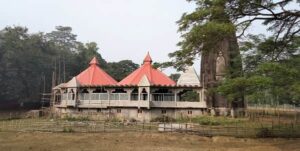
A small hut at Parnasala contains beautifully painted sculptures of Rama, Sita, and Lakshmana depicting their forest life. The site is deeply atmospheric — situated within the Dandakaranya forest landscape that is genuinely old-growth, giving the mythological connection a physical substance that more urbanised Ramayana sites cannot replicate.
Kinnerasani Wildlife Sanctuary and Dam
Located 12 km from Palvancha town, the Kinnerasani Wildlife Sanctuary covers 635.4 sq km of Dandakaranya forest. The sanctuary is named after the Kinnerasani River — a significant tributary of the Godavari. The forest is home to leopards, spotted deer, gaurs (Indian bison), sloth bears, and various reptiles. It is part of the broader Dandakaranya ecosystem that stretches across Telangana, Chhattisgarh, and Odisha.
The Kinnerasani Dam, constructed in 1966 on the Kinnerasani River at Yanamboil village in Palvoncha mandal, provides water to the Kothagudem Thermal Power Station and irrigation to surrounding farmlands. A glass house constructed by Singareni Collieries near the dam has developed the site as a tourist amenity. A deer park housing over 80 spotted deer at the dam site is the most popular visitor attraction here, offering a comfortable wildlife encounter alongside the scenic dam reservoir.
Bogatha Waterfall
Bogatha Waterfall — located approximately 23 km from Eturunagaram in the broader district region — is one of the most scenic natural attractions in the Bhadradri Kothagudem district. The waterfall is surrounded by the Dandakaranya forest and is particularly dramatic during and after the monsoon. Visitors note that there are watch towers with excellent views of the falls. Entry involves a nominal fee (Rs. 20 per person, Rs. 50 for vehicles) and a 1 km walk from the parking area. Multiple visitors describe the waterfall as “very serene and scenic” and note that it is “easy to combine with a Bhadrachalam temple visit.”
Dummugudem — Lift Irrigation and River Scenery
Dummugudem village is the site of a major lift irrigation project on the Godavari. The Godavari at this point is broad and scenic, and the project infrastructure combined with the forested riverbank setting makes it a worthwhile scenic stop during a Bhadrachalam circuit.
Peddamma Talli Temple
Located on the Khammam–Bhadrachalam road in Jagannada Puram village of Palvancha Mandal, the Peddamma Talli Temple is a popular local goddess shrine attracting devotees from across the district.
Temples of Bhadradri Kothagudem District
| Temple | Location | Deity | Key Feature |
| Sri Sita Ramachandra Swamy Temple | Bhadrachalam town | Lord Rama, Sita, Lakshmana | Swayambhu idols; built by Bhakta Ramadasu 1630 CE; Sitarama Kalyanam on Ram Navami |
| Parnasala Temple Complex | ~35 km from Bhadrachalam | Lord Rama, Sita, Lakshmana | Ramayana’s Sita abduction site; Seethavagu and Naracheeralu |
| Abhaya Anjaneya Swamy Temple | Near Bhadrachalam | Lord Hanuman | Close to the main Rama temple; wish-fulfilling deity |
| Sri Venkateswara Swamy Temple | Navabharath Palvoncha | Lord Venkateswara (Vishnu) | Peaceful setting; Vishnu shrine in Kothagudem area |
| Peddamma Talli Temple | Jagannada Puram, Palvancha Mandal | Goddess Peddamma | Popular local goddess shrine; on Khammam-Bhadrachalam road |
Bhakta Ramadasu — The Heart of Bhadrachalam’s Devotion
The story of Bhakta Ramadasu (Kancherla Gopanna) is not merely historical background — it is the living emotional core of Bhadrachalam’s pilgrimage identity. Ramadasu’s keertanas (devotional compositions) composed in the Golconda prison — imploring Rama to rescue him from unjust imprisonment — are sung at the Bhadrachalam temple daily. Compositions like “Ee Vela Nee Madi” and “Paluke Bangaramaya” are cornerstones of Telugu devotional music. For a Telugu devotee, visiting Bhadrachalam without knowing Ramadasu’s story is like visiting Kashi without knowing Kashi Vishwanath’s significance.
The Ramadasu legend specifically tells of Lord Rama appearing before the Golconda Sultan Tanisha as two young men who paid back the temple construction funds in full, securing Ramadasu’s release. The miraculous payment is recounted in the temple’s official history.
Weather in Bhadradri Kothagudem District
October to March — Best Time: Ideal for all visits. October to February is cool and pleasant, with temperatures between 12°C and 28°C. The Ram Navami festival (March-April) is the most crowded period at Bhadrachalam — plan for crowds and advance booking if attending. October and November post-monsoon are ideal for Kinnerasani and Bogatha.
April to June — Summer: Temperatures reach 42–44°C. Temple visits should be at dawn (the 5–6 AM morning sevas are particularly rewarding at Bhadrachalam). The forest areas are very hot.
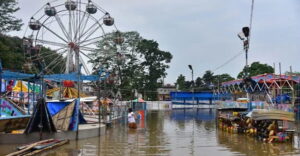
June to September — Monsoon: The Godavari can flood during heavy monsoon years — check river levels before visiting Bhadrachalam during July–August. Bogatha Waterfall is at its most dramatic in August–September.
Things to Do in Bhadradri Kothagudem District (2026)
Dawn Darshan at Bhadrachalam Temple — Arrive for the morning seva before 6 AM. The early morning atmosphere at the riverfront temple, with the Godavari in view and the chanting filling the mandapam, is profoundly peaceful.
Boat Ride on the Godavari at Bhadrachalam — Sunset boat rides on the Godavari at Bhadrachalam are consistently cited as breathtaking. The light on the temple hillock from the river at dusk is particularly striking.
Parnasala — Half-Day Forest Ramayana Circuit — Drive to Parnasala (35 km) and spend 2 hours at the Ramayana sites — the hut with sculptures, Seethavagu, Naracheeralu. The Dandakaranya forest setting is the key experience.
Kinnerasani Deer Park and Dam — A family-friendly morning at the scenic dam site with the deer park — combine with the Kinnerasani Sanctuary for a half-day nature experience.
Bogatha Waterfall — A half-day excursion best timed for September–November when water volume is high and the forest is lush.
How to Reach Bhadradri Kothagudem District
By Air: Rajahmundry Airport (Andhra Pradesh) is approximately 185 km from Bhadrachalam — the closest practical airport for most visitors. Hyderabad is approximately 300 km.
By Train: Bhadrachalam Road Station is approximately 40 km from Bhadrachalam town. Regular bus and taxi services connect from the station.
By Road: Bhadrachalam is well-connected by road from Hyderabad (~310 km), Khammam (~110 km), and Vijayawada (~250 km). Regular TSRTC and private buses operate to Bhadrachalam from all major Telangana cities.
Conclusion
Bhadradri Kothagudem is a district where the Ramayana is not just ancient scripture — it is geography. The Dandakaranya forest still stands, Parnasala still marks where Sita was taken, and the Godavari still flows around the hillock where Bhakta Ramadasu’s temple stands. For devotees of Rama, it is one of south India’s most emotionally complete pilgrimage destinations. For nature travellers, the Kinnerasani Sanctuary and Bogatha Waterfall in the old Dandakaranya forest offer a wilderness experience framed by mythology. The district rewards the visitor who comes for both.
FAQs About Bhadradri Kothagudem District, Telangana
Q1. What is Bhadradri Kothagudem district famous for?
The district is primarily famous for the Sri Sita Ramachandra Swamy Temple at Bhadrachalam — one of the most revered Rama temples in south India, with swayambhu (self-manifested) idols and the devotional legacy of Bhakta Ramadasu. The district is also known for Parnasala (Ramayana’s Sita abduction site), Kinnerasani Wildlife Sanctuary, and Bogatha Waterfall.
Q2. Who was Bhakta Ramadasu and why is he important to Bhadrachalam?
Bhakta Ramadasu (Kancherla Gopanna) was a 17th-century Tahsildar of Bhadrachalam who used government funds to build the Sri Sita Ramachandra Swamy Temple in 1630 CE out of devotion to Lord Rama. Imprisoned by the Golconda Sultans for misuse of funds, he composed his famous keertanas in prison. According to tradition, Lord Rama miraculously appeared and paid back the funds, securing his release. His devotional songs are sung at Bhadrachalam daily and are cornerstones of Telugu devotional music.
Q3. What is the significance of Parnasala in Bhadradri Kothagudem?
Parnasala, 32–35 km from Bhadrachalam, is the site believed to be where Lord Rama, Sita, and Lakshmana built their forest hermitage during the 14-year exile. According to Ramayana tradition, this is where Ravana abducted Sita (after Maricha’s golden deer deception) and where Maricha was killed by Rama. The Seethavagu (Sita’s bathing stream) and Naracheeralu (where Sita dried her clothes) are identifiable features of the site.
Q4. What is the Sitarama Kalyanam at Bhadrachalam?
Sitarama Kalyanam is the annual cosmic wedding of Lord Rama and Sita celebrated at the Bhadrachalam Temple on Sri Rama Navami (usually March-April). The event draws lakhs of devotees from across Telangana, Andhra Pradesh, and India. It is one of Telangana’s most celebrated annual religious events, during which the temple town fills with pilgrims.
Q5. How is Kinnerasani Wildlife Sanctuary connected to Bhadrachalam?
The Kinnerasani Wildlife Sanctuary (635.4 sq km) is part of the Dandakaranya forest system — the same ancient forest associated with the Ramayana’s forest exile. Located 12 km from Palvancha, the sanctuary protects leopards, gaurs, spotted deer, and forest birds. The Kinnerasani Dam within the sanctuary has a deer park and scenic reservoir. Combined with Parnasala, it gives the Bhadrachalam circuit a natural dimension alongside its spiritual one.