Goalpara District, Assam: Sri Surya Pahar, Tourist Places, Temples, History & Travel Guide
Note on “Lakhipur”: Lakhipur is a sub-divisional town within Goalpara district — not a separate district. This article covers Goalpara district in full, with Lakhipur’s local attraction (Dhamar Risen beel wetland) included within it.
On the southern bank of the Brahmaputra, roughly 130 km west of Guwahati, Goalpara district holds one of Assam’s most extraordinary and least-known archaeological sites. Sri Surya Pahar — a complex of seven hillocks spread across 1,400 acres containing rock-cut Shivalingas, Buddhist stupas, and Jain Tirthankara sculptures — has been called the “Ellora of the East.” The comparison is not frivolous. Where Ellora brought three faiths together in carved stone across a narrow canyon in Maharashtra, Sri Surya Pahar does the same across seven wooded hilltops in western Assam, where most visitors have never heard of the place.
That obscurity is changing slowly, but Goalpara still rewards travellers who arrive before the infrastructure catches up. The district has temples atop every significant hill, a Shakti Peetha on the Brahmaputra bank, Vaishnavite satras at the heart of town, Sufi mazars that draw Hindus and Muslims together in equal numbers, and a landscape of beels and wetlands that fills with migratory birds in winter. Lakhipur subdivision in the west of the district adds its own wetland attraction — the Dhamar Risen beel — to this already considerable list.
Goalpara District, Assam — Quick Overview
| Feature | Details |
| State | Assam |
| District Headquarters | Goalpara town |
| Note on Lakhipur | Sub-divisional town within Goalpara district, ~48 km west of HQ |
| District Created | Present Goalpara district formed 1983 |
| Area | 1,824 sq km |
| Borders | Brahmaputra River (N), Kamrup district (E), Meghalaya — West & East Garo Hills (S), Dhubri district (W) |
| Key Rivers | Brahmaputra, Krishnai, Dudhnoi |
| Famous For | Sri Surya Pahar (Hindu-Buddhist-Jain archaeological site), Tukreswari Temple, Joybhum Kamakhya Shakti Peetha |
| Nearest Airport | Lokpriya Gopinath Bordoloi International Airport, Guwahati (~120–135 km) |
| Railway Station | Goalpara Town Railway Station; Bongaigaon Junction (nearby) |
| Best Time to Visit | October to March |
| Summer Temperature | 25°C – 38°C |
| Winter Temperature | 8°C – 22°C |
| Languages Spoken | Assamese, Bengali, Rabha, Bodo, Garo, Hindi |
| Key Subdivisions | Goalpara Sadar, Lakhipur |
History of Goalpara District
1. Ancient Roots — The Pragjyotisha Debate and Early Kingdoms
The name Goalpara derives from “Gwaltippika” — meaning the village of milkmen — reflecting the pastoral character of this Brahmaputra plain long before any formal administrative identity. Some scholars, drawing on the travel account of the Chinese pilgrim Hiuen Tsang and the archaeological evidence at Sri Surya Pahar and nearby Paglatek, have argued that this area, not Guwahati, was the ancient Pragjyotishpur — capital of Kumar Bhaskar Varman (600–650 CE). The debate remains open but gives the district a historical weight that its current low profile does not reflect.
Sri Surya Pahar’s excavated remains indicate a thriving multi-religious civilization from the Post-Gupta era through the 9th–10th centuries CE. The Pala dynasty, who ruled much of eastern India from the 8th century and were followers of Mahayana Buddhism, spread Buddhist traditions across the Brahmaputra valley including this region. The stupas and terracotta plaques with Buddha figures found at Surya Pahar are consistent with that Pala-era presence.
2. Kingdom and the British Period
Before British arrival, Goalpara was under the control of the Koch dynasty — the Koch Rajbongshi kings whose kingdom spread across a vast belt of eastern Bengal and western Assam. The district came under British rule in 1765 and the original Goalpara district was formally created in 1822 by David Scott of the East India Company. Following the 1826 Treaty of Yandaboo, which transferred Assam to British administration, Goalpara was annexed to the Assam province in 1874. Over subsequent decades, the original large district gave birth to four districts: Goalpara, Dhubri, Kokrajhar, and Bongaigaon. The present compact Goalpara district was constituted in 1983.
Top Attractions in Goalpara District
1. Sri Surya Pahar — The Ellora of the East
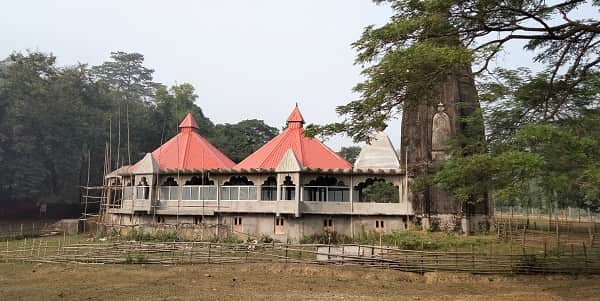
Sri Surya Pahar is Goalpara’s most significant attraction by a wide margin and one of the most underrated archaeological sites in northeastern India. Located about 12–13 km southeast of Goalpara town, the site spans seven hillocks across approximately 1,400 acres and has been protected as a Monument of National Importance by the Archaeological Survey of India.
What makes Sri Surya Pahar extraordinary is its rare co-existence of Hindu, Buddhist, and Jain religious remains within the same landscape. Rock-cut Shivalingas in the hundreds (popular belief holds there were 99,999 — one short of making it a second Kashi), votive Buddhist stupas up to four feet tall, sculptures of Jain Tirthankaras including Adinath, Vishnu with twelve arms, Durga (Mahisasura Mardini), and panels of Hari-Hara are all scattered across the same hillsides. The only known Sun Temple in northeast India stands here.
ASI excavations began in 1984 (with more systematic work from 1993 onward) and have unearthed pucca structural remains, terracotta plaques with Buddhist iconography, a 12-armed Vishnu sculpture, a Panchayatana temple complex, and water reservoirs. An on-site archaeological museum displays 93 of 173 excavated antiquities across three galleries. The Sri Sri Surya Mela is held every January over three days starting on Maghi Purnima, drawing thousands of devotees.
2. Tukreswari Temple — The Shakti Hill
About 15 km from Goalpara town on NH-17, Tukreswari is one of the most visited religious sites in the district. According to Shakta tradition, a fragment (tukra) of the body of Goddess Sati fell at this spot — placing it within the broader Shakti Peetha system. Two temples sit atop the Tukreswari hill: one dedicated to the goddess herself (with twin deities Joya and Vijoya) and another to Lord Shiva. The hill itself offers excellent views of the surrounding countryside, and the resident monkey population — reportedly unintimidated by uniformed security personnel — adds a lively dimension to any visit. The rocky terrain also attracts trekkers and rock-climbing enthusiasts.
3. Sri Sri Joybhum Kamakhya Temple
One of the 51 Shakti Sthals of Hinduism, this temple sits on the bank of the Brahmaputra about 50 km from Goalpara town. The temple sits atop a hillock with the river forming a dramatic backdrop, and the natural scenery of the setting is described by the district government as “matchless.” A devastating 17th-century earthquake damaged the original structure significantly; the temple was reconstructed by the Zamindar of Meshpara. Devotees from across India assemble here during the festival in October to offer puja to the Goddess of Power. A Shiva temple stands adjacent to the Kamakhya shrine.
4. Dadan Hill and Dadan Hillock Temple
Located about 3 km from Goalpara town centre on Pancharatna Road, Dadan Hill is a compact hillock with an ancient Shiva temple at its summit — established, according to tradition, by a general of King Bana of Sonitpur named Dadan, who is said to have killed a wild elephant at the hill’s base. The temple has a mythological story tied to the great King Bana of the Mahabharata. The hillock provides panoramic views of Goalpara town and the Brahmaputra plains and is one of the more accessible half-day destinations in the district.
5. Nandeswar Devalaya
One of the oldest Shiva temples in the district, the Nandeswar Devalaya sits atop Nandeswar hill on the bank of a river in the Goalpara area. The hill’s isolation and the antiquity of the temple make it a destination for devotees who prefer quieter, less crowded pilgrimage experiences. The river setting and the surrounding natural landscape add to its appeal.
6. Shyamrai Satra
Established about 366 years ago in the heart of Goalpara town, the Shyamrai Satra is a centre of Vaishnavite culture and religion — one of the neo-Vaishnavite satras whose tradition traces back to the great reformer Srimanta Sankardeva. The Asthi (sacred relics) of Sankardeva are preserved by the Satra authority. The Satra hosts regular kirtan, religious performances, and Vaishnavite ceremonies that are genuine expressions of living devotional culture rather than staged displays.
7. Pir Majhar — Sufi Shrine of Hazrat Sayed Abul Kasem Kharasani
At the heart of Goalpara town, the Pir Majhar is the tomb of a Sufi saint named Hazrat Sayed Abul Kasem Kharasani — a figure revered equally by Muslims and Hindus. The annual Uros-Mubarak, observed on the 21st day of the lunar month of Safar, draws thousands of people from both communities. The saint is believed to have lived approximately 150 years and died at Goalpara in 1896. The interfaith character of the pilgrimage — Hindus and Muslims praying together at the same tomb — is one of the most distinctive cultural features of Goalpara district.
8. Majar Sharif at Jaleswar-Katarihara
The Majar Sharif of Sufi Saint Shah Sayed Nasiruddin Kaderi (known as “Bagdadi” — so called because he came from Baghdad) is situated 60 km from Goalpara town. On the 8th day of the Assamese month of Magh (around January 21 each year), thousands of people cutting across religious boundaries congregate at this Majar Sharif. The annual Urs draws participants from across Assam and West Bengal, making it one of the largest interfaith gatherings in the region.
9. Dhamar Risen Beel — Lakhipur Subdivision
The Dhamar Risen beel is a wetland located in the Lakhipur subdivision area of Goalpara district. Like many beels across Assam’s Brahmaputra floodplain, it functions as a seasonal wetland and supports birdlife and fishing communities. It is listed among the district’s tourist attractions and is particularly interesting during the winter months when migratory birds arrive. Other wetland attractions in the district include the Urpad Beel of Agia and Kumri Beel, the latter noted for its birdwatching potential.
10. Tea Gardens — Moijonga and Simlitola
Goalpara has two tea gardens — Moijonga and Simlitola — which offer visitors a glimpse of Assam’s most celebrated industry at a smaller, quieter scale than the great tea districts of Upper Assam. Early morning walks through the estates, observation of the plucking process, and the experience of fresh-brewed Assam tea at source make these gardens worth a stop.
Temples and Religious Sites of Goalpara District
| Site | Location | Tradition | Key Feature |
| Sri Surya Temple | Sri Surya Pahar, ~13 km from HQ | Hindu (Surya worship) | Only Sun Temple in northeast India; surrounded by rock-cut Shivalingas |
| Tukreswari Temple | Tukura, ~15 km on NH-17 | Shakta (Goddess Sati fragment) | Twin hilltop temples; rock climbing terrain; animated monkey population |
| Joybhum Kamakhya Temple | Brahmaputra bank, ~50 km from HQ | Shakta (Shakti Peetha) | One of 51 Shakti Sthals; reconstructed after 17th-century earthquake |
| Dadan Hill Temple | ~3 km from Goalpara town | Shaiva | Established by King Bana’s general Dadan; panoramic Brahmaputra views |
| Nandeswar Devalaya | Nandeswar hill, riverside | Shaiva | One of district’s oldest Shiva temples; riverside setting |
| Shyamrai Satra | Goalpara town centre | Vaishnava (Sankardeva tradition) | 366-year-old satra; houses relics of Srimanta Sankardeva |
| Pir Majhar | Heart of Goalpara town | Islamic Sufi | Revered by Hindus and Muslims equally; annual Uros draws thousands |
| Buraburi Than | Brahmaputra bank near Jaleswar | Multi-faith | Symbolic of national integration; “Bura Buri” legend of stone transformation |
| Paglatek Shiva Mandir | Barbhita village, near Surya Pahar | Shaiva | Linked to Surya Pahar archaeology; ancient pilgrimage site |
Weather in Goalpara District — Season by Season
Goalpara has a humid subtropical climate typical of the Brahmaputra valley. Winters are cool and dry, summers are hot and humid, and the monsoon is heavy and prolonged.
1. October to March — Best Time to Visit
This is the clearly recommended window. October and November bring post-monsoon relief — the landscape is intensely green, the beels are full of migratory birds arriving for winter, and the air quality is excellent. December and January are the coolest months with temperatures between 8°C and 18°C — pleasant for temple hill climbs and the Sri Surya Pahar circuit. The Sri Sri Surya Mela in January is a highlight of the district’s cultural calendar. February and March remain comfortable before the summer heat begins building.
2. April to June — Summer
Temperatures climb from the mid-30s in April to 38°C and above by May and June. Extreme humidity makes outdoor activity tiring. The Joybhum Kamakhya festival in October is worth timing a visit around, but summer itself is the least recommended season. Early mornings are manageable for temple visits.
3. June to September — Monsoon
Goalpara receives heavy monsoon rainfall. The Brahmaputra can flood significantly, low-lying beels including Dhamar Risen expand dramatically, and some road connections become unreliable. The landscape is dramatically beautiful. The monsoon arrives early and continues through October in this part of Assam.
Things to Do in Goalpara District (2026)
Spend a Full Day at Sri Surya Pahar — Hire a vehicle from Goalpara town for the 13 km drive. Arrive at the on-site museum first, then walk the hillside trails. The combination of Shivalingas, Buddhist stupas, and Jain sculptures across a forested hillscape takes the better part of a day to absorb properly. Carry water and snacks — facilities within the site are basic.
Climb Tukreswari Hill — The hill temple is manageable in 45 minutes of moderate walking. The views from the top and the twin temple complex make it one of the district’s most rewarding temple experiences. The rock-climbing terrain is separately interesting for adventure visitors.
Visit the Pir Majhar and Shyamrai Satra on the Same Day — Both are within Goalpara town. Together they tell the story of the district’s religious complexity — a Sufi shrine revered across faiths, and a 366-year-old Vaishnavite institution keeping Sankardeva’s tradition alive — in a single afternoon.
Birdwatch at the Beels — Between November and February, the Urpad Beel, Kumri Beel, and Dhamar Risen beel attract migratory birds. A local guide from Goalpara town who knows the beel access routes is worth arranging.
Attend the Sri Sri Surya Mela — The January fair at Surya Pahar runs for three days from Maghi Purnima. The combination of the archaeological setting, the pilgrimage crowd, and the fair atmosphere makes it one of the more unusual cultural experiences in Assam.
Walk the Majar Sharif Circuit at Jaleswar — If visiting in late January around the 8th of Magh, the Bagdadi Urs draws thousands from both communities in one of the most genuine interfaith gatherings in northeastern India.
How to Reach Goalpara District
By Air: Lokpriya Gopinath Bordoloi International Airport in Guwahati is the nearest major airport, approximately 120–135 km from Goalpara town. Taxis cover the distance in roughly 3 to 4 hours.
By Train: Goalpara Town Railway Station is connected to Guwahati, Bongaigaon, Siliguri, Kolkata, and northeast India. Major trains including the New Delhi–Guwahati Sampark Kranti Express stop at Goalpara. Bongaigaon Junction, a major railhead, is also nearby.
By Road: NH-17 and NH-37 pass through Goalpara, connecting it to Guwahati (approximately 130–135 km east) and Dhubri (west). Regular ASTC and private buses connect Goalpara to Guwahati, Bongaigaon, and other Assam towns. The road from Guwahati passes through scenic Brahmaputra floodplain country.
Practical Tips for Visitors (2026)
- Carry cash. Goalpara town has ATMs but the Surya Pahar site and Tukreswari hill area have no digital payment facilities.
- For Sri Surya Pahar, walking shoes are essential — the hillside paths are uneven rock.
- Confirm Tukreswari temple access road conditions during monsoon before visiting.
- The Joybhum Kamakhya temple is 50 km from town — hire a vehicle for the day and combine with the Majar Sharif at Jaleswar if visiting that direction.
- Mosquito repellent is necessary near the beels, especially in the evenings.
- Dress modestly at all religious sites regardless of faith tradition.
Conclusion
Goalpara district does not advertise itself. Sri Surya Pahar, which in a better-known state or country would anchor a major heritage tourism circuit, sits 13 km from a district headquarters that most Assam travellers pass through on the way to Guwahati or Bongaigaon. The Tukreswari temple on the hill, the Pir Majhar in the town centre, the Joybhum Kamakhya on the Brahmaputra bank, the migratory birds on the winter beels — all of it waits quietly for the traveller willing to stop and look.
For anyone building a western Assam itinerary in 2026, Goalpara is the most historically dense and least-visited stop on the route. That combination will not last indefinitely.
FAQs About Goalpara District, Assam
Q: What is Goalpara district famous for?
A: Goalpara is primarily famous for Sri Surya Pahar — an ASI-protected archaeological complex containing Hindu, Buddhist, and Jain rock-cut sculptures, the only Sun Temple in northeast India, and an estimated 99,999 Shivalingas. The district also holds the Tukreswari Shakti hill temple, the Joybhum Kamakhya Shakti Peetha on the Brahmaputra, and the Shyamrai Satra of the Vaishnavite tradition.
Q: Is Lakhipur a separate district?
A: No. Lakhipur is a sub-divisional town within Goalpara district, located approximately 48 km west of Goalpara headquarters. It is not an independent district. The Dhamar Risen beel wetland in Lakhipur area is a local natural attraction.
Q: How far is Goalpara from Guwahati?
A: Goalpara town is approximately 120–135 km west of Guwahati by road, typically a 3 to 4 hour drive on NH-17. Goalpara Town Railway Station is on the main rail line and well connected to Guwahati Junction.
Q: What is the best time to visit Sri Surya Pahar?
A: October to February is ideal. The weather is comfortable for walking the hillside trails, and the January Sri Sri Surya Mela (held over three days from Maghi Purnima) is the site’s major annual festival. Avoid peak monsoon (July–September) when the paths become slippery.
Q: What is the historical significance of Sri Surya Pahar?
A: Sri Surya Pahar is one of the few places in India where Hindu, Buddhist, and Jain religious monuments coexist in the same landscape. The rock-cut remains date to the Post-Gupta era (approximately 6th–10th century CE). Some scholars have proposed it as the ancient Pragjyotishpur based on Hiuen Tsang’s account — a claim that, if accepted, would significantly revise understanding of ancient Assam’s geography.