Gadwal (Jogulamba Gadwal) District, Telangana: Temples, Fort, History & Travel Guide
Gadwal sits at the edge of where the Tungabhadra meets the Krishna, in the westernmost corner of Telangana. The district takes its formal name — Jogulamba Gadwal — from the most significant religious site in the region: the Jogulamba Temple at Alampur, where Goddess Jogulamba is venerated as one of the 18 Shakti Peethas of India. That ancient temple, set on the banks of the Tungabhadra and built during the height of the Badami Chalukya period, gives the district its spiritual identity.
But Gadwal also carries a distinct secular identity. The Gadwal Fort, built by the powerful local chieftain Pedda Soma Bhupaludu (Somanadri) in the 17th century, still dominates the centre of town and houses temples, a massive cannon, and the memory of a regional lord who defeated a Nawab of Kurnool in battle. And the GI-tagged Gadwal saree — a cotton-bodied, silk-pallued weave so fine that a fully woven saree can reportedly be packed into a matchbox — has given this district a place in India’s textile heritage that goes well beyond its size.
Gadwal (Jogulamba Gadwal) District, Telangana — Quick Overview
| Feature | Details |
| State | Telangana |
| Official Name | Jogulamba Gadwal District |
| District Headquarters | Gadwal town |
| District Formed | 2016 (carved from erstwhile Mahabubnagar district) |
| Area | ~3,419 sq km |
| Location | Southwestern Telangana |
| Borders | Karnataka (W), Wanaparthy (N), Nagarkurnool (NE), Nalgonda (E), Andhra Pradesh (S) |
| Famous For | Jogulamba Temple (Shakti Peetha), Gadwal Fort, Jurala Dam, Gadwal saree (GI-tagged), Alampur temples |
| Key Rivers | Krishna, Tungabhadra |
| Nearest Airport | Rajiv Gandhi International Airport, Hyderabad (~190 km) / Uyyalawada Narasimha Reddy Airport, Kurnool (for Alampur) |
| Railway Station | Gadwal Railway Station |
| Best Time to Visit | October to March |
| Summer Temperature | 30°C – 44°C |
| Winter Temperature | 15°C – 28°C |
| Languages Spoken | Telugu (primary), Kannada, Urdu |
| Key Mandals | Gadwal, Alampur, Waddepally, Maldakal, Ieeja, Gattu |
History of Gadwal District
1. Ancient Period — Chalukyas and Dakshina Kailasam
The region’s recorded ancient history centres on Alampur — a town on the banks of the Tungabhadra that has served as a seat of religious and cultural activity since at least the 6th century CE. Alampur is identified with the ancient name of Dakshina Kailasam (the Southern Kailash) due to the confluence of the Tungabhadra and Krishna rivers at its edge, and its location as the western gateway to the great pilgrimage site of Srisailam.
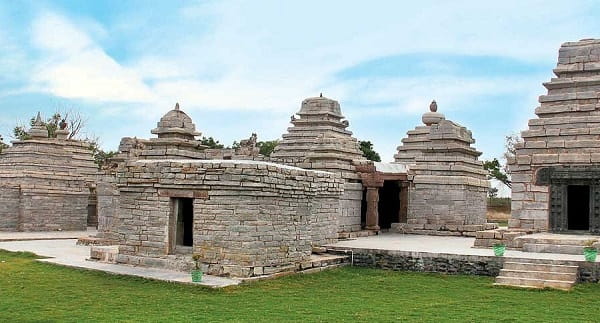
The Navabrahma Temples at Alampur — a group of nine temples built between the 6th and 8th centuries CE during the Badami Chalukya period — represent some of the finest examples of early Deccan temple architecture. The Kudala Sangameswara Temple, the most magnificent among them, was originally built in 740 AD by the Chalukya ruler Pulakesi II at the exact confluence point of the Tungabhadra and Krishna rivers. When the Srisailam Dam project threatened to submerge the original site in the 1970s, the Archaeological Survey of India undertook the extraordinary task of dismantling the temple stone by stone and reconstructing it exactly, rock by rock, at the current location about 2 km away. The Papanasi Temples — a group of 24 shrines built between the 6th and 10th centuries — were similarly relocated.
2. Medieval Period — Gadwal Samsthana
The Gadwal Samsthana (princely state) was established in the 17th century when Pedda Soma Bhupaludu (also called Somanadri) emerged as the dominant regional power. He built Gadwal Fort — a massive structure surrounded by walls and moats — and is celebrated locally for defeating the powerful Nawab of Kurnool in battle. As a trophy of that victory, he brought back a 32-foot cannon (reportedly one of the largest in the country at the time), which still stands within the fort. The Gadwal rulers maintained their samsthana under the Nizam of Hyderabad’s suzerainty for several centuries.
3. District Formation
The Jogulamba Gadwal district was carved from the former Mahabubnagar district in 2016 as part of Telangana’s reorganisation of districts following statehood in 2014. The district’s name combines the ancient Jogulamba Shakti Peetha at Alampur with the historical Gadwal samsthana headquarters, formally recognising both identities.
Top Attractions in Gadwal District
1. Jogulamba Temple, Alampur — Shakti Peetha
The Jogulamba Temple at Alampur is the district’s primary spiritual landmark and one of the 18 Shakti Peethas of India — the sacred sites associated with the dismembered body of Goddess Sati. Goddess Jogulamba is worshipped as the presiding deity here, and Lord Balabrahmeshwara (Shiva) is her divine consort. The temple is also part of the Ashtadasha Shakti Peethas (18 Shakti Peethas) and the Chaturdasha Trilinga Kshetras (14 Trilinga sacred sites).
The name Alampur is associated with the ancient concept of Dakshina Kailasam — the confluence of the Tungabhadra and Krishna makes this the southernmost Kailash, a sacred geographical meeting point. The temple’s architecture reflects the Badami Chalukyan tradition and subsequent additions from multiple dynasties. The annual festivals at Jogulamba Temple draw enormous crowds of devotees from across Telangana, Andhra Pradesh, and Karnataka.
2. Navabrahma Temples, Alampur
The Navabrahma Temples — literally “Nine Brahma Temples” — are a group of nine temples built during the Badami Chalukya period (6th–8th centuries CE) at Alampur. Each temple is named after a form of Brahma (Taraka Brahma, Swarga Brahma, Bala Brahma, Garuda Brahma, Padma Brahma, Vira Brahma, Vishwa Brahma, Kumara Brahma, and Arka Brahma). The temples exhibit the early Deccan architectural style that preceded the more elaborate Rashtrakuta and Kalyani Chalukya traditions.
The Museum at Alampur, maintained by the Archaeological Survey of India, houses hundreds of sculptures and artefacts recovered from the original temple sites before the Srisailam Dam reservoir inundation. The collection includes exquisite examples of Chalukyan sculpture — Nataraja, Mahishasuramardini, Lakshmi, and Ganesa panels — that would be among the highlights of any major museum.
3. Kudala Sangameswara Temple
Built in 740 AD by Pulakesi II and relocated rock-by-rock in 1979 to its current site (the original confluence point was submerged by the Srisailam reservoir), the Kudala Sangameswara Temple is the most magnificent of the Alampur temples. “Kudala” means confluence in Telugu, and the temple was specifically built to mark the sacred junction of the Tungabhadra and Krishna. The stone mandapa, large temple tower, and beautiful carvings have survived the remarkable relocation exercise intact.
4. Papanasi Temples, Alampur
Adjacent to the Navabrahma complex, the Papanasi Temples are a group of 24 shrines developed between the 6th and 10th centuries. The main Papanaseswara shrine was built by the Chalukyas in the 6th century; the remaining temples were added by the Rashtrakutas between the 9th and 10th centuries, built in the Dravida and Phamsana styles. The collection includes sub-shrines of Ganesha and Saptamatrikas (seven mother goddesses), and the sculptural programme includes Vamana avatar, Ashtadikpalakas, Mahishasura Mardhini, and Ramayana scenes — an outstanding visual record of early Deccan religious iconography.
5. Gadwal Fort
In the heart of Gadwal town, the 17th-century Gadwal Fort built by Pedda Soma Bhupaludu dominates the old city. The fort was constructed with massive walls and a deep moat system designed to make it impregnable. Within the fort complex stand three significant temples: the grand Chennakesava Temple (with a large tower, stone mandapa, and detailed carvings), the Ramalayam, and the Venugopala Temple. The famous 32-foot cannon brought back from the defeated Nawab of Kurnool — reportedly one of the largest cannons in peninsular India at the time — is still housed within the fort and is the most unusual physical artifact of Gadwal’s military history.
The Telangana government has taken steps toward renovating the fort and developing it as a major tourist destination. Part of the fort presently houses a college established in memory of Maharani Adi Laxmi Devamma, wife of Nalla Somanadri.
6. Jurala Dam (Priyadarshini Project)
Located approximately 60 km from Gadwal and 45 minutes’ drive from the town, the Jurala Dam is built across the River Krishna and is the first major hydroelectric project on the Krishna River in Telangana. Also known as the Priyadarshini Project, it was completed in 1995 with a generation capacity of 234 MW and 62 gates. The full reservoir level sits at 1,045 feet, and the dam is the only hydroelectric project in Telangana that carries water throughout the year — making it nationally significant.
Visitor facilities include a Deer Park approximately 1.5 km from the reservoir (housing about 100 deer), and the Ramalayam and Parthasaradhi Temples near the dam add a spiritual dimension. The view when the dam gates open and water cascades through is genuinely dramatic. Local visitors from Karnataka and Maharashtra are frequent, particularly during and after the monsoon season.
7. Chandraghad Fort
About 8 km from Jurala Dam on the banks of the Krishna River, Chandraghad Fort is a hill fort built during the Peshwa period by the Chandrasena Jilledar. The fort sits at a picturesque position above the river, with the ruins of protective walls, gateways, and several ruined buildings still visible. A Sri Ramalingeshwara Temple dedicated to Lord Shiva is located within the fort. The 1 km walk from the nearest road point to the hilltop is a short trek with good river views.
8. Beechupally — Hanuman Temple
Located on the banks of the Krishna River approximately 30 km downstream from the Jurala Project, Beechupally is home to a famous shrine of Lord Hanuman (Anjaneya Swamy). The riverbanks at this location are noted for the performance of Hindu obsequies (rites for departed souls) — a tradition that draws devotees from across the district and neighbouring areas.
9. Gadwal Sarees — The GI-Tagged Textile
The Gadwal saree is the district’s most celebrated economic and cultural product, registered under the Geographical Indications of Goods (Registration and Protection) Act, 1999 — one of the few Telangana products to receive this formal protection.
The saree is distinctive for its cotton body (Sico — silk-cotton blend) combined with a pure silk pallu (border end-piece). The Zari (gold thread) work on the pallu is the defining feature — intricate, fine, and lustrous. The weave is so light and the silk so fine that weavers and sellers still make the claim — verified by tradition if not by everyday demonstration — that the saree can be packed entirely within a matchbox. The sarees are produced by weaving communities in Gadwal town and surrounding areas and are sold across India at premium prices for their quality.
Temples and Religious Sites of Gadwal District
| Site | Location | Deity / Tradition | Key Feature |
| Jogulamba Temple | Alampur | Goddess Jogulamba (Shakti) | 5th among 18 Shakti Peethas; Dakshina Kailasam; Balabrahmeshwara as consort |
| Navabrahma Temples | Alampur | Nine forms of Brahma | 6th–8th century Badami Chalukyan group; ASI museum with Chalukyan sculpture |
| Kudala Sangameswara Temple | Alampur | Lord Shiva (Sangameswara) | Built 740 AD; relocated rock-by-rock in 1979 before Srisailam reservoir inundation |
| Papanasi Temples (24 shrines) | Alampur | Lord Shiva and multiple deities | 6th–10th century Chalukya-Rashtrakuta construction; Dravida and Phamsana styles |
| Chennakesava Temple | Inside Gadwal Fort | Lord Vishnu (Chennakesava) | Grand temple within 17th-century fort; large tower and carved stone mandapa |
| Jammulamma Temple | West of Gadwal town | Goddess Jammulamma | Well-known local goddess shrine |
| Ramalayam and Parthasaradhi Temple | Near Jurala Dam | Lord Rama / Lord Krishna | Pilgrimage temples adjacent to the dam site |
| Ramalingeshwara Temple | Chandraghad Fort | Lord Shiva | Located within Peshwa-era hill fort above the Krishna River |
Weather in Gadwal District — Season by Season
Gadwal district has a hot semi-arid climate typical of the Deccan interior. Summers are harsh and prolonged; winters are short, mild, and the most comfortable period.
October to March — Best Time to Visit
The clear recommendation for all visitor types. October brings post-monsoon relief with pleasant temperatures around 22–30°C. November through February is the most comfortable window — the Krishna and Tungabhadra rivers are full after the monsoon, the temples at Alampur are accessible, and the Gadwal Fort and Jurala Dam are pleasant to explore without the midday heat. The Jogulamba Temple festivals during Navratri (October) and Shivaratri (February–March) are the major pilgrimage occasions.
June to September — Monsoon
The district receives moderate monsoon rainfall. The Jurala Dam and Krishna River are most dramatic — if the dam gates open during a high-water year, the spectacle is significant. However, outdoor exploration of the fort and temple circuit is limited by heat and unpredictable rain. The monsoon is the best time for the Jurala Dam visit specifically.
April to May — Summer
Temperatures climb sharply to 40–44°C and outdoor activity becomes genuinely exhausting during midday hours. Temple visits should be planned for early mornings (before 9 AM) and evenings.
Things to Do in Gadwal District (2026)
Explore the Alampur Temple Complex — Allow a full day for Alampur: start at the Jogulamba Temple for morning darshan, then spend 2–3 hours at the Navabrahma Temples and Kudala Sangameswara Temple, visit the ASI Museum for the sculpture collection, and end at the Papanasi Temples group. The combined complex is one of Telangana’s richest heritage zones.
Visit Gadwal Fort — The fort is in the heart of town. The Chennakesava Temple within the fort, the 32-foot cannon, and the fort walls and moat system together tell the story of the Gadwal Samsthana period. Allow 1.5 to 2 hours.
Drive to Jurala Dam — The 45-minute drive from Gadwal through the Krishna basin landscape is pleasant. Visit the Deer Park, the riverside temples, and the dam viewpoint. If visiting during or just after monsoon, check whether gates are open for the most dramatic view.
Chandraghad Fort Trek — The 1 km hillside walk from the road to the fort is easy and rewarding, with Krishna River views from the hilltop. Combine with the Jurala Dam visit on the same day.
Shop for Gadwal Sarees — The weaving community’s workshops in Gadwal town are the authentic source. Buying directly from the weaver cooperative gives better pricing and ensures authenticity. The cotton-silk Zari weave is immediately distinctive from imitations.
Visit Beechupally Hanuman Temple — A meaningful pilgrimage stop on the Krishna riverbank with beautiful riverside setting.
How to Reach Gadwal District
By Air: Rajiv Gandhi International Airport, Hyderabad, is approximately 190 km from Gadwal. The Uyyalawada Narasimha Reddy Airport at Kurnool (in Andhra Pradesh) is closer for Alampur specifically.
By Train: Gadwal Railway Station is connected to Hyderabad, Kurnool, and other stations on the Hyderabad–Guntakal line.
By Road: Gadwal is approximately 185–190 km from Hyderabad by road, typically a 3.5 to 4 hour drive via the Hyderabad–Kurnool highway. Alampur is approximately 215 km from Hyderabad. TSRTC buses connect Gadwal to Hyderabad and Mahabubnagar regularly.
Practical Tips for Visitors (2026)
- Carry cash throughout — rural temple areas and the Jurala Dam vicinity have limited digital payment options.
- The Jogulamba Temple can be very crowded during Navratri and Shivaratri — plan visits on off-peak days if possible.
- When visiting Jurala Dam, confirm gate opening schedules locally before making the 45-minute drive specifically for that sight.
- The Alampur temples are managed by ASI — confirm museum opening hours (typically closed Fridays).
- For the best Gadwal saree purchasing experience, visit the weavers directly rather than retail shops in Hyderabad.
Conclusion
Gadwal (Jogulamba Gadwal) district rewards visitors who approach it with a specific interest — in Shakti Peetha pilgrimage, in Chalukyan temple architecture, in Deccan fort history, or in traditional textile craftsmanship. The Alampur complex alone, with its relocated Chalukyan temples and its Shakti Peetha temple on the Tungabhadra banks, justifies a dedicated visit. The Gadwal Fort and its extraordinary cannon tell a compelling regional history. The GI-tagged sarees represent a living craft tradition of genuine quality. Together they make a district that repays the traveller who chooses to stop here rather than pass through.
FAQs About Gadwal District, Telangana
Q: What is the official name of Gadwal district?
A: The district’s official name is Jogulamba Gadwal district, named after the Jogulamba Temple at Alampur (one of India’s 18 Shakti Peethas) and the historical Gadwal Samsthana. It was formed in 2016 from the erstwhile Mahabubnagar district.
Q: What is Gadwal famous for?
A: Gadwal is famous for the Jogulamba Shakti Peetha at Alampur, the Chalukyan Navabrahma Temples at Alampur, Gadwal Fort with its historic 32-foot cannon, the Jurala Dam on the Krishna River, and the GI-tagged Gadwal saree (a fine cotton-silk weave known for its Zari work).
Q: What is special about Gadwal sarees?
A: The Gadwal saree has a cotton body (Sico blend) with a pure silk pallu featuring intricate Zari (gold thread) work. It is registered as a Geographical Indication (GI) product from Telangana. The weave is so fine that a full saree is traditionally said to fit inside a matchbox — a testament to the quality of the silk and the skill of the weavers.
Q: How far is Alampur from Gadwal and Hyderabad?
A: Alampur is approximately 35–40 km from Gadwal town. From Hyderabad, Alampur is approximately 215 km — about 3.5 to 4 hours by road.
Q: What is the best time to visit Gadwal district?
A: October to March is the best period. The Jogulamba Temple festival during Navratri (October) is the largest annual gathering. The monsoon season (July–September) offers the most dramatic view of the Jurala Dam and the Krishna River.