Is Organic Vegetable Farming Profitable in India?
Drive past Bengaluru or Pune on a weekend, and you’ll spot health-conscious urban families specifically hunting for stalls selling “certified organic” tomatoes and spinach, happily paying considerably more than what the regular vegetable vendor charges next door. This isn’t a passing wellness fad, India’s organic food market hit $2.3 billion in 2025 and is projected to nearly quintuple to $11.3 billion by 2034. For farmers and agri-entrepreneurs watching this shift, the genuine question isn’t whether organic vegetables sell, they clearly do, it’s whether the actual economics of growing them work out once you account for certification costs, lower yields, and the patience the transition period demands.
Here’s why this genuinely matters for anyone considering entering this space: organic farming isn’t simply “regular farming without chemicals.” It’s a distinct business model with its own cost structure, market access challenges, and profit potential that can genuinely outperform conventional farming, but only if you understand exactly where the money gets made and where it quietly gets lost along the way.
What Genuine Profit Margins Actually Look Like
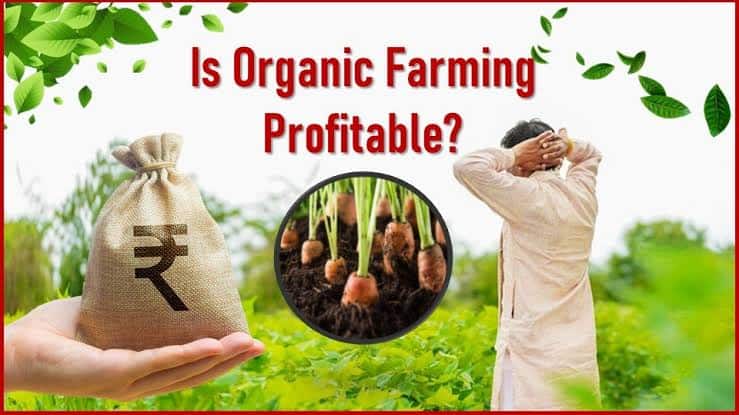
Organic vegetable farming in India genuinely delivers strong returns when managed properly, with profit margins commonly cited between 22% and 35% of revenue, and mixed-crop, year-round harvesting approaches sometimes pushing profits upwards of 40%. On a modest 7-acre operation with an investment of ₹3 to 5 lakh, growing chemical-free tomatoes, capsicum, and leafy greens, farmers can genuinely achieve margins in this healthy 40 to 50% range when input costs stay controlled and market access is solid.
Smaller operations show genuinely encouraging numbers too. A half-acre plot selling directly to local organic stores, FMCG brands, or quick-commerce platforms like BigBasket or Blinkit can realistically generate ₹60,000 to ₹1,20,000 per month, a genuinely meaningful income for a relatively small land footprint, provided the farmer has built those direct sales relationships rather than relying purely on traditional mandis.
Why Organic Produce Genuinely Commands Premium Pricing
The core economic advantage of organic farming lies entirely in pricing power. Certified organic vegetables, carrying recognised marks like NPOP or Jaivik Bharat, genuinely sell for 20 to 50% more than conventionally grown produce, driven by health-conscious urban consumers who’ve become willing to pay this premium for chemical-free food. This pricing advantage is precisely what offsets organic farming’s typically higher labour costs and, in many cases, somewhat lower yields compared to conventional chemical-intensive methods.
This premium isn’t uniform across all sales channels though. Selling through traditional middlemen and mandis genuinely erodes much of this advantage, since middlemen commonly take 30 to 60% of the final sale price, a margin that quietly consumes most of the organic premium before it ever reaches the farmer. This is exactly why building direct relationships with retailers, restaurants, or consumer groups matters so enormously, even shifting 30 to 40% of your produce to direct sales channels can measurably transform your overall profitability.
The Certification Investment That Genuinely Pays Off Later
Getting certified organic isn’t instant or free, and this transition period deserves honest attention before you commit. Converting land from conventional to certified organic status typically takes a few years, during which yields can genuinely dip while soil biology recovers from prior chemical use, and you won’t yet be able to charge the premium pricing certification eventually unlocks.
Certification costs themselves, while variable depending on your specific certifying body and farm size, represent a genuine upfront expense worth budgeting for rather than treating as an afterthought. The good news is that several state governments, Karnataka among them, offer subsidies and schemes specifically supporting organic farming transitions, genuinely reducing the financial burden of this waiting period if you research and access these programmes early rather than funding the entire transition out of pocket.
Choosing the Right Vegetables Genuinely Changes Your Returns
Not every vegetable delivers equal profitability under organic methods. High-value crops like capsicum, broccoli, and bell peppers command considerably better per-square-foot returns than staple vegetables, precisely because health-conscious buyers actively seek these out and are willing to pay accordingly. Shorter-cycle vegetables like spinach, radish, and cucumber offer a different advantage, faster cash flow through multiple harvests annually rather than waiting for a single seasonal payout.
A genuinely smart approach for first-time organic farmers is avoiding mono-cropping entirely, planting a mix of one staple crop, one high-value crop, and one short-cycle vegetable lets you learn your soil’s behaviour and the local market’s actual demand without risking your entire investment on a single crop’s performance.
Avoiding the Mistakes That Genuinely Erode Profit
Beyond the core numbers, a few practical missteps consistently damage organic farming profitability. Selling your entire harvest immediately after picking floods the local market and crashes your price, storing even 20% of your produce for a few weeks using basic cold storage, even a small modular unit, lets you wait for prices to stabilise and genuinely doubles your return on that stored portion.
Buying cheap, unverified seeds is another genuinely costly shortcut, these often carry poor germination rates and higher disease susceptibility, reducing yields by 40 to 60% compared to certified hybrid or quality seed sources. A modest ₹500 to ₹2,000 investment in proper seeds from reputable suppliers genuinely protects your entire season’s output rather than risking it to save a small upfront amount.
Frequently Asked Questions
Q1. How long does it genuinely take before organic vegetable farming becomes profitable after starting the certification transition?
Most farmers see meaningful profitability within 2 to 3 years, since the transition period requires phasing out chemical inputs while yields temporarily adjust, though selling through direct channels rather than middlemen during this period genuinely helps offset lower early-stage margins.
Q2. Is it worth pursuing organic certification, or can I sell chemical-free vegetables without it and still charge a premium?
While some local, trust-based sales work without formal certification, genuine NPOP or Jaivik Bharat certification unlocks considerably wider market access and stronger, more consistent premium pricing, particularly for supplying organized retail, export markets, or larger institutional buyers who specifically require documented proof.
Q3. Which organic vegetables genuinely offer the best returns for a small farmer just starting out?
High-value crops like capsicum and bell peppers, combined with fast-cycle vegetables like spinach or radish that allow multiple harvests yearly, genuinely offer the strongest combination of premium pricing and quick cash flow for farmers testing the waters before committing significant land to organic methods.
Q4. How much does middlemen selling genuinely cost me compared to direct sales in organic vegetable farming?
Middlemen typically take 30 to 60% of your final sale price, meaning even shifting a modest 30 to 40% of your produce toward direct relationships with retailers, restaurants, or consumer groups can measurably transform your overall profit margin without requiring any change to your actual farming methods.