Gir Somnath District, Gujarat: Top Attractions, History, Temples, Weather & Things to Do
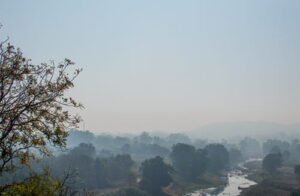
Gir Somnath district occupies a uniquely significant stretch of Gujarat’s Saurashtra coastline, carved out of Junagadh district in 2013 to bring together two of India’s most celebrated destinations under a single administrative umbrella: the sacred Somnath Temple — first among the twelve Jyotirlingas of Lord Shiva — and Gir National Park, the last wild refuge of the Asiatic lion anywhere on Earth. With Veraval as its district headquarters, a town that ranks among India’s top fishing hubs, Gir Somnath blends profound religious pilgrimage with world-class wildlife conservation in a manner found in few other Indian districts.
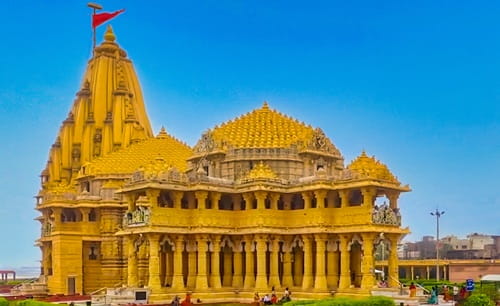
The Somnath temple’s history is one of resilience as much as devotion — repeatedly destroyed by Muslim invaders and Portuguese forces across the centuries, the present structure was rebuilt in the Chaulukya style of Hindu temple architecture under the determined leadership of Sardar Vallabhbhai Patel following India’s independence, completed in May 1951. The district’s coastal location, mentioned in both the Rigveda and the Gita, traces its rule through the Mauryas, Guptas, and Chudasama Rajputs, before passing through Islamic influence and eventual British-era princely administration prior to joining independent India in 1947.
Gir Somnath District, Gujarat — Quick Overview
| Feature | Details |
| State | Gujarat |
| District Headquarters | Veraval |
| District Formed | 2013 (carved from Junagadh district) |
| Region | Saurashtra, southern coast |
| Population | 1,217,477 (345 villages) |
| Famous For | Somnath Temple (1st Jyotirlinga), Gir National Park (Asiatic Lions), Triveni Sangam |
| Key Rivers | Hiran, Kapila, Saraswati (Triveni Sangam confluence) |
| Industry | Fishing (Veraval); groundnuts, cotton, wheat (agriculture) |
| Nearest Airport | Rajkot Airport (~195 km) |
| Railway | Western Railway network |
| Best Time to Visit | October to March |
| Summer Temperature | 30°C – 42°C (March-June) |
| Winter Temperature | 10°C – 24°C (October-February) |
History of Gir Somnath District
1. Ancient Foundations and Dynastic Succession
Gir Somnath’s history traces through successive ruling powers — the Mauryas, followed by the Guptas, and much later the Chudasama Rajputs. Power subsequently shifted to Islamic leaders who exerted influence across the area, before the region became one of many small princely kingdoms loosely tied together under British colonial oversight. With Indian independence in 1947, the land joined the newly independent nation.
2. The Somnath Temple’s Cycle of Destruction and Reconstruction
The Somnath temple, believed to have been built by the Yadava dynasty in 649 CE, has been destroyed and rebuilt multiple times throughout history by various Muslim invaders and Portuguese forces — a cycle of devastation and renewal that became emblematic of the temple’s enduring spiritual significance to Hindu devotees. One of the most documented historical raids associated with the temple connects to the route taken by Mahmud of Ghazni, commemorated today at the intricately adorned Junagadh Gate, said to mark the path he took to plunder the temple.
3. Sardar Vallabhbhai Patel’s Post-Independence Reconstruction
Following India’s independence, the reconstruction of Somnath Temple resumed — not quietly, but boldly guided by Sardar Vallabhbhai Patel, India’s first Deputy Prime Minister and the architect of the country’s political integration. This rebuilding effort carried belief, memory, and the collective voice of the Hindu community; the present temple, completed in May 1951, was constructed in the Chaulukya style of Hindu temple architecture, turning stone into a symbol of strength remembered and unity shaped anew.
4. Modern District Formation
Gir Somnath was officially carved out of Junagadh district in 2013, recognising the area’s distinct religious, ecological, and economic identity centred on Somnath’s pilgrimage economy and Veraval’s fishing industry, alongside Gir National Park’s globally significant wildlife conservation mandate.
Top Attractions in Gir Somnath District
1. Somnath Temple
The Somnath temple, located at Prabhas Patan near Veraval, is believed to be the first among the twelve Jyotirlinga shrines of Lord Shiva — among the most sacred sites in all of Hinduism. The temple’s site has been a pilgrimage destination since ancient times, owing to its position at the Triveni Sangam — the confluence of three rivers (Kapila, Hiran, and Saraswati). According to legend, Soma (the Moon god) lost his lustre due to a curse and bathed in the Saraswati River at this exact site to regain it.
The current temple’s architecture follows the Chalukya style, featuring a shikhara (spire) standing 15 metres tall, intricately carved walls, and ancient features. One inscription in Sanskrit at the site claims that Antarctica and the Somnath temple lie in a perfectly straight line, uninterrupted by any landmass — a detail frequently cited by visitors and guides alike. The temple complex now also includes a grand Shree Ram temple, opened under the Shree Somnath Trust on Vijaya Dashami 2017, joining the existing Shiva and Shri Krishna shrines. The “Jay Somnath” Sound and Light Show, held daily from 8:00 PM to 9:00 PM, narrates the temple’s resilient history through a dramatic 3D presentation in Hindi.
2. Gir National Park
Located within the broader district and renowned as the last refuge of the majestic Asiatic lion on Earth, Gir National Park offers a unique wildlife experience amid rugged terrain and diverse ecosystems. The park’s rare savannah and deciduous forest cover is the only place on the planet housing wild Asiatic Lions, alongside other notable residents including Golden Jackals, Ruddy Mongoose, Honey Badger, Chinkara, and Monitor Lizard. Scenic water reservoirs including Hiran, Datardi, and Raval serve as critical water points for wildlife and add to the park’s natural beauty. The Devalia Safari Park (Gir Interpretation Zone) offers visitors a controlled-environment opportunity to observe crocodiles, hyenas, and other species up close. Jungle safaris run from October to June, with the park closed during monsoon season (July-September).
3. Triveni Sangam
Located approximately 1.5 km from Somnath Temple, Triveni Sangam is the sacred confluence of three rivers — Hiran, Kapila, and Saraswati — before they merge into the Arabian Sea. This significant pilgrimage spot draws devotees who take holy dips to wash away sins and perform ancestral rites, making it an essential complement to any Somnath Temple visit.
4. Bhalka Tirth
Approximately 4-5 km from Somnath Temple, Bhalka Tirth marks the site where Lord Krishna, resting beneath a banyan tree, was mistakenly struck in the foot by an arrow shot by a hunter named Jara, who believed Krishna’s foot to be a deer. According to tradition, Krishna forgave the hunter, stating it was his own divine will that this event mark the end of his earthly incarnation. The site features a reclining statue of Krishna with an arrow in his foot, alongside the remains of the original banyan tree, a small market, and a peaceful temple pond.
5. Prachi Tirth
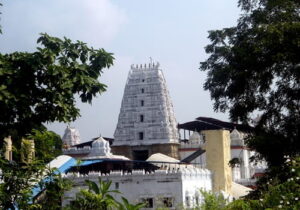
Considered one of the most sacred places to perform ancestral rites alongside Kashi itself — reflected in the Gujarati saying “100 times Kashi but only 1 time Prachi” — Prachi Tirth is believed to be where Lord Krishna, a descendant of the Yaduvansh dynasty, performed posthumous ceremonies for his own ancestors approximately 5,000 years ago. Mahatma Gandhi is also said to have performed these rites here for his forefathers. The site features the Madhavrayji Mandir, a temple dedicated to Lord Krishna on the banks of the Hiran River, located approximately 25 km from Somnath.
6. Somnath Beach
Forming an essential part of any Somnath itinerary, Somnath Beach is famous for its beautifully sparkling waves and long stretches of shoreline. Visitors should note that the rocky seabed remains submerged during high tide and becomes slippery during low tide, requiring careful footing.
7. Girnar Hills and Junagadh Gate
The intricately adorned Junagadh Gate marks the historical route believed to have been taken by Mahmud of Ghazni in his raid to plunder the Somnath Temple, offering a tangible connection to the temple’s turbulent medieval history.
Temples of Gir Somnath District
| Temple | Location | Deity | Key Feature |
| Somnath Temple | Prabhas Patan, near Veraval | Lord Shiva (1st Jyotirlinga) | Chaulukya-style; rebuilt 1951 by Sardar Patel; Triveni Sangam site |
| Shree Ram Temple | Somnath Temple complex | Lord Rama | Opened Vijaya Dashami 2017 |
| Gita Mandir | Near Somnath/Bhalka Tirth | Lord Krishna | Bhagavad Gita verses inscribed on pillars |
| Madhavrayji Mandir | Prachi Tirth, banks of Hiran River | Lord Krishna | Site of Krishna’s ancestral rites legend |
| Bhidbhanjan Mahadev Temple | Gir Somnath district | Lord Shiva | Notable district shrine |
| Veneshwar Mahadev Temple | Gir Somnath district | Lord Shiva | Regional pilgrimage site |
| Kamnath Mahadev Mandir and Sarada Math | Near Triveni Sangam Ghat | Lord Shiva | Adjacent cave; less-visited heritage site |
Weather in Gir Somnath District
October to March — Best Time: Pleasant weather ranging 10°C-24°C, ideal for temple visits, beach exploration, and Gir National Park safaris (open October through June, with peak season October-March).
March to June — Summer: Hot and dry conditions with temperatures rising to 30-42°C; early morning visits are recommended for outdoor activities during this period.
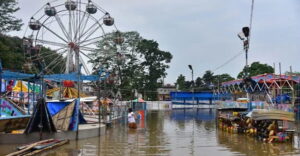
July to September — Monsoon: Heavy and humid rainfall typical of the coastal Saurashtra region, with possibilities of cyclones and sharp winds; Gir National Park closes entirely during this season for wildlife breeding protection.
Things to Do in Gir Somnath District (2026)
Evening Aarti and “Jay Somnath” Show at Somnath Temple — Experience the temple’s divine evening rituals followed by the daily 8 PM sound and light show narrating its resilient history.
Wildlife Safari at Gir National Park — Book in advance for jungle safaris (October-June) to spot the Asiatic lion in its only wild habitat on Earth, alongside leopards and diverse birdlife.
Holy Dip at Triveni Sangam — Combine ancestral rites or a purifying dip at the sacred three-river confluence with the nearby Somnath Temple visit.
Bhalka Tirth and Prachi Tirth Pilgrimage Circuit — Trace the final chapters of Lord Krishna’s earthly life, from the site of his fatal arrow wound to the location of his own ancestral rites.
Beach Time at Somnath and Chorwad Beaches — Enjoy coastal relaxation, being mindful of the rocky, tide-dependent seabed conditions.
Visit the Prabhas Patan Museum — Explore ancient sculptures, pictures, and manuscripts documenting the temple’s and region’s deep historical layers.
How to Reach Gir Somnath District
By Air: Rajkot Airport is the nearest, approximately 195 km from Somnath, with regular flights connecting to major Gujarati and Indian cities.
By Train: Gir Somnath lies on the Western Railway network, with regular train connectivity from across India to Veraval and Somnath stations.
By Road: The district is well connected by road, with cab and car rental services available for both Somnath temple visits and Gir National Park safaris.
Conclusion
Gir Somnath district uniquely brings together two of India’s most profound destinations — the eternal, repeatedly-rebuilt Somnath Jyotirlinga representing Hindu spiritual resilience, and Gir National Park preserving the world’s last wild Asiatic lions. From the sacred Triveni Sangam to Krishna’s final earthly chapter at Bhalka Tirth, and from temple bells echoing across the Arabian Sea to roaring lions in ancient savannah forest, Gir Somnath offers travellers an extraordinary combination of devotion and untamed wilderness within a single, accessible Saurashtra coastal district.
FAQs About Gir Somnath District, Gujarat
Q1. What is Gir Somnath district famous for?
A: Gir Somnath is famous for the Somnath Temple — the first among the twelve Jyotirlingas of Lord Shiva — and Gir National Park, the last wild refuge of the Asiatic lion on Earth. The district also features the sacred Triveni Sangam river confluence, Bhalka Tirth (where Krishna’s earthly life ended), and historic coastal beaches.
Q2. When was Gir Somnath district formed?
A: Gir Somnath district was carved out of Junagadh district in 2013, bringing together the Somnath pilgrimage area and Gir National Park under unified administration, with Veraval designated as the district headquarters.
Q3. Who rebuilt the Somnath Temple and when?
A: The present Somnath Temple, built in the Chaulukya style of Hindu temple architecture, was reconstructed following India’s independence under the determined leadership of Sardar Vallabhbhai Patel, with construction completed in May 1951. The temple had been destroyed and rebuilt multiple times throughout history by various Muslim invaders and Portuguese forces.
Q4. What is the connection between Gir Somnath and Lord Krishna?
A: Several sites in Gir Somnath district connect directly to Lord Krishna’s life and legend. Bhalka Tirth marks where Krishna was mistakenly struck by a hunter’s arrow, ending his earthly incarnation. Prachi Tirth is believed to be where Krishna performed ancestral rites for his own forefathers approximately 5,000 years ago, considered second only to Kashi in sanctity for such rituals.
Q5. When is the best time to visit Gir Somnath district, especially for Gir National Park safaris?
A: October to March offers the most pleasant weather (10°C-24°C) for both temple visits and wildlife safaris. Gir National Park operates safaris from October through June but closes entirely during the monsoon season (July-September) for wildlife breeding protection.