Dharashiv (Osmanabad) District, Maharashtra: Top Attractions, History, Temples, Weather & Things to Do
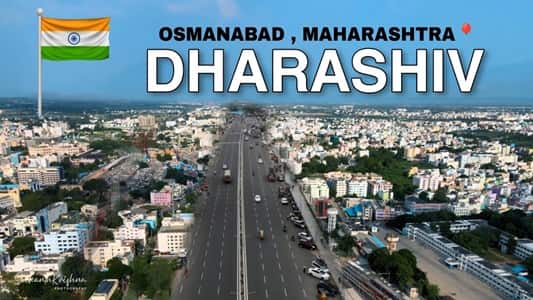
Dharashiv district — officially renamed from Osmanabad in February 2023, taking its new name from the ancient Dharashiv Caves — sits in the southeastern Marathwada region of Maharashtra, a land shaped by Deccan Trap basalt rock formations and nourished by the Manjara, Bhima, Sina, and Godavari river systems. The district’s defining landmark is Tuljapur’s Tulja Bhavani Temple, one of the three and a half Shakti Peethas of Maharashtra and the family deity of the Bhosale dynasty — the very temple where, according to legend, Goddess Bhavani gifted Chhatrapati Shivaji Maharaj the divine “Bhavani Talwar” (Bhavani sword) for success in his campaigns to establish Hindavi Swarajya.
Beyond Tuljapur’s profound spiritual significance, Dharashiv carries over 2,300 years of dynastic layering — from Emperor Ashoka’s Buddhist missionaries establishing early Viharas in the 4th century BCE through Satavahana and Chalukya trade corridors, Yadava-era temple architecture, and Bahmani military engineering at Naldurg Fort. The district’s old rock-cut Dharashiv Caves themselves embody this religious evolution — originally Buddhist, later converted into Jain monuments — making this corner of Marathwada a genuine living archive of Deccan spiritual and political history.
Dharashiv (Osmanabad) District, Maharashtra — Quick Overview
| Feature | Details |
| State | Maharashtra |
| Region | Marathwada |
| District Headquarters | Dharashiv (Osmanabad) town |
| Officially Renamed | February 2023 (from Osmanabad to Dharashiv) |
| Famous For | Tulja Bhavani Temple (Tuljapur), Dharashiv Caves, Naldurg Fort, Paranda Fort |
| Key Rivers | Manjara, Bhima, Sina, Godavari, Terna |
| Sub-Divisions | Kalamb, Bhoom, Lohara, Omerga, Osmanabad city, Paranda, Tuljapur, Vashi |
| Elevation | ~653 metres |
| Nearest Airport | Pune Airport (~300 km); Aurangabad/Nanded Airports (operational alternatives) |
| Railway Station | Osmanabad Station (Latur-Miraj route, Central Railway) |
| Best Time to Visit | November to February |
| Summer Temperature | up to 45°C |
| Monsoon Rainfall | ~829 mm (June-September) |
History of Dharashiv District
1. Ancient Buddhist and Dynastic Foundations
Dharashiv’s earliest documented history reaches to the Mauryan era (4th century BCE), when Emperor Ashoka’s Buddhist missionaries established early Viharas (monasteries) — direct precursors to the now-famous Dharashiv Caves. Subsequently, under the Satavahanas and Chalukyas (1st-8th century CE), the region transformed into a significant trade corridor, with the Chalukyas constructing the Kallinaatha Shiva Temple using distinctive Bhumija spire architecture. Across the centuries, the district was ruled by an extraordinary succession of dynasties: the Mauryas, Satavahanas, Rashtrakutas, Yadavas, and the Bahmani, Bijapur, and Mughal empires.
2. The Dharashiv Caves — A Religious Transformation
The district’s namesake monument, the Dharashiv Caves, are rock-cut structures dug into solid rock, dating back to the 3rd century BCE according to some sources, though Archaeological Survey scholarship (per James Burgess) generally dates the Dharashiv group to the 6th to 8th centuries CE. There are seven caves total in the Balaghat Mountain range, four belonging to the Jain tradition and two Vaishnava caves, with the complex originally serving as Buddhist monastic sites before later being converted into Jain monuments — a religious transition reflecting the broader spiritual evolution of the Deccan plateau during this period. A separate group, the Chamar rock-cut caves, located 2 km from the city, contains two Hindu caves dated to the 6th century CE.
3. Nizam Shahi Resistance and the Mughal Conquest
In 1599, the Mughals defeated the Nizam Shahi rulers of Ahmednagar. Though Emperor Akbar appointed his own officers to administer the Deccan kingdom, the Nizam Shah’s officers refused to accept their authority, having effectively lost their independence. They declared Murtaza, son of Shah Ali, as king and established Paranda Fort — situated about 75 miles southeast of Ahmednagar — as their new capital, a defiant assertion of continued local sovereignty against Mughal centralisation.
4. Hyderabad State and the Nizam’s Legacy
The region became part of the princely state of Hyderabad under Asaf Jah I (who took the title Nizam-ul-Mulk), and the district was subsequently named “Osmanabad” after Osman Ali Khan, the last Nizam of Hyderabad. Following India’s independence and the 1956 reorganisation that extracted Marathwada from Hyderabad State and merged it with Bombay Presidency, Osmanabad became part of Maharashtra. The district’s official renaming to Dharashiv in February 2023 — drawing on the ancient cave complex’s name — represents a deliberate reconnection with the region’s pre-Nizam, indigenous cultural and historical identity.
Top Attractions in Dharashiv District
1. Tulja Bhavani Temple, Tuljapur
The single most important pilgrimage destination in the district, Tulja Bhavani Temple is dedicated to Goddess Bhavani, an incarnation of Goddess Parvati, and ranks among the 51 Shakti Peethas of Hindu tradition — specifically considered the second among India’s Shaktipeeths. The temple’s origins date to the 12th century, with construction attributed to the Kadamb dynasty’s Maratha Mahamandaleshwara Maradadeva, though it grew to its greatest historical prominence during the reign of Chhatrapati Shivaji Maharaj, an ardent devotee of the Goddess.
According to legend, the Goddess herself bestowed upon Shivaji the divine “Bhavani Talwar” (Bhavani sword), symbolising her protection and blessings for his mission to establish Hindavi Swarajya — a story documented in the Skanda Purana and forming one of the most significant devotional-historical narratives in all of Maratha culture. Perched on Yamunachala hill within the Balaghat mountain range, the temple is a masterpiece of Hemadpanti architecture, built from black stone with intricate carvings, entered through the grand Sardar Nimbalkar Gate.
Inside the complex, smaller shrines honour Lord Narasimha, Khandoba, and Chintamani. The sanctum sanctorum houses a three-foot-tall swayambhu (self-manifested) idol of Goddess Bhavani, carved from black stone, depicted with eight arms wielding weapons while one hand offers protection in abhayamudra. The temple’s daily rituals begin with the Kakad Aarti — a melodious morning prayer that devotees recommend witnessing at 5 AM. During the Sharad Navratri period, the goddess’s idol is placed in a sleeping position, with devotees advised to plan visits after this period concludes for the standard darshan experience.
2. Dharashiv Caves
Located 8 km from Osmanabad city in the Balaghat Mountains, the Dharashiv Caves comprise seven caves carved into the hillside, originally Buddhist and later converted into Jain religious monuments, with fresh caves also excavated nearby in subsequent periods. The first cave is a small open space without statuary; the second features intriguing Gandharva-era artistic carving alongside its central statue; the fourth is open without any internal statue; the statue in the sixth cave has been damaged, and the seventh contains no statue at all. The caves are administered by the Archaeological Survey of India, though visitor infrastructure remains relatively basic — no guides or security are typically posted, and the site is best visited as a focused half-day excursion combined with transit time from Osmanabad.
3. Naldurg Fort
Located approximately 50 km southeast of Dharashiv town, in what was formerly a district headquarters, Naldurg Fort is one of Maharashtra’s most popular tourist attractions and an example of military architecture and engineering excellence from the Bahmani Sultanate period. The fort’s strategic positioning and impressive scale make it a significant heritage destination for visitors interested in Deccan fortification history.
4. Paranda Fort
A protected monument under the Archaeological Survey of India, Paranda Fort stands as an exemplary specimen of military architecture and engineering in Maharashtra, erected by Mahmud Gawan, the Vazir of the Bahmani Sultanate. Established as a capital of resistance against Mughal authority following the 1599 defeat of the Nizam Shahi rulers of Ahmednagar, Paranda Fort carries deep historical significance tied to the region’s struggle for continued local sovereignty.
5. Ter (Tagar) — Saint Gora Kumbhar’s Birthplace
Located approximately 17-22 km from Dharashiv, Ter (historically known as Tagar) holds rich historical significance as an ancient trading hub and is home to temples along the Terna River. The town is the birthplace of Saint Gora Kumbhar, born in 1267 CE, and the temple dedicated to him — built in the 13th century after his death in 1317 — is a square-shaped, fully stone-constructed structure considered one of the finest architectural models in the region, complete with a Sabha Mandap for religious and cultural activities. Pilgrims travelling between Pandharpur and Tuljapur frequently visit Ter on their return journey, and the town’s significance is further enhanced by the historical Shri Nrisimha Temple.
6. Ruibhar Datta Mandir
Located approximately 12 km from Osmanabad city, the temple of Lord Dattatreya at Ruibhar sits amid quiet, serene natural surroundings, with ancient banyan trees beneath which devotional Kirtans echo nightly — a peaceful meditation and pilgrimage site distinct from the district’s larger, more crowded temple destinations.
7. Yedshi Ramling Ghat Wildlife Sanctuary
Located in Kalamb, the Yedshi Ramling Ghat Wildlife Sanctuary offers a natural counterpoint to the district’s predominantly historical and religious tourism identity, providing visitors with wildlife and forest-based recreational opportunities within the Balaghat region’s broader ecosystem.
Temples of Dharashiv District
| Temple | Location | Deity | Key Feature |
| Tulja Bhavani Temple | Tuljapur | Goddess Bhavani | One of 51 Shakti Peethas; Shivaji’s Bhavani Talwar legend |
| Sant Gora Kumbhar Temple | Ter (Tagar) | Saint Gora Kumbhar | Built 13th century; stone architecture; on Pandharpur-Tuljapur pilgrim route |
| Ruibhar Datta Mandir | Ruibhar village, ~12 km from Osmanabad | Lord Dattatreya | Ancient banyan trees; nightly Kirtans |
| Yedeshweri Devi Temple | Kalamb | Goddess Yedeshweri | Notable district pilgrimage site |
| Hemadpanthi Shiv Temple | Mankeshwar | Lord Shiva | Hemadpanthi architectural style |
| Satwai Devi Temple | Mankeshwar | Goddess Satwai | Regional devotional significance |
| Maruti Temple | Shelagoan | Lord Hanuman | Notable village shrine |
| Bhimashankar Mandir | Kond village, ~35 km from Osmanabad | Lord Shiva | Historical regional temple |
Weather in Dharashiv District
November to February — Best Time: Comfortable temperatures of 15°C-28°C make this the ideal period for visiting Naldurg Fort, the Dharashiv Caves, and Tulja Bhavani Temple, with clear skies suitable for fort and cave exploration.
March to May — Summer: Temperatures can reach as high as 45°C; outdoor sightseeing should be planned for early morning hours.
June to September — Monsoon: Approximately 829 mm of annual rainfall, with road delays likely and cave visits generally not recommended during this period.
Things to Do in Dharashiv District (2026)
Pre-Dawn Darshan at Tulja Bhavani Temple — Arrive for the 5 AM Kakad Aarti to experience the temple’s most spiritually charged morning ritual, and avoid visiting during Sharad Navratri when the idol is in sleeping position.
Combined Heritage Circuit — Plan a single-day route: Dharashiv Caves in the morning, Tuljapur for lunch and temple darshan, concluding with Paranda Fort at sunset.
Naldurg Fort Exploration — A half-day visit examining the fort’s Bahmani-era military architecture and engineering.
Ter (Tagar) Pilgrimage and Heritage Walk — Combine the Saint Gora Kumbhar Temple with the ancient trading town’s historical sites along the Terna River.
Ruibhar Datta Mandir Meditation — A quiet evening visit to experience the nightly Kirtans beneath the temple’s ancient banyan trees.
Sample Local Cuisine and Crafts — Try Tambda Rassa (spicy mutton curry) and Puran Poli, while exploring Bidriware silver-inlaid metalwork and Himroo shawls at local markets.
How to Reach Dharashiv District
By Air: Pune Airport is the closest major airport (approximately 300 km), with Aurangabad and Nanded Airports serving as nearer operational alternatives.
By Train: Osmanabad Railway Station (station code UMD) sits on the Latur-Miraj railway route under Central Railway administration.
By Road: National Highway 52 passes through Osmanabad city, connecting it to Sangrur, Hisar, Kota, Indore, Dhule, Aurangabad, Beed, Tuljapur, Solapur, Vijayapura, and Hubballi. Solapur (approximately 67 km) and Latur (approximately 73 km) offer frequent bus and taxi connectivity.
Conclusion
Dharashiv district, reclaiming its ancient identity from the more recent “Osmanabad” designation, offers Maharashtra’s Marathwada region at its most spiritually and historically dense — the Shakti Peeth at Tuljapur where Shivaji received his legendary sword, rock-cut caves spanning a religious transformation from Buddhist to Jain worship, and Bahmani-era fortresses at Naldurg and Paranda that once defied Mughal centralisation. For travellers seeking deep Deccan history combined with one of Maharashtra’s most powerful pilgrimage experiences, Dharashiv rewards focused, unhurried exploration.
FAQs About Dharashiv (Osmanabad) District, Maharashtra
Q1. What is Dharashiv district famous for?
A: Dharashiv is famous for the Tulja Bhavani Temple at Tuljapur — one of the 51 Shakti Peethas and the temple where Goddess Bhavani is believed to have gifted Chhatrapati Shivaji Maharaj his sword — alongside the ancient Dharashiv Caves, Naldurg Fort, and Paranda Fort.
Q2. Why was Osmanabad renamed to Dharashiv?
A: Osmanabad district was officially renamed Dharashiv in February 2023, drawing its new name from the ancient Dharashiv Caves located 8 km from the district headquarters. The original name “Osmanabad” derived from Osman Ali Khan, the last Nizam of Hyderabad, under whose princely state the region had been administered.
Q3. What is the legend behind Shivaji and the Tulja Bhavani Temple?
A: According to legend documented in the Skanda Purana, Goddess Bhavani at Tuljapur bestowed upon Chhatrapati Shivaji Maharaj the divine “Bhavani Talwar” (Bhavani sword), symbolising her protection and blessing for his mission to establish Hindavi Swarajya. This deep devotional connection between the Maratha warrior king and the goddess makes Tulja Bhavani Temple one of the most historically significant Shakti Peethas in India.
Q4. What is the religious history of the Dharashiv Caves?
A: The seven Dharashiv Caves, carved into the Balaghat Mountains, were originally Buddhist monastic sites, established as early as the 4th century BCE during Emperor Ashoka’s reign, before later being converted into Jain monuments around the 6th to 8th centuries CE. Four caves belong to the Jain tradition and two are Vaishnava, reflecting the region’s layered religious evolution.
Q5. When is the best time to visit Dharashiv district?
A: November to February is the recommended period, offering comfortable temperatures (15°C-28°C) ideal for visiting Naldurg Fort, the Dharashiv Caves, and Tulja Bhavani Temple. Summer (March-May) can reach 45°C, while the monsoon season (June-September, averaging 829mm rainfall) is generally not recommended for cave visits due to road delays and accessibility concerns.