Bhadohi District, Uttar Pradesh: Top Attractions, History, Temples, Weather & Things to Do
Bhadohi district occupies a geographically compact but economically significant position between Varanasi (45 km east) and Prayagraj (82 km west) in southern Uttar Pradesh, straddling the culturally rich corridor connecting two of India’s holiest cities. Covering just 1,015-1,055 sq km, it is the smallest district by area in Uttar Pradesh — yet punches far above its physical weight as the global capital of hand-knotted carpet manufacturing, earning the well-deserved designation “Carpet City of India.”
Carpet weaving in the Bhadohi-Mirzapur region dates to the 16th century during Mughal Emperor Akbar’s reign, when Iranian master weavers are believed to have stopped at Madhosingh village near Khamaria in Bhadohi while travelling across India, subsequently setting up looms that established a craft tradition now employing 2.2 million rural artisans in Bhadohi alone. Today the district accounts for approximately 75% of India’s total carpet exports — a remarkable concentration of a single craft within a single small district that received both a Geographical Indication (GI) tag in 2010 and the government’s “export excellence” tag in 2018. Alongside this carpet legacy, Bhadohi carries genuine spiritual significance through its Sita Samahit Sthal (Sitamarhi) pilgrimage site, where Sita is believed to have been absorbed into the earth, and the teachings of the 15th-century saint-poet Ravidas, who is deeply associated with the district.
Bhadohi District, Uttar Pradesh — Quick Overview
| Feature | Details |
| State | Uttar Pradesh |
| District Headquarters | Gyanpur |
| Alternate Name | Sant Ravidas Nagar (1997-2014) |
| District Formed | 30 June 1994 (from Varanasi district, 65th district of UP) |
| Area | 1,015-1,055 sq km (smallest by area in UP) |
| Famous For | Hand-knotted carpet weaving, Sita Samahit Sthal, Sant Ravidas connection |
| Carpet Industry | 2.2 million artisans; ~75% of India’s carpet exports; GI-tagged |
| Key Borders | Varanasi (E), Prayagraj (W), Jaunpur (N), Mirzapur (S) |
| Distance from Varanasi | ~40-50 km |
| Nearest Airport | Lal Bahadur Shastri Airport, Varanasi (~50 km) |
| Best Time to Visit | October to March |
History of Bhadohi District
Bhar Raj — The Ancient Capital
Bhadohi’s history stretches back centuries, with the town historically serving as the capital of the Bhar Raj — an early ruling power in eastern Uttar Pradesh associated with the aboriginal Bhar tribe, whose settlements and forts scattered across the Gangetic plains represent some of the region’s earliest documented political formations. Vedic literature and epics including the Mahabharata reference the area through its associations with Kashi’s sacred geography, with sites like Semradhnath linked to the Pandavas and Sitamarhi tied to Sita’s ashram in the Ramayana.
Mughal Era and the Carpet’s Iranian Origins
Bhadohi’s defining modern history begins in the late 16th century under Emperor Akbar’s administration, when the region was organised as a dastur within the sarkar of Allahabad. Akbar’s patronage introduced Persian-influenced carpet weaving techniques to India around 1580 CE. According to tradition, Iranian master weavers travelling through India stopped at Madhosingh village near Khamaria in Bhadohi and set up the first looms here, blending Mughal aesthetics with regional traditions to establish a craft that would grow over four centuries into the world’s largest hand-knotted carpet manufacturing hub.
Sant Ravidas — The District’s Spiritual Patron
The 15th-century saint-poet Ravidas — a disciple of Ramanand and founder of the Raidasi Sampradaya — is deeply associated with Bhadohi’s cultural identity. Ravidas, known for his powerful bhajans challenging caste discrimination and advocating devotion to a formless divine, inspired a spiritual tradition that resonates particularly strongly in eastern Uttar Pradesh’s Dalit and weaver communities. The district was briefly renamed “Sant Ravidas Nagar” in 1997 by the Mayawati government to honour his memory, reverting to “Bhadohi” in 2014.
District Formation
Bhadohi district was carved out of Varanasi district on 30 June 1994, becoming Uttar Pradesh’s 65th district under Chief Minister Mulayam Singh Yadav’s government. In 1911, the area had come under the princely state of Benares under Maharaja Prabhu Narayan Singh, remaining thus until India’s independence in 1947 before becoming part of Uttar Pradesh.
Top Attractions in Bhadohi District
Carpet Weaving Centres and Living Craft Tours
The primary unique attraction of Bhadohi for any visitor is the opportunity to witness hand-knotted carpet weaving firsthand. Over 500,000 artisans from families with generations of weaving expertise work across Bhadohi’s carpet clusters, primarily in areas around Khamaria and Bhadohi city. Visiting these clusters reveals the extraordinary skill involved in creating carpets of Old Persian, Chhapra Mir, Abusan, Loribaft, and Indo-Gabbeh styles — a process where a single square foot of a high-quality carpet can take a skilled weaver many hours to complete. The Indian Institute of Carpet Technology, established in 2001 and the only such institute in Asia, is located in Bhadohi and can be visited for insights into the technical and historical dimensions of carpet production.
Sita Samahit Sthal (Sitamarhi)
One of Bhadohi’s most significant pilgrimage sites, Sita Samahit Sthal — also called Sitamarhi — is the traditional site where Goddess Sita is believed to have entered (been absorbed into) the earth following her final return to Ayodhya. Promoted under Uttar Pradesh’s 2022 Tourism Policy as a focus destination for spiritual circuits, Sitamarhi is a sacred and deeply revered location for devotees of the Ramayana tradition, drawing pilgrims seeking darshan at the site where Sita completed her earthly journey.
Bhadeshwar Mahadev Mandir and District Temples
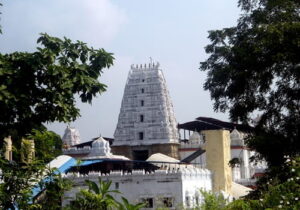
Bhadohi district is home to a rich network of local temples including the Semradhnath Mahadev Dham (connected to Pandava legends from the Mahabharata), Baba Harihar Nath Mandir (Gyanpur), Baba Doodhnath Mandir (Gyanpur), Ghopaila Devi Mandir (Gyanpur), Chakwa Mahaveer Hanuman Mandir, Bhadreshwar Mahadev Mandir, Maa Kamakhya Dham (Uchetha Village), Baba Tileshwarnath Mandir (Tilanga village), Bhadrakali Temple, and Baba Gangeshwarnath Dham (Itahara Uparwar Village). Together these shrines constitute a dense local pilgrimage circuit within the district.
Bhoganw and Rampur Ghats
Famous ghats along the Ganga within Bhadohi district, Bhoganw and Rampur provide serene spots for bathing, prayer, and riverside walks, particularly auspicious during Hindu festivals when the riverbanks come alive with devotional activity. The Ganga forms Bhadohi’s southwestern boundary, linking the district to the broader sacred river network of eastern UP.
Samdha Tal (Wetland)
Selected as a significant wetland in the Bhadohi district and published in the Extraordinary Gazette of Uttar Pradesh, Samdha Tal represents the district’s natural heritage dimension alongside its industrial and spiritual identity.
Sant Ravidas Temples and Jayanti Celebration
Temples dedicated to Sant Ravidas throughout Bhadohi district draw devotees particularly during Ravidas Jayanti (celebrated on the full moon of Magh, typically January-February) — the most significant annual event for the Raidasi Sampradaya community, marked by devotional bhajans, community gatherings, and pilgrimages to sites connected with Ravidas’s memory.
Day Trips to Varanasi and Prayagraj
Bhadohi’s strategic position between two of India’s holiest cities means travellers can combine a Bhadohi carpet-weaving visit with Varanasi’s Kashi Vishwanath Temple and ghats (40-50 km) or Prayagraj’s Triveni Sangam (82 km) for a comprehensive eastern UP spiritual and cultural circuit within a single itinerary.
Temples of Bhadohi District
| Temple | Location | Deity | Key Feature |
| Sita Samahit Sthal (Sitamarhi) | Bhadohi district | Goddess Sita | Site where Sita absorbed into earth; major Ramayana pilgrimage |
| Semradhnath Mahadev Dham | Bhadohi district | Lord Shiva | Pandava-era Mahabharata connection |
| Bhadreshwar Mahadev Mandir | Bhadohi | Lord Shiva | District-significant Shiva temple |
| Ghopaila Devi Mandir | Gyanpur | Goddess Devi | Popular devotional site |
| Maa Kamakhya Dham | Uchetha Village | Goddess Kamakhya | Significant local Shakti shrine |
| Baba Gangeshwarnath Dham | Itahara Uparwar Village | Lord Shiva | Notable village shrine with river connection |
| Sant Ravidas Temples | Throughout district | Sant Ravidas (Bhakti tradition) | Major draw during annual Ravidas Jayanti |
Weather in Bhadohi District
October to March — Best Time: Cool and comfortable conditions (ideally October to February for the most pleasant weather) suit both carpet-centre visiting and spiritual site exploration, with the Ravidas Jayanti festival in January-February adding cultural significance.
Summer (March-May): Hot and dry, often exceeding 40°C — uncomfortable for extended sightseeing.
Monsoon (June-September): Heavy rainfall with high humidity; the Ganga riverbank ghats are at their most dramatic, though outdoor exploration is limited by conditions.
Things to Do in Bhadohi District (2026)
Carpet Weaving Workshop Visit — Arrange access to a local carpet cluster in Khamaria or Bhadohi city to observe generations of artisan expertise at work, and consider purchasing a GI-tagged hand-knotted carpet directly.
Pilgrimage to Sita Samahit Sthal — Visit this ancient Ramayana pilgrimage site, particularly meaningful during the period of Ram Navami (March-April) when devotional activity peaks.
Ravidas Jayanti Celebration — Time a January-February visit for the most significant annual festival in the district, honouring the 15th-century saint-poet at local temples.
Ganga Ghat Morning Walk — Spend a dawn hour at Bhoganw or Rampur Ghat watching the river and conducting simple riverside rituals alongside local devotees.
Indian Institute of Carpet Technology Visit — Arrange a visit to Asia’s only carpet technology institute for an academic-level understanding of the craft’s history and manufacturing process.
Combined Varanasi Day Trip — Pair a Bhadohi carpet visit with a 40-50 km day trip to Varanasi’s Kashi Vishwanath Temple and evening Ganga Aarti for a complete eastern UP cultural experience.
How to Reach Bhadohi District
By Air: Lal Bahadur Shastri Airport in Varanasi is the nearest, approximately 50 km away.
By Train: Bhadohi is well connected by rail on the Varanasi-Allahabad section, with regular trains from both directions stopping at stations within the district.
By Road: The district is approximately 45 km west of Varanasi, 82 km east of Prayagraj, and 234 km from Lucknow, with regular bus and taxi services connecting to all three cities.
Conclusion
Bhadohi district demonstrates that the smallest districts by geography can carry the largest economic and spiritual weight — 2.2 million artisans producing GI-tagged hand-knotted carpets that account for three-quarters of India’s total carpet exports, a Ramayana-era pilgrimage site where Sita concluded her earthly life, and the devotional legacy of 15th-century saint Ravidas all compressed into less than 1,055 sq km between Varanasi and Prayagraj. For textile enthusiasts, pilgrims, and curious travellers, Bhadohi’s “Carpet City” identity opens a door into one of India’s most ancient, globally connected, and authentically practised craft traditions.
FAQs About Bhadohi District, Uttar Pradesh
Q1. What is Bhadohi district famous for?
Bhadohi is famous as the “Carpet City of India,” home to the largest hand-knotted carpet weaving hub in South Asia, employing 2.2 million artisans and accounting for approximately 75% of India’s total carpet exports. The district is also known for the Sita Samahit Sthal (Sitamarhi) pilgrimage site and its connection to 15th-century saint-poet Ravidas.
Q2. How did carpet weaving come to Bhadohi?
Carpet weaving in Bhadohi dates to the 16th century during Mughal Emperor Akbar’s reign. According to tradition, Iranian master weavers travelling through India stopped at Madhosingh village near Khamaria in Bhadohi and set up looms, establishing a craft tradition that blended Persian aesthetics with regional techniques. Over four centuries, this evolved into the world’s largest hand-knotted carpet manufacturing hub.
Q3. What is the Bhadohi GI tag and what does it cover?
Bhadohi carpets received a Geographical Indication (GI) tag in 2010, designating carpets from nine districts — Bhadohi, Mirzapur, Varanasi, Ghazipur, Sonebhadra, Kaushambi, Allahabad, Jaunpur, and Chandauli — as “handmade carpets of Bhadohi.” This tag protects the traditional craft’s authenticity and helps buyers identify genuinely handcrafted products from the region.
Q4. What is the significance of Sita Samahit Sthal (Sitamarhi) in Bhadohi?
Sita Samahit Sthal, also called Sitamarhi, is the traditional site in Bhadohi district where Goddess Sita is believed to have been absorbed into the earth — the conclusion of her earthly journey according to Ramayana tradition. The site is promoted under Uttar Pradesh’s 2022 Tourism Policy as a priority destination for spiritual circuits and draws Ramayana devotees from across India.
Q5. When was Bhadohi district formed and why was it briefly renamed?
Bhadohi district was carved out of Varanasi district on 30 June 1994, becoming Uttar Pradesh’s 65th district. In 1997, the district was renamed “Sant Ravidas Nagar” by the Mayawati government to honour the revered 15th-century saint-poet Ravidas, who is deeply associated with the area’s cultural and Dalit heritage. The name was reverted to Bhadohi in December 2014 by the Akhilesh Yadav government to restore the district’s historical industrial identity.