Baksa District, Assam: Top Attractions, History, Temples, Weather & Things to Do (2026)
Baksa district sits at the foothills of Bhutan in the Bodoland Territorial Region of Assam, bounded by Bhutan to the north, Udalguri district to the east, Barpeta, Nalbari, and Kamrup districts to the south, and Chirang district to the west. With its headquarters at Mushalpur — approximately 85-105 km from Guwahati — Baksa is one of four districts that form the Bodoland Territorial Autonomous District (BTAD), created following the historic BTC (Bodoland Territorial Council) accord signed on 10 February 2003.
The district’s name carries competing origin stories: one traces “Baksa” to the Bhutanese language phrase “Bagsa Duar” — “Bagsa” meaning a type of rice and “Duar” meaning entrance point, a reference to the Bhutanese kingdom’s historic administrative presence in this sub-Himalayan gateway region during the first half of the 19th century. The Bodo tribal community’s own tradition, however, also identifies “Bagsa” as a kind of broken, uncleaned rice grain gained after milling. Whichever origin is accurate, the name reflects the district’s deep historical connections to both the Bhutanese kingdom to its north and the indigenous Bodo tribal culture that remains its dominant identity today.
Baksa District, Assam — Quick Overview
| Feature | Details |
| State | Assam |
| Region | Bodoland Territorial Region (BTAD) |
| District Headquarters | Mushalpur |
| District Formed | 2003 (following BTC Accord, 10 February 2003) |
| Area | 2,400-2,457 sq km |
| Distance from Guwahati | ~85-105 km |
| Famous For | Manas National Park (UNESCO World Heritage Site), Bogamati, Tea Estates, Bodo Culture |
| Borders | Bhutan (N), Udalguri (E), Barpeta/Nalbari/Kamrup (S), Chirang (W) |
| Nearest Airport | Lokpriya Gopinath Bordoloi International Airport, Guwahati |
| Nearest Railway | Tihu and New Bongaigaon (~30-35 km from district areas) |
| Best Time to Visit | November to April (Manas National Park season) |
History of Baksa District
Bhutanese Kingdom Rule and the Duar System
The Baksa region historically came under Bhutanese administrative control during the first half of the 19th century, as part of the broader “Duar” system — the network of passes and foothills controlling movement between Bhutan’s highlands and the Assamese plains. The Bhutanese ruled these areas as “Bagsa Duar,” levying taxes and controlling trade through the mountain passes that connected the Indian subcontinent to Bhutan. This Bhutanese administrative legacy is embedded in the very name “Baksa,” making the district one of the few in Assam where the etymology of its name directly traces to a neighbouring country’s historical sovereignty.
The BTC Accord and Bodoland Territorial Creation
For decades, the Bodo people of northwestern Assam demanded a separate homeland, resulting in sustained political agitation and eventually the signing of the Bodoland Territorial Council accord on 10 February 2003. This landmark agreement created the Bodoland Territorial Autonomous District (BTAD) with four districts — Kokrajhar, Chirang, Baksa, and Udalguri — giving the Bodo community substantial self-governance rights over their ancestral territory. Baksa district emerged from this accord with Mushalpur as its headquarters, integrating previously sub-divided administrative areas into a single Bodo-majority governance framework.
Manas National Park — A Conservation History
Manas National Park, a large portion of which falls within Baksa district, has a conservation history marked by both achievement and adversity. The park suffered significant damage to wildlife populations during periods of ethnic conflict in the region, with evidence of reduced tiger and rhino populations through the late 1980s and early 1990s. However, sustained conservation efforts led to Manas’s remarkable ecological recovery, and it was removed from UNESCO’s List of World Heritage in Danger in 2011 — a restoration achievement recognised globally.
Top Attractions in Baksa District
Manas National Park (UNESCO World Heritage Site)
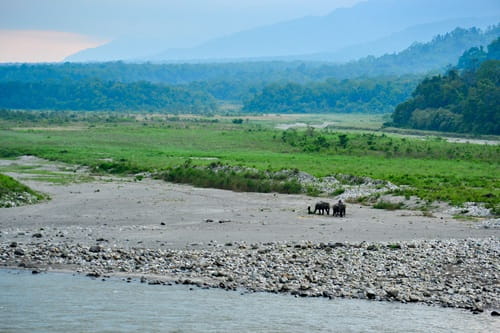
The centrepiece of Baksa district’s tourism, Manas National Park is a UNESCO World Heritage Site, a Project Tiger Reserve, an Elephant Reserve, and a Biosphere Reserve — the only protected area in India simultaneously holding all four designations. The major portion of the park falls within Baksa district, offering habitat across a diverse landscape of evergreen and semi-evergreen forests, riparian forests, wetlands, grassland, and mixed moist deciduous forest. The park shelters approximately 60 species of mammals, including tigers, wild water buffalo (a globally endangered species), golden langurs, pygmy hogs (one of the world’s rarest mammals), Indian rhinoceros, leopards, and hornbills. An extraordinary 312 types of birds have been recorded within the park.
Visitors can enjoy jeep safaris, elephant-back rides, and river rafting within the park — with the elephant rides offering the most intimate wildlife viewing experience, particularly for approaching the park’s grassland areas. Mathanguri Forest IB (Inspection Bungalow), located inside Manas within Baksa district, serves as an accommodation option for visitors seeking to experience the park’s pre-dawn and evening wildlife activity from within the forest itself.
Bogamati
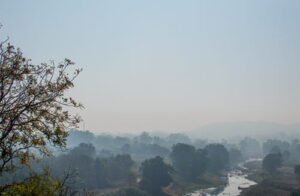
A newly discovered picnic destination located at the mouth of the Barnadi River on the Indo-Bhutan border foothills within Baksa district, Bogamati offers a panoramic view of the Bhutan mountains in a pristine, uncrowded setting. Inaugurated relatively recently by a local MLA, Bogamati represents the kind of genuinely unexplored natural beauty — beautiful skies, lush green hills, and gushing river streams — that characterises Baksa’s underdeveloped tourism potential. The river’s mouth confluence with the foothills creates a scenic composition ideal for photography.
Tea Estates of Baksa
Baksa district is home to several notable tea estates including Nagrijulie, Doomni, Menoka, and Fatemabad, all contributing to the district’s identity as a significant tea-producing region within Assam. Tea tourism allows visitors to walk through green rows of tea bushes, observe plucking operations during season, and sample freshly processed Assam tea — an authentic agricultural experience connecting visitors directly to one of the district’s primary economic activities.
Moina Pukhuri
A trekking site within Baksa district, Moina Pukhuri provides a nature-focused outdoor experience for visitors seeking physical activity within the district’s lush forested terrain. The trail and surrounding landscape reflect Baksa’s characteristic blend of forested hills and river systems in the Himalayan foothill zone.
Manas Soushi Khongkhar
An eco-tourism post within Baksa district known for its proximity to the beautiful Pagladia River, Manas Soushi Khongkhar represents an emerging sustainable tourism initiative combining wildlife observation, river scenery, and community-based tourism supporting local Bodo families.
Daragaon
A picnic spot under the Dihira Reserve Forest of Baksa, Daragaon offers unexplored natural scenery across a pristine forested landscape, adding to the district’s collection of underdeveloped natural destinations.
Traditional Bodo Villages
Baksa is primarily inhabited by the Bodo people, and a stay of several days allows visitors to engage authentically with Bodo culture — including traditional crafts, Bodo textile weaving (distinctive for its geometric patterns on dokhona, the traditional dress), local cuisine, and the vibrant Bwisagu (Bihu equivalent) festival celebrations that mark the Bodo new year with music, dance, and community feasting.
Temples and Religious Sites of Baksa District
The Bodo people maintain a syncretic religious tradition blending Bathw (the indigenous Bodo animist belief system) with elements of Hinduism. The district’s religious landscape reflects this cultural synthesis alongside a growing presence of more mainstream Hindu devotional practices.
| Site | Location | Tradition | Key Feature |
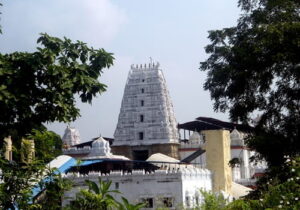
| Bageshwari Temple | Within district area | Goddess Bageshwari (Durga) | Ancient temple; significant regional pilgrimage |
| Bodo Village Shrines | Various villages | Bathw (Bodo animist tradition) | Living indigenous worship traditions |
Weather in Baksa District
November to April — Park Season (Best Time): Manas National Park operates during this window, with November to February offering the most pleasant weather for safaris, tea estate walks, and bird watching as migratory species are present.
May to June: Hot and humid conditions before the monsoon; the park typically closes ahead of the monsoon season.
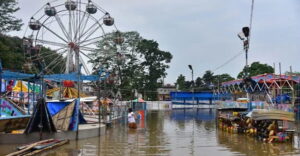
July to October — Monsoon: Heavy rainfall, with the park usually closed for wildlife conservation; lush greenery and river flooding define the landscape.
Things to Do in Baksa District (2026)
Jeep Safari and Elephant Ride in Manas National Park — Pre-book safaris at Mathanguri for the best tiger, rhino, wild buffalo, and golden langur viewing opportunities in this UNESCO World Heritage forest.
Stay at Mathanguri Forest IB — Experience the park’s dawn and dusk wildlife activity from within the forest, a uniquely atmospheric overnight option.
Tea Estate Walk at Nagrijulie or Doomni — Observe tea plucking and processing during season, ending with a fresh cup of Assam tea at the estate.
Explore Bogamati’s Indo-Bhutan Border Scenery — Visit this newly developed viewpoint for panoramic Bhutan mountain views at the Barnadi River mouth.
Engage with Bodo Village Culture — Spend time in a traditional Bodo village, learning about dokhona weaving, Bathw traditions, and Bwisagu festival customs.
Trek to Moina Pukhuri — Explore the forested trekking trail for Baksa’s nature-focused outdoor enthusiasts.
How to Reach Baksa District
By Air: Lokpriya Gopinath Bordoloi International Airport in Guwahati is the nearest, with taxis available for the approximately 85-105 km onward journey to Mushalpur.
By Train: Tihu and New Bongaigaon are the nearest railway stations, approximately 30-35 km from key district destinations.
By Road: Baksa is accessible from Guwahati by road, with the journey to Mushalpur taking approximately 2-3 hours. Buses, shared sumos, and private taxis operate from Guwahati and Barpeta.
Conclusion
Baksa district delivers northeast India’s most complete wildlife-and-tribal-culture combination within easy reach of Guwahati — a UNESCO World Heritage park sheltering tigers, wild water buffalo, pygmy hogs, and golden langurs alongside living Bodo cultural traditions, tea estate scenery, and an emerging set of scenic river-and-foothill destinations at the Indo-Bhutan border. For travellers seeking Assam beyond Kaziranga’s established circuit, Baksa rewards a focused multi-day visit with genuine ecological and cultural depth.
FAQs About Baksa District, Assam
Q1. What is Baksa district famous for?
Baksa is famous for Manas National Park — a UNESCO World Heritage Site, Project Tiger Reserve, Elephant Reserve, and Biosphere Reserve — alongside its vibrant Bodo tribal culture, tea estates including Nagrijulie and Doomni, and the scenic Bogamati viewpoint at the Indo-Bhutan border.
Q2. When was Baksa district created?
Baksa district was created following the historic Bodoland Territorial Council (BTC) accord signed on 10 February 2003, which established the Bodoland Territorial Autonomous District (BTAD) comprising Baksa, Kokrajhar, Chirang, and Udalguri districts. Mushalpur was designated as the district headquarters.
Q3. What is the origin of the name “Baksa”?
Two competing theories exist. The Bhutanese-origin theory holds that “Baksa” derives from “Bagsa Duar” — “Bagsa” meaning a type of rice and “Duar” meaning entrance point — reflecting Bhutanese administrative control during the first half of the 19th century. The Bodo-origin theory holds that “Bagsa” refers to a kind of broken, uncleaned rice grain, making the name indigenously Bodo in origin.
Q4. What makes Manas National Park in Baksa district unique?
Manas National Park is the only protected area in India simultaneously designated as a UNESCO World Heritage Site, a Project Tiger Reserve, an Elephant Reserve, and a Biosphere Reserve. It shelters rare species including the wild water buffalo, golden langur, and pygmy hog (one of the world’s rarest mammals), alongside tigers, rhinos, leopards, and 312 bird species.
Q5. When is the best time to visit Baksa district for Manas National Park?
Manas National Park is open from November to approximately June, with November to February offering the most pleasant weather, peak migratory bird presence, and optimal wildlife viewing conditions. The park is typically closed during the monsoon season (July-October) for wildlife conservation.