Thiruvalla, Pathanamthitta District, Kerala: Top Attractions, History, Temples, Weather & Things to Do
Thiruvalla, the largest town in Kerala’s Pathanamthitta district, sits on the northern banks of the Manimala River in central Travancore — a land-locked region surrounded by irrigating canals and rivers, earning it recognition as both the “Healthcare City” and “Banking Capital” of Kerala. Known affectionately as “The Land of NRIs” for its significant non-resident Indian population, Thiruvalla is also called “Aarogya Nagari” (city of health) for its well-developed healthcare infrastructure, while remaining deeply rooted in religious tradition as the headquarters of the Malankara Marthoma Syrian Church.
The town’s history reaches back to at least 500 BCE, with Neolithic stone axes discovered locally confirming early human habitation, though an organised settlement only emerged around 800 CE. Thiruvalla holds the distinction of being one of Kerala’s 64 ancient Brahmana graamams (Brahmin settlements), and the 12th-century Thiruvalla copper plates — voluminous records documenting the social and economic life centred around the Sree Vallabha Temple — are considered by scholars to constitute the very first book in Malayalam, a testament to the town’s profound historical and linguistic significance.
Thiruvalla, Pathanamthitta District — Quick Overview
| Feature | Details |
| State | Kerala |
| District | Pathanamthitta |
| Designation | “Healthcare City,” “Banking Capital of Kerala,” “Land of NRIs” |
| Famous For | Sree Vallabha Temple, Paliakkara (St. George) Church, Parumala Church, Kaviyoor Mahadeva Temple |
| Key Rivers | Manimala, Pamba |
| Religious Distinction | Headquarters of Malankara Marthoma Syrian Church |
| Ancient Name | Valla Vaay / Thiruvallabhapuram |
| Settlement Age | Inhabited since 500 BCE; organised settlement from ~800 CE |
| Distance from Pathanamthitta | ~30-31 km |
| Nearest Airport | Cochin International Airport (~120 km) |
| Best Time to Visit | November to February |
| Temperature Range | 20°C – 30°C |
History of Thiruvalla
1. Ancient Settlement and the Ay Dynasty
Evidence suggests Thiruvalla has been inhabited since 500 BCE, with Neolithic stone axes discovered in the area confirming the region’s early civilisation. Up to the beginning of the 10th century CE, the Ay dynasty held dominant power in Kerala, ruling from Thiruvalla in the north to Nagercoil in the south — a span the Greek geographer Ptolemy referenced as stretching from Baris (the Pamba River) to Cape Comorin, calling the people “Aioi.” The present-day areas of Niranam and Kadapra, on Thiruvalla’s western side, were submerged under the sea prior to this period, only later emerging as inhabitable land.
2. The Origin of the Name “Thiruvalla”
Two principal theories explain Thiruvalla’s name. The first traces it to “Valla Vaay,” referencing the river Manimala, which was historically known as “Vallayar” — with “Valla Vaay” meaning the river’s mouth, later prefixed with the reverential Malayalam term “Thiru.” The second theory, drawn from the 10th-century Sanskrit work “Sreevallabha Kshetra Mahatmyam,” holds that the name derives from “Sreevallabhapuram” — meaning “the town of Vallabha” — directly referencing the Sreevallabha Temple, one of the town’s most significant religious landmarks.
3. The Thiruvalla Copper Plates — Kerala’s First Malayalam Book
By the 12th century, the Thiruvalla copper plates provide voluminous documentation of the social life centred around the Sree Vallabha Temple, which functioned as a major Vedic learning institution — the “Thiruvalla Salai” — comparable to a modern university and among the foremost learning centres in Kerala. According to the plates, students at this school were fed 350 nazhis of paddy daily, reflecting the vastness of its student population. The temple itself was among the wealthiest in ancient Kerala: land allocated to feed Brahmins required 2.1 million litres of rice seeds, while maintaining the temple’s eternal lamps required over 340,000 litres of paddy seed capacity. Due to their length, antiquity, and linguistic significance, the Thiruvalla copper plates are considered by Professor Elamkulam to constitute the first book ever written in Malayalam.
4. The Thekkumkoor Dynasty
The rulers of Thiruvalla subsequently belonged to the Thekkumkoor Dynasty, which maintained one of its headquarters at Idathil near Kaavil Temple — “Idathil” (Vempolinadu Edathil Karthavu) being the Thekkumkoor kings’ family name. Today’s Paliakara Palace traces descent as a branch of the Lakshmipuram Palace of Changanacherry, itself connected to the Alikottu Kovilakam of Pazhancherry in Malabar, while Nedumpuram Palace links to the Mavelikkara Palace lineage from the Valluvanad tradition of South Malabar — illustrating Thiruvalla’s deep integration into Kerala’s broader princely network.
Top Attractions in Thiruvalla
1. Sree Vallabha Temple
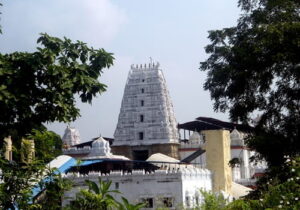
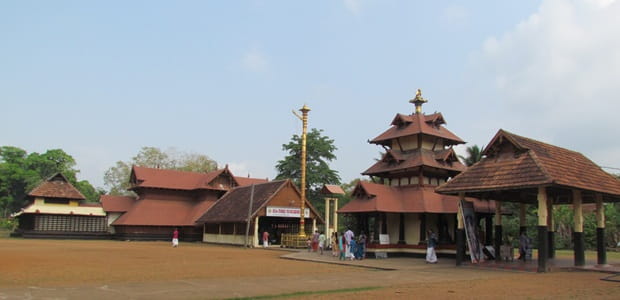
One of the oldest and largest temples in Kerala, Sree Vallabha Temple is dedicated to Sree Vallabha, a form of Lord Vishnu, and counts among the 108 Divya Desams — sacred Vaishnava shrines celebrated by the twelve Alvar saints. Built in classic Kerala-style temple architecture with fine carvings and murals, the temple’s most distinctive feature is its Garuda Sthambha — a 50-54 foot flagpost carved from a single block of granite, topped with a 3-foot idol of Garuda, Vishnu’s vehicle. Remarkably, this is the only temple in Kerala where Kathakali, the traditional dance-drama, is performed every single night as a ritual offering — a practice unbroken across generations. According to temple legend, Lord Vishnu appeared here as Sreevallabha to liberate the sage Khandakarnan, directed by sage Durvasa, after Khandakarnan bathed in the sacred Jalavanthy pond and exchanged his Shaiva earrings for Vaishnava ones to hear only Vishnu’s name. Shrines for Ganapathy and Ayyappan stand within the temple complex alongside the main deity.
2. Paliakkara Church (St. George Orthodox Church)
Dating to the Middle Ages, Paliakkara Church showcases medieval architecture alongside exquisite mural paintings on its eastern wall. The roof features unique sculptures of tigers and elephants on either side of large wooden logs. Located near Sri Vallabha Temple, the church represents a remarkable convergence of Hinduism and Christianity, particularly visible during the lively ten-day festival celebrated jointly in April and May — a powerful symbol of Thiruvalla’s interfaith harmony.
3. Parumala Church (St. Peter’s and St. Paul’s Orthodox Church)
Located approximately 10 km from Thiruvalla, Parumala Church is a major pilgrimage site for Syrian Christians, drawing numerous visitors annually. The Ormaperunnal (commemoration day) of Mar Gregorios Metropolitan — the declared saint of the Malankara Orthodox Church — is celebrated here on 1st and 2nd November, with vast tents constructed to accommodate up to 175,000 pilgrims during the festival period. Visitors can view the tomb of St. Gregorios, his death bed, the Bible, and other vestments associated with his life.
4. Kaviyoor Mahadeva Temple (Thrikkaviyoor)
Nestled atop a small hilltop, Kaviyoor Mahadeva Temple exhibits striking Pallava-style architecture and dates to the early years of the 10th century, with references in the Kaviyoor Shasanas of 950 CE documenting gifts offered to the temple, though the “Darusilpas” (wooden sculptures) seen around the temple are believed to belong to the 17th century. Dedicated to Lord Shiva, the temple houses a three-foot-tall Shivalinga carved from rock and enshrined in a square cave alongside Goddess Parvati, with statues of Ganapati, Dwarapalakas, and Maharshi also present. Hanuman Jayanti and the December-January temple festival draw significant devotee footfall from around the world.
5. Chakkulathukavu Temple
Located near Thiruvalla, this temple is dedicated to Goddess Durga and remains a popular site for both devotees and tourists, adding to the town’s collection of significant Hindu shrines beyond the more prominent Sree Vallabha Temple.
6. Niranam Church
Believed to have been built by Saint Thomas the Apostle in 52 CE, Niranam Church — nearly 2,000 years old — is considered one of the seven churches founded by St. Thomas in Kerala, representing one of the oldest continuous sites of Christian worship in India.
7. Mar Thoma Syrian Church Headquarters
Thiruvalla serves as the headquarters of the autonomous Malankara Marthoma Syrian Church, which maintains presence in several countries worldwide, making the town a globally significant administrative and spiritual centre for this distinctive branch of Saint Thomas Christianity.
8. Aranmula
A short distance from Thiruvalla, Aranmula is a charming temple town girdled by the holy Pamba River, home to a temple dedicated to Lord Krishna. The town is internationally famous for Aranmula Kannadi — unique metal mirrors made of bell metal, an art form found nowhere else in the world, believed to have originated from a divine visitation that inspired the discovery of this mysterious bronze blend capable of being waxed into a crystal-clear mirror surface. Aranmula is equally celebrated for its Vallamkali (snake boat race), held during the annual Onam festival, featuring thirty-foot-long boats each carrying four helmsmen, a hundred rowers, and twenty-five singers.
Temples and Churches of Thiruvalla
| Site | Tradition | Key Feature |
| Sree Vallabha Temple | Lord Vishnu (Vaishnavite) | One of 108 Divya Desams; nightly Kathakali ritual |
| Kaviyoor Mahadeva Temple | Lord Shiva | 10th-century Pallava architecture |
| Chakkulathukavu Temple | Goddess Durga | Popular devotional and tourist site |
| Paliakkara Church (St. George Orthodox) | Christian | Medieval murals; joint Hindu-Christian festival |
| Parumala Church | Christian (Orthodox) | Major pilgrimage; Mar Gregorios commemoration |
| Niranam Church | Christian | ~2,000 years old; one of seven St. Thomas churches |
| Mar Thoma Syrian Church HQ | Christian (Marthoma) | Global headquarters institution |
Weather in Thiruvalla
November to February — Best Time: Pleasant, cool conditions ranging 20°C-30°C make this period ideal for temple visits, church tours, and outdoor exploration of the town’s spiritual landmarks.
March to June — Summer: Hot conditions with temperatures often exceeding 35°C, combined with rising humidity, making outdoor sightseeing considerably less comfortable.
June to September — Monsoon: Heavy rainfall enhances the town’s natural greenery, marking the off-season for tourists, though the rain-soaked landscape along the Manimala and Pamba rivers takes on a particularly lush character.
Things to Do in Thiruvalla (2026)
Sree Vallabha Temple and Nightly Kathakali — Visit the temple and time your trip to witness the unique nightly Kathakali ritual performance, found nowhere else in Kerala.
Interfaith Heritage Walk — Combine Paliakkara Church and Sree Vallabha Temple, particularly meaningful during the joint April-May ten-day festival celebrating both traditions.
Pilgrimage to Parumala Church — Time a visit for 1st-2nd November to experience the Mar Gregorios commemoration, one of Kerala’s largest Christian pilgrimage gatherings.
Kaviyoor Mahadeva Temple Heritage Visit — Examine the 10th-century Pallava-style architecture and rock-cut Shivalinga, especially vibrant during Hanuman Jayanti or the December-January festival.
Day Trip to Aranmula — Explore the unique Aranmula Kannadi metal-mirror craft tradition and, if timing allows during Onam, witness the spectacular snake boat race.
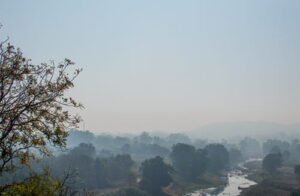
Riverside Walks Along the Manimala and Pamba — Enjoy the scenic, land-locked riverine landscape that defines Thiruvalla’s tranquil central Travancore setting.
How to Reach Thiruvalla
By Air: Cochin International Airport is the nearest, approximately 120 km away, with taxi or bus services for the onward journey.
By Train: Thiruvalla has its own well-connected railway station, linking the town to major cities across Kerala.
By Road: Thiruvalla is well connected by road, surrounded by Chengannur (5.48 km), Kottayam (13.96 km), and Pathanamthitta (17.33 km), with regular bus and taxi services available throughout the town and to nearby attractions.
Conclusion
Thiruvalla offers a genuinely rare model of interfaith coexistence within central Travancore — the 108 Divya Desam Sree Vallabha Temple performing nightly Kathakali rituals, a medieval Orthodox church celebrating a joint Hindu-Christian festival, and a nearly 2,000-year-old church tradition tracing back to Saint Thomas the Apostle himself. Combined with the town’s deep Vedic learning legacy preserved in Kerala’s first Malayalam manuscript, and the nearby Aranmula mirror-craft and boat-race traditions, Thiruvalla rewards travellers with a compact but profoundly significant spiritual and cultural day trip.
FAQs About Thiruvalla, Pathanamthitta District
Q1. Which district is Thiruvalla in?
A: Thiruvalla is located in Pathanamthitta district, Kerala, situated on the northern banks of the Manimala River, approximately 30-31 km from the district headquarters of Pathanamthitta.
Q2. What is unique about the Sree Vallabha Temple?
A: Sree Vallabha Temple, one of Kerala’s oldest and largest temples and one of the 108 Divya Desams, is the only temple in Kerala where Kathakali dance-drama is performed every single night as a ritual offering — an unbroken tradition. The temple also features a 50-54 foot flagpost carved from a single block of granite, topped with a 3-foot Garuda idol.
Q3. Why are the Thiruvalla copper plates historically significant?
A: The 12th-century Thiruvalla copper plates document the extensive social and economic life centred around the Sree Vallabha Temple, including details of its major Vedic learning school. Due to their length, antiquity, and linguistic content, scholars including Professor Elamkulam consider them to be the very first book written in Malayalam.
Q4. What makes Paliakkara Church significant for interfaith harmony?
A: Paliakkara Church (St. George Orthodox Church), located near Sree Vallabha Temple, represents a remarkable convergence of Hinduism and Christianity, particularly evident during a joint ten-day festival celebrated together by both communities in April and May — a powerful symbol of Thiruvalla’s longstanding religious coexistence.
Q5. When is the best time to visit Thiruvalla?
A: November to February offers the most pleasant weather, with temperatures ranging from 20°C to 30°C, ideal for visiting the town’s temples, churches, and exploring nearby Aranmula. This period coincides with several significant festivals, including the Parumala Church commemoration in early November.