Kodaikanal, Dindigul District, Tamil Nadu: Top Attractions, History, Temples, Weather & Things to Do
Kodaikanal — affectionately known as the “Princess of Hill Stations” and the “Gift of God” — sits at an elevation of 2,225 metres (7,300 feet) in the Palani Hills of the Western Ghats, within Tamil Nadu’s Dindigul district. Established in 1845 by British colonial administrators and American missionaries as a refuge from the searing heat and tropical diseases of the plains below, Kodaikanal’s earliest documented references actually predate this colonial founding, appearing as far back as Sangam literature — though the hill station’s modern era of development began only with British settlement in the mid-19th century.
The town’s centrepiece, the star-shaped Kodaikanal Lake, was formed in 1863 at the suggestion of Vere Levinge, then collector of Madurai, and remains one of India’s most photographed hill-station lakes, having featured in numerous Bollywood productions. Beyond the lake, Kodaikanal offers Coaker’s Walk — a mist-wrapped pedestrian path carved in 1872 along a steep ridge — alongside the historic Kurinji Andavar Temple named for the rare flower that blooms only once every 12 years, the prehistoric Dolmen Circle dating to 5,000 BCE, and Thalaiyar Falls, Tamil Nadu’s highest waterfall at 297 metres.
Kodaikanal, Dindigul District — Quick Overview
| Feature | Details |
| State | Tamil Nadu |
| District | Dindigul |
| Mountain Range | Palani Hills, Western Ghats |
| Elevation | 2,225 metres (7,300 feet) |
| Established | 1845 (as colonial summer retreat) |
| Designation | “Princess of Hill Stations”; “Gift of God” |
| Famous For | Kodaikanal Lake, Coaker’s Walk, Kurinji Andavar Temple, Pillar Rocks, Kurinji flower bloom |
| Key Wildlife Sanctuary | Kodaikanal Wildlife Sanctuary (notified 2013, ~700 sq km) |
| Distance from Madurai | ~115-120 km |
| Nearest Airport | Madurai International Airport (~115 km) |
| Nearest Major Railhead | Madurai Junction (~114 km) |
| Best Time to Visit | April to June (peak season); year-round cool climate |
History of Kodaikanal
1. Sangam-Era References and Early European Exploration
While Kodaikanal’s earliest references appear as far back as Sangam literature, its modern development began with British and American interest in the mid-19th century. In 1836, botanist Robert Wight visited the area and documented his observations in the 1837 Madras Journal of Literature and Science. In 1852, Major J. M. Partridge of the Bombay Army built a house and became the first European to formally settle in the region. By 1853, only six to seven houses existed when the then-Governor of the Madras Presidency, Charles Trevelyan, visited in 1860.
2. Founding as a Colonial Hill Retreat (1845)
Kodaikanal was officially established in 1845 to serve as a refuge from the high temperatures and tropical diseases prevalent in the plains during summer months. This founding reflects the broader pattern of British colonial hill-station development across India, designed specifically to provide European administrators and missionaries relief from the climate of the lowlands.
3. The Formation of Kodaikanal Lake (1863)
In 1862, American missionary David Coit Scudder arrived in the region. The following year, in 1863, acting on a suggestion by Vere Levinge, then collector of Madurai, an artificial lake was constructed — the star-shaped Kodaikanal Lake that remains the town’s defining landmark today. In 1867, Major J. M. Partridge imported Australian eucalyptus and wattle trees, introducing species that would come to define much of the region’s forested character.
4. Coaker’s Walk and the Mapping of Kodaikanal (1872)
In 1872, Lieutenant Coaker cut a path along the steep southeast-facing ridge overlooking the plains below, simultaneously preparing a descriptive map of the region. This pedestrian path, now known as Coaker’s Walk, became one of Kodaikanal’s most iconic attractions, named in his honour. By the latter half of the 19th century, Kodaikanal had become a regular summer retreat for American missionaries and European diplomats seeking refuge from the heat.
5. The Kodaikanal Solar Observatory (1899)
Built in 1899 at the highest point of the Kodai hills, approximately 7,700 feet above sea level, the Kodaikanal Solar Observatory was established following severe famine and drought in Tamil Nadu, driven by the need to study the sun’s impact on weather patterns and nature. The observatory quickly produced significant scientific results, most notably the discovery of the Evershed Effect in 1909 — a finding of genuine international astronomical significance that emerged from this remote hill-station research facility.
Top Attractions in Kodaikanal
1. Kodaikanal Lake (Kodai Lake)
The star-shaped, man-made Kodaikanal Lake formed in 1863 remains the town’s most iconic and frequently visited landmark, surrounded by resorts and hotels offering tranquil lakeside relaxation. The lake has become a favoured photographic spot and movie location, even appearing in Bollywood productions. Boating, cycling, and horse riding around the lake are among the most popular visitor activities, with note that boating itself has been restricted in certain periods to help preserve the natural freshwater ecosystem.
2. Coaker’s Walk
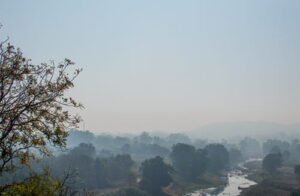
Constructed in 1872 by Lieutenant Coaker, this approximately one-kilometre paved pedestrian path runs along the edge of steep slopes on the southern side of Kodai, roughly one kilometre from the lake, offering panoramic views of the plains and lush landscapes below. On clear days, visitors can spot Dolphin’s Nose, the Pambar River valley, and even distant Madurai; on misty days, the area is immersed in atmospheric cloud cover that adds genuine mystical charm. Numerous telescopes installed along the walk allow visitors a closer view of the surroundings, and on the right combination of sun and mist, visitors can witness the rare optical phenomenon known as the “Brachem Spectre” — a shadow surrounded by a rainbow halo. The walk is open from sunrise to sunset, with April to June and September to October considered the best months for clearest visibility.
3. Kurinji Andavar Temple
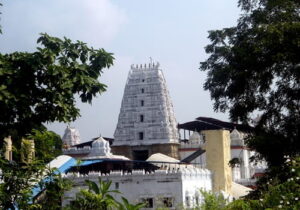
Located approximately 3-4 km from Kodaikanal Lake, the Kurinji Andavar Temple is dedicated to Lord Murugan and takes its name from the indigenous Kurinji flower, which blooms only once every 12 years in the surrounding hills — “Kurinji” meaning “hill region” and “Andavar” meaning “God” in Tamil, together signifying “God of the Hills.” Built in 1936 by a European woman who converted to Hinduism and took the name Leelavathi, the temple was constructed as a symbol of her deep devotion to Lord Murugan. The temple remains compact, clean, and well-maintained, known for its architectural beauty and serene ambiance.
4. Pillar Rocks
A beloved picnic spot featuring three vertically standing rock pillars that create a striking natural landmark, Pillar Rocks has become one of Kodaikanal’s most photographed natural formations, drawing visitors for the dramatic geological spectacle and the mini-garden setting that surrounds it.
5. Guna Caves (Devil’s Kitchen)
Situated at an altitude of 2,200 metres, Guna Caves were formerly known as “Devil’s Kitchen” before being renamed after the 1992 Tamil blockbuster film “Guna” was filmed at this location. The caves remain a place of mystery and wonder that attracts travellers in significant numbers, despite some visitor reports noting the site can become crowded and slippery during rainfall.
6. Bryant Park
Located on the eastern side of Kodaikanal Lake, Bryant Park spans approximately 20.5 acres and was established by H.D. Bryant, displaying a colourful, vibrant variety of botanical flora that makes it one of the town’s most visually appealing green spaces, ideal for a relaxed family stroll.
7. Thalaiyar Falls (Rat Tail Falls)
Located in the lush green slopes of the Palani Hill ranges in Devadanapatti, Thalaiyar Falls stands at 297 metres, making it the highest waterfall in Tamil Nadu and the sixth-highest waterfall in India. A view tower at Dum Dum Rock offers a beautiful vantage point over the falls and the Manjalar Dam, with a hiking route available near the waterfall for more adventurous visitors.
8. Berijam Lake
A natural freshwater lake situated within a forest conservation area approximately 22 km from Kodaikanal bus stand, Berijam Lake is a haven for nature enthusiasts and wildlife lovers, home to species including Bison, Indian Elephant, Nilgiri Langur, and Deer. A special permit from the Forest Department is required to visit this protected lake, and boating has been banned here to preserve its pristine freshwater ecosystem.
9. Dolmen Circle
Located approximately 18 km from Berijam Lake and 8 km from Kodaikanal Lake, the Dolmen Circle showcases prehistoric remains dating back to approximately 5,000 BCE, offering history enthusiasts a genuinely ancient archaeological counterpoint to Kodaikanal’s predominantly 19th-century colonial heritage.
10. Mannavanur Lake
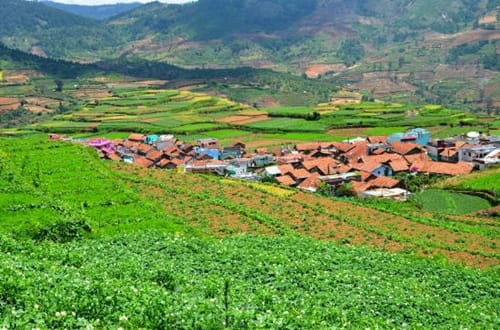
A serene farming village location approximately 35 km from Kodaikanal, Mannavanur features terrace farms cut into hill slopes, offering nature lovers the chance to experience rural farm life and spot rabbits, sheep, and other animals. Often termed “mini Switzerland” or “Kashmir in Tamil Nadu” for its scenic beauty, the lake area is known for its calm waters, open grasslands, eucalyptus trees, and activities including boating, coracle riding, ziplining, and horse riding — remaining notably unaffected by Kodaikanal’s main tourist rush due to its remoteness.
Temples and Religious Sites of Kodaikanal
| Temple | Location | Deity | Key Feature |
| Kuzhanthai Velappar Temple | Kodaikanal | Lord Murugan | Believed built ~3,000 years ago by the Cheras; idol of Dashabashanam (10 metal alloys) consecrated by Bhogar |
| Kurinji Andavar Temple | ~3-4 km from Kodaikanal Lake | Lord Murugan | Built 1936; named after rare 12-year Kurinji flower bloom |
| La Saleth Church | Near Coaker’s Walk | Virgin Mary | Catholic church in a serene hilltop setting |
Weather in Kodaikanal
Year-Round Cool Climate: Kodaikanal enjoys a monsoon-influenced subtropical highland climate (Cwb, bordering on Cfb under Köppen classification), with temperatures remaining cool throughout the year due to its high elevation — making it a genuinely flexible year-round destination unlike many plains-based hill stations.
April to June — Peak/Best Season: Widely cited as the best time to visit, when the weather is at its finest, combining pleasant temperatures with the chance to witness the Kurinji flower bloom (in years it occurs) and clear visibility at viewpoints like Coaker’s Walk.
September to October — Secondary Best Window: Also recommended for clear visibility and pleasant weather at Coaker’s Walk and other panoramic viewpoints.
Monsoon Season: Brings the symphony of full-flow waterfalls including Bear Shola Falls, though some attractions can become slippery and crowded during this period.
Things to Do in Kodaikanal (2026)
Sunrise or Sunset Walk at Coaker’s Walk — Time your visit for optimal visibility, watching for the rare Brachem Spectre phenomenon when sun and mist align correctly.
Boating and Lakeside Stroll at Kodaikanal Lake — Cycle, walk, or take a horse ride around the iconic star-shaped lake, particularly atmospheric during early morning or evening hours.
Visit Kurinji Andavar Temple — Experience this Murugan shrine’s serene architecture and learn the story of Leelavathi, the European convert who built it in 1936.
Trek to Guna Caves and Pillar Rocks — Combine these two dramatic natural rock formations into a focused half-day exploration, particularly rewarding on clear days.
Explore Berijam Lake (Permit Required) — Arrange Forest Department permission in advance for this pristine, wildlife-rich freshwater lake within the conservation area.
Day Trip to Mannavanur and Thalaiyar Falls — Combine the rural “mini Switzerland” farming village experience with a visit to Tamil Nadu’s highest waterfall.
How to Reach Kodaikanal
By Air: Madurai International Airport is the nearest, approximately 115 km away; Coimbatore International Airport offers an alternative at approximately 170 km.
By Train: The nearest railway stations are Palani (64 km) and Kodaikanal Road (80 km), with Madurai Junction (114 km) serving as the nearest major rail-head.
By Road: Kodaikanal Bus Stand sits within the town itself, with frequent Tamil Nadu State Transport Corporation (TNSTC) bus services from Madurai Aarappalayam, Batlagundu, Palani, Oddanchatram, Kodai Road, and Dindigul, via the two main routes through Palani and Batlagundu (SH-156).
Conclusion
Kodaikanal’s “Princess of Hill Stations” reputation rests on a genuinely complete combination of colonial-era engineering and natural drama — an 1863 star-shaped lake, an 1872 cliff-edge walking path offering rare optical phenomena, a 1936 temple built by a European convert’s devotion, and a 1899 solar observatory that produced internationally significant astronomical discoveries. Layer onto this Tamil Nadu’s highest waterfall, prehistoric dolmens dating to 5,000 BCE, and the rare 12-year Kurinji flower bloom, and Kodaikanal delivers one of South India’s most historically and naturally rich hill-station experiences.
FAQs About Kodaikanal
Q1. What is Kodaikanal famous for?
A: Kodaikanal is famous as the “Princess of Hill Stations,” known for its star-shaped Kodaikanal Lake (formed 1863), Coaker’s Walk (a misty cliff-edge pedestrian path built in 1872), the Kurinji Andavar Temple, Pillar Rocks, and the rare Kurinji flower that blooms once every 12 years in the surrounding hills.
Q2. When was Kodaikanal established and by whom?
A: Kodaikanal was officially established in 1845 by British colonial administrators and American missionaries as a refuge from the heat and tropical diseases of the plains. Earlier European exploration includes botanist Robert Wight’s 1836 visit and Major J.M. Partridge’s 1852 settlement, though references to the region appear as far back as Sangam-era Tamil literature.
Q3. What is the significance of Coaker’s Walk?
A: Coaker’s Walk, built in 1872 by Lieutenant Coaker, is a one-kilometre paved pedestrian path along a steep ridge offering panoramic views of the plains, Dolphin’s Nose, and the Pambar River valley. The location is notable for the rare “Brachem Spectre” optical phenomenon, where a viewer’s shadow appears surrounded by a rainbow halo under specific sun-and-mist conditions.
Q4. What is special about the Kurinji Andavar Temple?
A: Built in 1936 by a European woman who converted to Hinduism and took the name Leelavathi, the Kurinji Andavar Temple is dedicated to Lord Murugan and is named after the Kurinji flower, which blooms only once every 12 years in the surrounding Palani Hills — giving the temple its meaning as the “God of the Hills.”
Q5. When is the best time to visit Kodaikanal?
A: April to June is widely considered the best season, offering the most pleasant weather and optimal visibility at viewpoints. September to October is also recommended for clear conditions. Kodaikanal enjoys a cool, pleasant climate year-round due to its high elevation, making it a flexible destination, though monsoon months bring fuller waterfalls alongside increased crowds and slippery conditions at certain attractions.