Basti District, Uttar Pradesh: Top Attractions, History, Temples, Weather & Things to Do
There is a particular quiet that settles over the eastern Gangetic plains — the kind that comes not from emptiness but from deep historical saturation. Basti district carries that quiet. It was once the ashram of Rishi Vashistha. It sits in the same ancient landscape that sheltered the Kosala kingdom and borders the territory linked to the early life of Gautama Buddha. On most tourist maps of Uttar Pradesh, Basti barely registers — which is precisely what makes it worth knowing.
This is an honest, agricultural district at the edge of Awadhi and Bhojpuri country, where mythology, medieval history, and rural UP coexist without fanfare.
Basti District, Uttar Pradesh — Quick Overview
| Feature | Details |
| State | Uttar Pradesh |
| District Headquarters | Basti city |
| Administrative Division | Basti Division |
| Area | 2,688 sq km |
| Ancient Name | Vaishishthi — named after the ashram of Rishi Vashistha |
| Borders | Sant Kabir Nagar (E), Gonda (W), Siddharth Nagar (N), Ayodhya & Ambedkar Nagar (S) |
| Key Rivers | Kuwana, Ghaghara, Manorama |
| Famous For | Ramayana connections, Buddhist heritage, Makhauda Dham, Chando Tal |
| Nearest Airports | Ayodhya Airport (AYJ) / Gorakhpur Airport (GOP) |
| Railway Station | Basti Railway Station (BST) — Lucknow–Gorakhpur main line |
| Best Time to Visit | October to March |
| Summer Temperature | 25°C – 44°C |
| Winter Temperature | 5°C – 22°C |
| Languages Spoken | Hindi, Awadhi, Bhojpuri, Urdu |
| Key Tehsils | Basti Sadar, Harraiya, Rudhauli |
History of Basti District
Ancient Roots — Vaishishthi and the Kosala Kingdom
Basti’s recorded history begins not with a dynasty but with a sage. The district was anciently known as Vaishishthi, a name derived from the ashram of Rishi Vashistha — preceptor of the Raghu clan and the teacher of Lord Rama. The Ramayana describes Rama and his brother Lakshmana residing with Vashistha, and this connection places Basti squarely within the Kosala cultural and mythological landscape.
The district was also a significant centre of Buddhism in the ancient period. Lying close to Kapilavastu — associated with the early life of Gautama Buddha — and the holy city of Shravasti, Basti formed part of a Buddhist corridor that once connected several of the most important sites in early Indian religious geography. After the decline of Buddhism, British records note that the region was gradually absorbed into dense forests and became the home of the Bhar and Tharu communities.
Medieval Period and the 1857 Connection
During the medieval period, Basti fell within the Mughal empire’s eastern administrative territory. The town of Amorha Khas, 41 km from the district headquarters, served as the seat of the Surajbansi Rajput chieftain Raja Zalim Singh. The old wall of his mahal still stands, bearing visible marks of British musket fire — physical evidence of the fierce resistance the region mounted during the Uprising of 1857.
The site at Chhawani, 40 km from the headquarters, was the main shelter for Indian fighters during the 1857 mutiny. It is locally famous for the Pipal trees where approximately 250 freedom fighters were hanged by British forces in reprisal for the killing of General Fort. The site remains a place of solemn local memory.
Literary Legacy
Basti district is also the birthplace of Ram Chandra Shukla — one of the most revered critics and historians of Hindi literature, whose foundational work on Hindi literary history shaped how an entire generation understood the language’s canon.
Top Attractions in Basti District
Makhauda Dham
Of all the places in Basti district, Makhauda Dham carries the deepest mythological weight. Located in Harraiya tehsil on the banks of the Manorama river, approximately 57 km west of the district headquarters, this is the site where King Dasharatha is believed to have performed the Putrakameshti Yajna — the sacred fire ritual conducted on the advice of Rishi Vashistha with the help of Sage Rishyashringa, from which the divine kheer was obtained and distributed among his queens, leading to the birth of Lord Rama, Bharata, Lakshmana, and Shatrughna.
That single mythological connection makes Makhauda Dham one of the most significant Ramayana-linked sites in eastern Uttar Pradesh. An annual fair is held here on Chaitra Purnima, drawing large pilgrim gatherings from across the region. The site also holds an unusual communal significance — it is known as a place where Hindu and Muslim communities gather together annually, a tradition that speaks to the district’s syncretic social fabric.
Bhadeshwarnath Temple
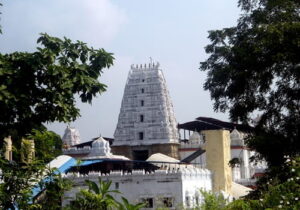
Located on the banks of the Kuwana river, approximately 5 to 6 km from the district headquarters, the Bhadeshwarnath Temple is one of Basti’s most revered Shaivite shrines. The Shivalinga enshrined here is referenced in the Shiva Mahapurana, and local tradition holds that the temple was established by Ravana himself — a great devotee of Lord Shiva — lending the site an antiquity that predates most of the district’s other landmarks.
A major fair is held during Shivratri every year, drawing crowds from across the district. The riverbank setting gives the temple a contemplative atmosphere that is at its best in the early morning hours, when the mist off the Kuwana and the sound of the flowing river create a genuinely meditative environment. The small village of Bhadeshwarnath, populated largely by Brahmin and Goswami families, surrounds the temple.
Chando Tal
About 8 km from the district headquarters on the road to Kalwari, Chando Tal is a natural lake measuring approximately 5 km long and 4 km wide. Local legend holds that this entire area was once a settlement called Chandra Nagar, which gradually submerged due to natural calamity to form the lake. Fishermen working the waters still occasionally retrieve metal ornaments and other ancient artefacts — details that lend the legend a tangible, if unverifiable, credibility.
In practical terms, Chando Tal is the district’s most accessible nature destination. It draws significant numbers of migratory birds during the winter months, making it a genuine draw for birdwatchers. The lake also supports a variety of fish species, which keeps the local fishing community active year-round. For visitors, it functions as a calm picnic spot — quiet, scenic, and entirely free of the infrastructure that tends to standardise nature tourism in more developed districts.
Rashtriya Van Chetna Kendra (Sant Ravi Das Van Vihar)
Located on the banks of the Kuwana river, about 1 km from the district headquarters toward Ganeshpur village, this government-established nature park is one of the few organised recreational spaces in the district. It offers boating on the Kuwana river and on an internal lake, a children’s park, and — importantly for a district with limited such resources — some structured greenery and shade.
The Kendra also provides information on regional flora, with particular emphasis on medicinal plants grown in the eastern Uttar Pradesh belt. It is busiest on weekends and public holidays, and its proximity to the town centre makes it an easy first stop before heading out to the district’s more remote attractions.
Chhawani — The 1857 Martyrs’ Site
Chhawani, 40 km from the district headquarters and historically known as Chhawani Bazar, carries the weight of one of eastern UP’s most painful colonial-era episodes. This was the main gathering point for Indian fighters during the 1857 uprising. Following the killing of a British officer, approximately 250 fighters were hanged by the British on the Pipal trees here — a reprisal that local communities have not forgotten.
The site is not developed as a tourist attraction in any formal sense. There are no museums or visitor facilities. What it offers instead is the particular stillness of a place where something important happened and has been quietly remembered ever since. A short visit pays genuine historical respects.
Amorha Khas
Situated 41 km from Basti city, Amorha Khas was historically known as Ambodha and served as the provincial seat of Raja Zalim Singh. The old boundary walls of his mahal still stand, with bullet marks from British-era military action still visible on the stonework. The Ramrekha Mandir here is a spiritually important temple that draws pilgrims who are undertaking the Ayodhya 84 Kosi Parikrama circuit. For those interested in colonial-era local history, Amorha Khas offers an underdocumented but genuinely evocative stop.
Nagar Bazar
About 8 km from the district headquarters, Nagar is a historically layered village built on an elevated mound. Once considered — and later conclusively rejected — as a possible birthplace of Gautama Buddha, the mound still yields archaeological interest. From the 14th century onward, it served as the headquarters of the Gautam Rajas, and the remnants of their castle are still visible. A temple called Rajkot has been constructed over the remains. Chando Tal lies immediately to the west of the village, making this a natural two-in-one stop.
Temples of Basti District
| Temple | Location | Deity | Key Feature |
| Bhadeshwarnath Temple | Kuwana riverbank, ~6 km from HQ | Lord Shiva | Shivalinga mentioned in Shiva Mahapurana; believed established by Ravana |
| Makhauda Dham Temple | Harraiya tehsil, Manorama riverbank | Lord Rama / Yajna site | Putrakameshti Yajna site from Ramayana; annual Chaitra Purnima fair |
| Barah Temple (Barah Chattar) | Barah village, ~15 km from HQ | Lord Shiva | Ancient Shaivite site; known as Viyagrapuri in mythological texts |
| Samay Mata Temple | Basti district | Goddess Samay Mata | Local countryside shrine; strong devotee following |
| Ramrekha Mandir | Amorha Khas | Lord Rama | Pilgrimage stop on Ayodhya 84 Kosi Parikrama route |
| Rajkot Temple | Nagar Bazar | — | Built over remains of 14th-century Gautam Raja castle |
| Shiva Temple — Tilakpur | Tilakpur village, Harraiya tehsil | Lord Shiva | Village known for deep spiritual atmosphere |
| Jama Masjid | Basti city | — | Main Islamic prayer site in the urban centre |
Weather in Basti District — Season by Season
Basti follows the classic eastern Uttar Pradesh climatic pattern — sharp seasonal transitions between a genuinely cold winter, a scorching summer, and a monsoon that arrives with force and transforms the Kuwana and Ghaghara riverbeds.
October to March — Best Time to Visit
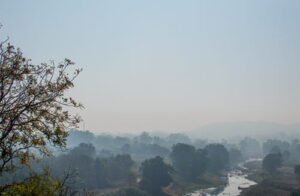
This is the most comfortable and recommended window. October and November bring post-monsoon clarity — the district is green, air quality is good, and temperatures are pleasant, ranging from about 15°C to 28°C. December and January are the coldest months; nights can drop to 5°C or below, and fog settles heavily over the Gangetic plains. February and March are arguably the sweetest months — days are warm without being hot, and the countryside looks its best before the summer heat arrives. Chando Tal’s migratory birds peak between November and February.
June to September — Monsoon
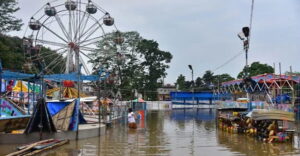
The southwest monsoon arrives in June and transforms the landscape. The Ghaghara and Kuwana rivers rise significantly, and low-lying areas around Chando Tal and the riverbanks can flood. The district turns intensely green. While the heat relents, travel within the district becomes more difficult on unpaved roads. The Makhauda Dham area is particularly atmospheric during monsoon but requires careful navigation.
April to May — Summer
The harshest season. Temperatures climb rapidly after March, regularly reaching 42°C to 44°C in May. The loo — the hot, dry wind of the Gangetic plains — makes outdoor activity particularly uncomfortable between 11 AM and 5 PM. If visiting in summer, confine outdoor exploration to early morning temple visits.
Things to Do in Basti District (2026)
Visit Makhauda Dham — Plan this as a half-day trip from Basti city, ideally in the morning. The Manorama riverbank setting is peaceful and the mythological significance is profound for anyone with even a passing connection to the Ramayana tradition. Time your visit around Chaitra Purnima for the annual fair.
Walk the Bhadeshwarnath Riverbank — Arrive at the Kuwana riverbank temple early in the morning. The combination of the Shiva Mahapurana-referenced Shivalinga, the flowing river, and the minimal crowd creates an atmosphere that the district’s more accessible sights cannot replicate.
Birdwatch at Chando Tal — Between November and February, the lake draws good numbers of migratory waterfowl. Carry binoculars. The lake is also a clean, shaded picnic spot for families.
Explore Amorha Khas and the 1857 History — The bullet-marked walls of Raja Zalim Singh’s Mahal are one of the most understated colonial-era heritage sites in eastern UP. Combine this with the Ramrekha Mandir and the Chhawani martyrs’ site for a half-day heritage circuit.
River Boating at Van Vihar — The Rashtriya Van Chetna Kendra offers boating on the Kuwana river, which is modest but genuinely pleasant, particularly on winter mornings.
Day Trip to Kapilvastu — The site associated with the early life of Gautama Buddha lies close to the Basti district boundary in the Siddharth Nagar direction. For visitors with a Buddhist heritage interest, this is the most significant nearby excursion.
Attend a Local Fair — The district’s rural fair culture is vivid. Shivratri at Bhadeshwarnath and Chaitra Purnima at Makhauda Dham are both worth planning around if your travel dates align.
How to Reach Basti District
By Air: The nearest airports are Maryada Purushottam Shri Ram International Airport in Ayodhya (approximately 60 km away) and Gorakhpur Airport (approximately 100 km away). Both are connected to major Indian cities.
By Train: Basti Railway Station (BST) sits on the main Lucknow–Gorakhpur railway line. There is a daily Intercity Express connecting Gorakhpur, Basti, Ayodhya, Gonda, and Lucknow. Multiple express and mail trains on the eastern main line also halt here.
By Road: National Highway 2A (part of the East-West Corridor) passes through the district. Regular state and private bus services connect Basti to Lucknow (approximately 190 km), Gorakhpur (approximately 100 km), and Ayodhya (approximately 58 km).
Practical Tips for Visitors (2026)
- Carry cash for all rural site visits — ATMs exist in Basti city but are sparse near Makhauda, Chhawani, and the riverbank temples.
- The Bhadeshwarnath Temple road requires a turn off the main route; confirm directions locally before heading out.
- Chando Tal has no organised visitor infrastructure — carry food, water, and any birdwatching equipment you need.
- Winter fog in December and January can delay road travel significantly on the NH. Plan early departures.
- The best local food in Basti city is in the Pakke Bazar area — traditional eastern UP thalis and street snacks.
Conclusion
Basti is not a district that packages itself for tourism. There is no visitor centre, no signposted heritage trail, and very little between a traveller and the raw experience of a deeply historical Gangetic plain district going about its agricultural, devotional life. That is both its limitation and its appeal.
The Ramayana connections at Makhauda Dham are genuine and layered. The Bhadeshwarnath Temple on the Kuwana riverbank is the kind of Shiva temple that rewards quiet visitors more than loud ones. Chando Tal in winter, with migratory birds on the water and farmland on every side, has a beauty that no promotional brochure has ever needed to advertise. For a traveller who arrives without expectations and leaves with something unexpected, Basti tends to deliver.
FAQs About Basti District, Uttar Pradesh
Q: What is Basti district famous for?
A: Basti is famous for its deep Ramayana connections — particularly Makhauda Dham, where King Dasharatha is believed to have performed the Putrakameshti Yajna. It is also historically significant for its proximity to Kapilavastu (associated with Gautama Buddha) and for its role in the 1857 uprising at Chhawani.
Q: How far is Basti from Lucknow?
A: Basti is approximately 190 km from Lucknow by road. The train journey on the Lucknow–Gorakhpur main line takes roughly 3 to 4 hours depending on the service.
Q: What is the best time to visit Basti district?
A: October to March is the ideal window. The post-monsoon months bring pleasant temperatures and clear skies. December–January can be cold with heavy fog; February–March offers the best overall combination of comfortable weather and scenic greenery.
Q: Is Basti worth visiting for tourists?
A: Basti suits travellers interested in Ramayana heritage, rural Uttar Pradesh culture, Shaivite temple traditions, and lesser-known Buddhist circuit destinations. It is not a mainstream tourist destination, but that is exactly what makes it authentic and unhurried.
Q: Which river flows through Basti district?
A: The Kuwana river flows through and near Basti city, passing the Bhadeshwarnath Temple and the Van Vihar. The Ghaghara (Saryu) river forms the southern boundary of the district, separating it from Ayodhya and Ambedkar Nagar.