Is Mushroom Farming Business Profitable in India?
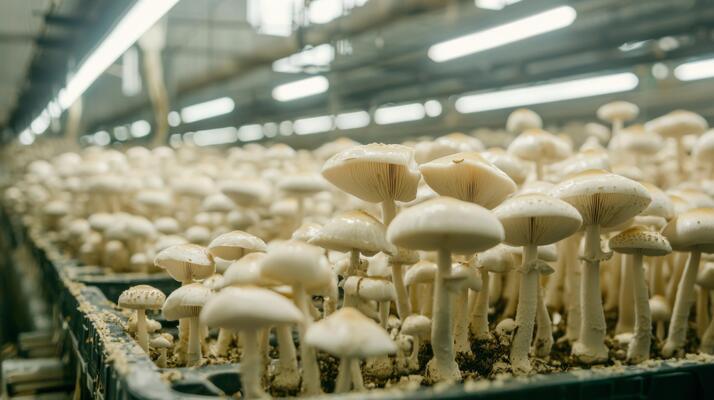
Picture a single 10×10 foot room in someone’s backyard, no tractor, no acres of land, no massive capital outlay, quietly generating ₹30,000 to ₹80,000 a month once it’s running smoothly. This isn’t a hypothetical, thousands of Indian farmers and urban entrepreneurs are genuinely doing exactly this with mushroom farming, one of the rare agricultural businesses that fits inside a spare room rather than requiring farmland most people simply don’t have access to.
Here’s why this genuinely matters if you’re weighing this business specifically: India’s mushroom market is growing 15% to 20% annually with a genuine supply gap exceeding 3 lakh tonnes, meaning demand consistently outpaces domestic production. Combined with return on investment reaching 40% to 60%, genuinely among the highest in Indian agriculture, and breakeven periods as short as 2 to 6 months, mushroom farming offers a genuinely rare combination of low capital requirement and fast payback that few other agri-businesses can match.
What Genuine Profit Margins Actually Look Like
Mushroom farming in India genuinely delivers net profit margins between 30% and 45% after operational costs, with small-scale growers earning ₹20,000 to ₹65,000 monthly and breakeven typically achieved within 2 to 6 months. On a per-cycle basis, a small 500-bag oyster mushroom setup genuinely nets ₹3,000 to ₹5,000 profit per 45-day cycle, while a medium operation running 2,000 bags across six or more cycles annually genuinely reaches ₹30,000 to ₹80,000 monthly.
This return profile genuinely compares favourably against almost every alternative in agriculture. Traditional crop farming typically takes 12 to 18 months to show meaningful ROI, and even a restaurant business commonly needs 18 to 24 months to break even, while mushroom farming’s short growth cycle, harvestable in just 3 to 4 weeks for oyster varieties, genuinely delivers one of the fastest payback periods available to Indian entrepreneurs regardless of business category.
Choosing Between Oyster, Button, and Milky Mushrooms
This decision genuinely shapes both your investment requirement and your realistic margin, and it’s worth understanding the trade-offs clearly before committing. Button mushrooms command the largest overall market and strongest brand recognition among Indian consumers, but they genuinely require air-conditioned growing rooms to maintain the cooler temperatures they need, pushing your investment considerably higher than other varieties.
Oyster mushrooms genuinely offer the best starting point for most beginners, requiring no cooling infrastructure whatsoever while often delivering higher margin per kilogram than button mushrooms, precisely because their lower input costs offset their somewhat lower per-kilogram selling price. This is genuinely why so many small, home-based oyster mushroom growers quietly out-earn larger, more capital-intensive button mushroom setups on a per-rupee-invested basis, their costs simply run lower across the board. Milky mushrooms genuinely suit hot climates specifically, making them a sensible choice for growers in South or Central India where maintaining cooler conditions for other varieties would add unnecessary expense.
Why Retail Versus Wholesale Genuinely Changes Everything
This single decision genuinely matters more than almost any other factor in your entire business plan, and it’s worth understanding with real numbers. Consider a grower harvesting 200 kilograms of oyster mushrooms monthly from a single room. Selling this retail at a reasonable per-kilogram price genuinely delivers considerably stronger profit than selling the identical harvest wholesale, where dropping to bulk pricing can reduce your profit by nearly 45% for exactly the same production effort.
This gap genuinely underscores why building direct relationships with local buyers, restaurants, retail stores, or even direct-to-consumer sales through weekly farmers’ markets, matters enormously more than simply producing mushrooms and accepting whatever wholesale price a middleman offers. Planning your actual sales channel before you start growing, rather than figuring it out after your first harvest is already sitting unsold, genuinely protects your margin from day one.
Understanding Your Realistic Starting Investment
A genuinely accessible entry point exists here that few other agricultural businesses can match. Beginners can start with as little as ₹8,000 to ₹25,000 for a small setup of 200 to 500 bags, covering spawn, substrate, growing bags, and basic equipment, and this cost drops considerably further if you already have a spare room or shed to use rather than needing dedicated construction. Larger commercial units running 2,000 or more bags typically require ₹50,000 to ₹2 lakh, still genuinely modest compared to most manufacturing or even other agricultural ventures.
Why Value-Added Products Genuinely Multiply Your Margins
This is genuinely where experienced mushroom farmers separate themselves from those selling purely fresh produce. Dried mushrooms, mushroom powder, and pickled products genuinely command margins of 300% to 500%, considerably higher than fresh mushroom sales alone, while also solving the genuine challenge of fresh mushrooms’ short shelf life. This value addition also genuinely opens export market access that fresh, perishable produce simply cannot reach given shipping and storage constraints.
For growers who’ve validated consistent local demand at small scale, reinvesting into basic drying or processing equipment genuinely represents one of the smartest expansion moves available, transforming what would otherwise be unsold or spoiled harvest into considerably higher-margin, longer-shelf-life products.
Getting Your Compliance and Support Access Right
This business genuinely requires straightforward but non-negotiable compliance. An FSSAI licence is mandatory for selling any food product, costing just ₹100 for basic registration, alongside a local trade licence, with GST registration only becoming necessary once turnover crosses ₹40 lakh. For growers planning eventual export ambitions, APEDA registration becomes genuinely relevant too.
On the funding side, PMEGP offers a genuinely valuable 25% to 35% subsidy on project costs up to ₹25 lakh, considerably reducing your personal capital exposure, alongside various state-specific horticulture and agriculture board schemes worth checking in your specific region before assuming you need to fund everything independently.
Frequently Asked Questions
Q1. Which mushroom variety is genuinely the best choice for a first-time grower in India?
Oyster mushrooms genuinely suit beginners best, since they require no cooling infrastructure, have lower input costs, and often deliver stronger per-kilogram margins than button mushrooms, which need air-conditioned rooms and considerably higher upfront investment.
Q2. How much money do I genuinely need to start the smallest possible mushroom farming operation?
A basic setup can genuinely start with ₹8,000 to ₹25,000 for 200 to 500 bags, covering spawn, substrate, and basic equipment, with costs dropping further if you already have a spare room or shed rather than needing dedicated construction.
Q3. Why does selling wholesale genuinely reduce my profit so much compared to retail sales?
Wholesale pricing typically runs considerably lower than retail per-kilogram rates, and for the exact same production effort, this difference can reduce your overall profit by nearly 45%, making building direct retail or B2B relationships with restaurants and local buyers genuinely worth the extra effort compared to relying purely on middlemen.
Q4. How quickly can I genuinely expect to break even on a small mushroom farming setup?
Most small-scale operations genuinely reach breakeven within 2 to 6 months, considerably faster than traditional crop farming’s typical 12 to 18 month timeline, making mushroom farming one of the fastest payback agricultural businesses available to Indian entrepreneurs.