Lakshmipur District, Bangladesh: Tourist Places, History, Meghna Riverbank & Travel Guide
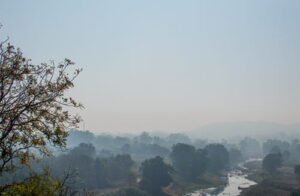
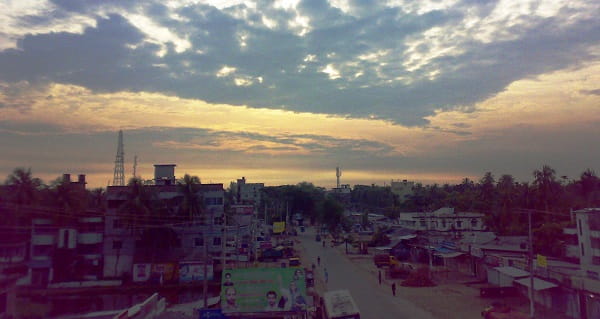
Lakshmipur does not appear on most travellers’ lists of Bangladesh destinations. Cox’s Bazar gets the beaches, Sylhet gets the tea gardens, Dhaka absorbs most of the cultural tourism, and Sundarbans claims the wildlife seekers. Lakshmipur, in the southeastern corner of the country on the eastern bank of the mighty Meghna River, is simply missed — a district of fertile river-formed land, historic zamindar estates, ancient mosques, riverside ghats, and rural Bengali life at its most unhurried.
That obscurity is partly geographical. Much of Lakshmipur’s land did not exist until the Meghna deposited it here over centuries. The district sits on alluvial char land — some of the youngest agricultural territory in Bangladesh — and its history reflects both the fragility and the abundance of that geography. Ships from Asia and Africa once anchored at its cargo port. Salt was produced here in industrial quantities during the colonial era. Mahatma Gandhi stayed here during the Swadeshi Movement. Kazi Nazrul Islam was welcomed with a silver cup. During the Liberation War of 1971, seventeen separate battles were fought between freedom fighters and the Pakistani occupation army within district boundaries.
This is a district with genuine depth. It just requires a visitor willing to look for it.
Lakshmipur District, Bangladesh — Quick Overview
| Feature | Details |
| Country | Bangladesh |
| Division | Chittagong Division |
| District Headquarters | Lakshmipur town |
| District Formed | 28 February 1984 (previously part of Noakhali district) |
| Area | 1,440 sq km |
| Borders | Chandpur (N), Bhola & Noakhali (S), Noakhali (E), Meghna River / Barisal & Bhola (W) |
| Famous For | Dalal Bazar Zamindar Bari, Char Alexander Meghna embankment, historic mosques, Hilsa fish, coconut & betel nut |
| Key Rivers | Meghna, Dakatia, Katakhali, Rahmatkhali |
| Nearest Airport | Shah Amanat International Airport, Chittagong (~100 km) |
| Transport | Road (buses from Dhaka ~150 km); river ferry via Chandpur |
| Best Time to Visit | October to March |
| Summer Temperature | 28°C – 38°C |
| Winter Temperature | 10°C – 22°C |
| Languages Spoken | Bengali (primary) |
| Upazilas | Lakshmipur Sadar, Raipur, Ramganj, Ramgati, Kamalnagar |
History of Lakshmipur District
Ancient and Medieval Origins — The Bhulua Kingdom
The land that constitutes modern Lakshmipur district did not always exist in its current form. Much of its territory was once under the waters of the Bay of Bengal — formed over centuries by Meghna River deposits building up char land. The Scottish explorer Dr. Francis Buchanan, who visited in 1798, noted the area’s soft sandy soil and sparsely populated villages amidst forests, with many areas still in early stages of natural formation.
The district area was part of the Kingdom of Bhulua at the beginning of the 13th century. Historical accounts, including those of Ibn Battuta, mention the once-thriving port town of Islamabad — which was eventually swallowed by the Meghna River, along with other early settlements. In the 16th century, Shah Sujah, son of Mughal Emperor Shah Jahan, passed through the region while escaping to Arakan.
Colonial Period — Salt, Trade, and Resistance
During the Mughal and East India Company period, Lakshmipur served as a military outpost. From the 16th to the 19th century, the district produced enormous quantities of salt for export — salt houses (kuthis) at Sahapur, Jaksin, and Sahebganj controlled the commerce. Asian and African cargo ships once anchored at Lakshmipur’s river port, connecting this apparently remote southeastern district to international trade networks.
The colonial period brought significant resistance movements. The district’s inhabitants played active roles in the Indigo Resistance Movement, the Sannyasi Uprising, the Swadeshi Movement, and the Debt Arbitration Movement. During the Swadeshi Movement, Mahatma Gandhi travelled through Lakshmipur and stayed at Kafilatali Akhra and at Sreerampur Rajbari in Ramganj — a connection locals still remember. The national poet Kazi Nazrul Islam visited Lakshmipur town in June 1926; he was presented a silver plate and silver cup on behalf of the residents.
The Lakshmipur Munsef Court was established in 1870. Lakshmipur Thana was formed in 1860 under Noakhali district, transformed into a subdivision in 1979, and elevated to a full district on 28 February 1984.
Liberation War of 1971
Lakshmipur bore a heavy cost during Bangladesh’s Liberation War. Seventeen separate battles were fought between the Mukti Bahini freedom fighters and the Pakistani occupation army within the district. Monuments and mass graves remaining from this period stand as testaments to the resistance and sacrifice of the district’s people.
Top Attractions in Lakshmipur District
Dalal Bazar Zamindar Bari
The most historically significant structure in Lakshmipur district, the Dalal Bazar Zamindar Bari was the residence of Zamindar Lakshmi Narayan Baishnab — the man after whom, according to one prominent theory, the district itself was named. The house sits on 36 acres of land in Dalal Bazar Union of Lakshmipur Sadar Upazila, about 5 km from the district headquarters on the Dhaka-Raipur Road.
Built in 1765 after Goura Kishore — a descendant of Lakshmi Narayan who had cultivated ties with the East India Company — was formally recognised as zamindar, the property is approximately 260 years old. The zamindars fled during the communal riots of 1946, abandoning the estate. The Department of Archaeology of Bangladesh has since designated it an archaeological site (formally named on 4 January 2018) and has taken steps to establish the first Noakhali Archaeological Museum within its walls. The three-century-old structure, with its large grounds and colonial-era architecture, draws visitors from across the country.
Char Alexander — Meghna Embankment and Beach
Located in Union No. 4 of Ramgati Upazila, Char Alexander is one of Lakshmipur’s most popular natural attractions. The site takes its name from Alexander, a British-era revenue collector who had the original embankment constructed. The structure built around the Meghna River at this point is described by visitors as genuinely breathtaking — green fields on one side, waves of the Meghna crashing against the embankment on the other, the immensity of the river creating a horizon that feels oceanic.
Hundreds of tourists visit daily, particularly on weekends, to enjoy the river view, take boat rides on the Meghna, and sample buffalo milk yogurt sold locally — one of those small, specific pleasures that define a place. Neighbouring spots Suvarna Char and Nuru Patwari’s Char Alexander Ghat are worth adding to the same visit. Sunset from Char Alexander is particularly celebrated.
Altaf Master’s Ghat — Raipur Upazila
Situated in the remote North Charbanshi Union of Raipur Upazila on the banks of the Meghna, Altaf Master’s Ghat has become a destination for nature lovers drawn to the river’s sound, tidal movement, boat traffic, and birdlife. The ghat’s setting in a picturesque rural environment — away from the main town circuit — gives it a quality of genuine discovery. The best visiting season is winter, when the river is calmer and the light on the water is clearer.
As-Salam Jame Masjid — Ramgati
One of Lakshmipur’s most architecturally distinctive structures, the As-Salam Jame Masjid in Sheikh’s Killa area of Charporagachha union in Ramgati Upazila was built under the initiative of Rahima Mumtaz and Saif Salahuddin Trust. What makes it exceptional is its natural lighting system — the mosque is designed to be lit entirely by natural light without electric lamps. Worshippers experience the touch of monsoon rain in the rainy season and the chill of winter mist, but are protected from direct sun heat and rain inside the prayer hall. Moonlight on full moon nights creates a particularly striking atmosphere inside. An education complex surrounds the mosque, making it a community landmark as well as a religious one.
Tita Khan Jame Mosque
The Tita Khan Jame Mosque is among Lakshmipur’s oldest surviving Islamic heritage structures. Built in the Mughal architectural tradition, it represents the district’s deep history of Islamic scholarship and trade. Along with the Mita Khan Mosque, Majupur Matka Mosque, Dayem Shah Mosque, and several other historic mosques across the five upazilas, Tita Khan forms part of a heritage circuit of medieval and colonial-era mosques that gives the district its distinctive architectural character.
Sreerampur Rajbari — Ramganj
The Sreerampur Rajbari in Ramganj upazila is a historic royal palace where both Mahatma Gandhi and Kazi Nazrul Islam stayed during their visits to Lakshmipur. The palace’s historical connections to two of the subcontinent’s most celebrated figures give it a significance beyond its architectural merit. The Rajbari and its surroundings reflect the zamindar culture of pre-partition Bengal in its regional form.
Khoa-Sagor Dighi and Heritage Water Bodies
The Khoa-Sagor Dighi (large pond), Oidara Dighi, and Kamala Sundari Dighi are ancient water bodies across the district that have served communities for centuries. In Bangladesh’s heritage landscape, large dighis associated with zamindar estates often hold significant historical and ecological value. The Dalal Bazar Math complex adjacent to the main Zamindar Bari includes its own pond within the heritage zone.
Shyampur Dayra Sharif and Dargahs
The Shyampur Dayra Sharif, Kachua Dargah, Harishchar Dargah, Kanchanpur Dargah, and the sanctuary of Hafez Shah Miran in Ramgonj are among the district’s significant Islamic spiritual sites. The Dayra Sharif at Shyampur is associated with Gholam Sarwar Husseini and draws pilgrims regularly. The annual Urs observances at multiple dargahs across the district are important community events attended by thousands.
Sahapur Neel-Kuthi — Colonial Indigo Heritage
The Sahapur Neel-Kuthi (indigo warehouse) is a surviving remnant of the colonial indigo trade that shaped this district’s resistance history. Indigo cultivation was forcibly enforced here under the British, and the resistance to this exploitation — the Indigo Resistance Movement — was one of the significant anti-colonial struggles in which Lakshmipur’s people participated. The kuthi building itself stands as an artifact of that contested history.
Religious and Heritage Sites of Lakshmipur District
| Site | Location | Tradition | Key Feature |
| Tita Khan Jame Mosque | Lakshmipur Sadar | Islamic (Mughal era) | One of district’s oldest mosques; Mughal architectural tradition |
| As-Salam Jame Masjid | Charporagachha, Ramgati | Islamic (contemporary) | Natural light architecture; no electric lighting; monsoon and mist experience inside |
| Shyampur Dayra Sharif | Shyampur | Islamic (Sufi) | Active pilgrimage dargah; annual Urs |
| Srigovinda Mahaprabhu Jeu Akhra | Near Dalal Bazar | Vaishnava Hindu | Hindu place of worship within predominantly Muslim district |
| Dalal Bazar Math | Dalal Bazar | Hindu | Temple complex within the Zamindar Bari heritage zone |
| Kachua Dargah | Kachua | Islamic Sufi | Pilgrimage dargah drawing regional devotees |
| Rani Bhabani Kamada Math | Ramgati | Hindu | Math (monastery) named after Rani Bhabani |
| Jinn’s Mosque | Kerwa village, Raipur | Islamic | Known locally for unique legends; heritage mosque |
| Hafez Shah Miran Shrine | Ramgonj | Islamic Sufi | Annual Urash-Mahfil on 11th Agrahaion; thousands attend |
Economy, Culture and Local Identity
Lakshmipur’s economy is primarily agricultural, with rice, jute, and vegetables as the main crops. The district is particularly famous for its coconut and betel nut production — the landscape of coconut groves is one of the most visually distinctive features of the district as you travel through it. Hilsa fish from the Meghna is the district’s most celebrated food product, central to the economy of Ramgati and Kamalnagar upazilas bordering the river and the Bay of Bengal. Overseas remittances from workers in the Middle East are a significant economic factor.
The folk culture traditions of Lakshmipur are rich and varied: rhymes, riddles, proverbs, folk songs, Pala songs, Murshid songs, and Sari songs all form part of the living cultural heritage. Pottery-making villages in Lakshmipur Sadar, Ramgonj, Raipur, and Ramgati maintain a handicraft tradition that rewards visitors who seek out the artisans directly.
Weather in Lakshmipur District — Season by Season
Lakshmipur has a tropical monsoon climate influenced by its proximity to the Bay of Bengal and the Meghna estuary. Humidity is high year-round, rainfall is heavy during monsoon, and winters bring the most pleasant conditions.
October to March — Best Time to Visit
October to March is the clear recommendation. November through February brings cool, dry weather — temperatures between 10°C and 22°C — ideal for exploring the zamindar estate, riverside ghats, and village pottery workshops. The Meghna is calmer in winter, making river excursions to Char Alexander more comfortable and scenic. December and January offer the clearest skies and the most pleasant outdoor conditions.
June to September — Monsoon
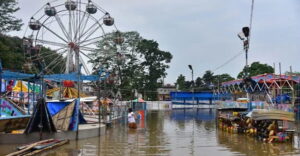
Lakshmipur receives heavy monsoon rainfall from June through September. The Meghna swells significantly and the char areas can flood extensively. The district’s agricultural landscapes become intensely green. River travel becomes more dramatic but also more hazardous. Tourism activity drops significantly during this period.
April to May — Summer
Hot and increasingly humid, with temperatures reaching 35°C–38°C. The Meghna’s heat-shimmer on the water creates its own visual drama but outdoor exploration is tiring. Manageable with early morning starts.
Things to Do in Lakshmipur District (2026)
Visit the Dalal Bazar Zamindar Bari — The closest the district has to a formal heritage attraction. The 260-year-old structure on 36 acres tells the story of the zamindar who named the district. Check current access arrangements with the Department of Archaeology regarding museum progress.
Watch the Sunset at Char Alexander — Take an auto-rickshaw or CNG from Ramgati to the Meghna embankment. Arrive by 4 PM, walk the embankment, try the local buffalo yogurt, and stay for the sunset over the river. This is Lakshmipur’s single most celebrated visitor experience.
Explore Altaf Master’s Ghat — Plan a half-day in Raipur Upazila for the riverside setting, boat activity on the Meghna, and the genuinely rural atmosphere of North Charbanshi Union.
Visit the As-Salam Jame Masjid — The naturally lit mosque in Ramgati is a genuine architectural curiosity. Visit during prayer times (entry for men only for prayers, general viewing outside those times) to observe the light quality inside.
Walk Through Village Pottery Workshops — The pottery villages in Ramgonj and Raipur are authentic working environments. Ask locally for directions to the main pottery communities and allow artisans to continue working while you watch — the wheel-thrown vessels and terracotta wares are genuinely skilled work.
Eat Fresh Hilsa by the Meghna — The best Hilsa in Bangladesh is caught in these waters. River-side eating spots near Char Jalia Fish Ghat (Saju Molla Fish Ghat) serve freshly caught fish. The experience of eating Hilsa literally beside the river where it was caught is one of those food-travel moments that justifies the journey.
Explore the Dargah Circuit — The Shyampur Dayra Sharif, Kachua Dargah, and Hafez Shah Miran shrine in Ramgonj form a Sufi pilgrimage circuit across the district. Each dargah has its own devotional atmosphere and annual Urs calendar — check dates locally.
How to Reach Lakshmipur District
By Air: The nearest major airport is Shah Amanat International Airport in Chittagong, approximately 100 km away. From Chittagong, buses and private vehicles reach Lakshmipur via Feni. Dhaka’s Hazrat Shahjalal International Airport is approximately 150 km away with good road connections.
By Road: Regular bus services from Dhaka’s Syedabad Bus Terminal operate to Lakshmipur (Dhaka Express, Econo Service, Grameen Service, Janani Paribahan, Royal Coach, and Miami Air Condition). Buses also depart from Mirpur, Mohammadpur, and Uttara at night. The journey takes approximately 3 to 4 hours.
By River: Ferries operate from Dhaka’s Sadarghat launch terminal to Chandpur, from where buses or vehicles connect directly to Lakshmipur.
Practical Tips for Visitors (2026)
- Carry cash throughout — digital payment infrastructure is limited outside Lakshmipur town.
- Local transport within the district is by rickshaw, auto-rickshaw, and CNG — all affordable and widely available.
- The Meghna can be rough during and just after monsoon; check conditions before boat trips.
- Dress conservatively when visiting mosques and dargahs.
- For pottery village visits, a local guide arranged through your hotel in town is the most efficient way to navigate to the right communities.
- Best Hilsa season is July–October, but some fresh catch is available year-round.
Conclusion
Lakshmipur is Bangladesh at its most unmediated. No tourist circuits have been drawn, no heritage trails marked, no visitor centres established. What exists instead is three centuries of zamindar history in a crumbling but magnificent estate, an Meghna riverbank of extraordinary scale and beauty, mosques that embody centuries of Islamic architecture across five upazila, a living pottery tradition, and Hilsa fish served by the river that produces it. The district’s claim to obscurity is accurate — and for the right traveller, that is precisely the point.
FAQs About Lakshmipur District, Bangladesh
Q: What is Lakshmipur district famous for?
A: Lakshmipur is famous for the Dalal Bazar Zamindar Bari (a 260-year-old heritage estate being developed as an archaeological museum), the Char Alexander Meghna embankment and river views, Hilsa fish from the Meghna, coconut and betel nut production, historic mosques and Sufi dargahs, and its role in the 1971 Bangladesh Liberation War.
Q: How far is Lakshmipur from Dhaka?
A: Lakshmipur is approximately 150 km from Dhaka by road. Bus services from Syedabad Terminal take 3 to 4 hours. River ferry via Chandpur is an alternative route.
Q: When was Lakshmipur established as a district?
A: Lakshmipur was established as a full district on 28 February 1984, having previously been a subdivision of Noakhali district. A police station (thana) had existed here since 1860.
Q: What is the best time to visit Lakshmipur?
A: October to March is the best period. November through February offers the most comfortable temperatures and the clearest conditions for exploring the riverbanks and heritage sites.
Q: Did famous personalities visit Lakshmipur?
A: Yes. Mahatma Gandhi visited during the Swadeshi Movement and stayed at Kafilatali Akhra and Sreerampur Rajbari in Ramganj. National poet Kazi Nazrul Islam visited Lakshmipur town in June 1926 and was presented with a silver plate and silver cup by the residents.