Thrissur District, Kerala: Top Attractions, History, Temples, Weather & Things to Do
Thrissur district sits at the geographic and cultural heart of Kerala, 80 km north of Kochi, known universally as the “Cultural Capital of Kerala” for its unmatched role in preserving and promoting the state’s traditional arts, festivals, and Hindu scholarship. The city is built around a unique concentric design — Vadakkumnathan Temple at the centre of the nine-acre Thekkinkadu Maidan, circled by Swaraj Round — a layout that makes Thrissur one of the few Indian cities whose very urban form is temple-centred by design.
The district’s defining annual moment is the Thrissur Pooram, held at Thekkinkadu Maidan every April or May: the world’s largest and grandest elephant procession, featuring decorated elephants, traditional percussion ensembles, and spectacular umbrella ceremonies that fill Swaraj Round with tens of thousands of devotees. Beyond this global-spectacle festival, Thrissur houses the Vadakkumnathan Temple (declared a National Monument, reportedly the first temple built by Parashurama), the Guruvayur Sri Krishna Temple (the “Dwarka of the South”), and the Kerala Kalamandalam — the state’s premier classical arts institution. Importantly, the district was also the point through which Christianity, Islam, and Judaism entered the Indian subcontinent, with Thomas the Apostle believed to have arrived near Thrissur in 51-52 CE and the country’s first mosque, Cheraman Juma Masjid, opening in 629 CE.
Thrissur District, Kerala — Quick Overview
| Feature | Details |
| State | Kerala |
| District Headquarters | Thrissur city |
| Designation | “Cultural Capital of Kerala” |
| Famous For | Thrissur Pooram, Vadakkumnathan Temple, Guruvayur Temple, Athirapally Falls, Kerala Kalamandalam |
| Urban Design | Temple-centred concentric design around Thekkinkadu Maidan |
| Key Rivers | Chalakkudy, Bharathapuzha |
| Distance from Kochi | ~80 km |
| Nearest Airport | Cochin International Airport (~60-80 km) |
| Railway Station | Thrissur Railway Station |
| Best Time to Visit | November to February; April-May for Thrissur Pooram |
| New Attraction (2026) | Puthur Zoological Park (opened 28 February 2026, 336 acres) |
History of Thrissur District
1. The World’s Oldest Teak Plantation and Ancient Hindu Scholarship
Thrissur has historically been a centre of Hindu scholarship, with the Vadakkumnathan Temple serving as a hub of Vedic learning across centuries. According to popular local lore supported by references in the Brahmanda Purana, the Vadakkumnathan Temple is the first temple built by Parashurama — who reclaimed Kerala from the sea — when Lord Shiva chose this exact spot to seat himself after accompanying Parashurama from Mount Kailasa. The temple’s legends connect it to Adi Shankara’s birth (8th century CE): his parents Shivaguru and Aryamba prayed for 41 days at Vadakkumnathan, after which Shiva appeared in a dream offering them a choice between an ordinary long-lived son or an extraordinary but short-lived son. They chose the latter, naming their son Shankara.
2. The Gateway for Three Religions
Thrissur district carries the extraordinary distinction of being the point through which Christianity, Islam, and Judaism each entered the Indian subcontinent. The Apostle Thomas is believed to have set foot in Muziris near Thrissur in 51-52 CE. The country’s first mosque, Cheraman Juma Masjid, opened in 629 CE. Romans, Arabs, Portuguese, Dutch, and English all passed through this district’s coastline across centuries, making Thrissur Kerala’s most cosmopolitan and historically layered district.
3. Tipu Sultan and Vadakkumnathan Temple
During Tipu Sultan’s invasion, even as he destroyed many temples across Thrissur district, the Vadakkumnathan Temple was spared. During his short stay in Thrissur city from 14-29 December 1789, Tipu borrowed cooking vessels from the temple to feed his army. Before departing, he not only returned the vessels but presented the temple with a large bronze lamp — a gesture still documented in temple records that speaks to the sacred complex’s exceptional historical standing.
4. Sakthan Thampuran and the Thrissur Pooram
When Sakthan Thampuran ascended the throne of the Kingdom of Cochin, he moved the capital from Thripunithura to Thrissur, decisively shaping the city’s modern layout and grandeur. He is credited with establishing the Thrissur Pooram festival in the 18th century, having previously divided the district’s temples into two competing groups — the Paramekkavu side and the Thiruvambady side — whose ritual rivalry powers the Pooram’s spectacular competitive format to this day.
Top Attractions in Thrissur District
1. Vadakkumnathan Temple
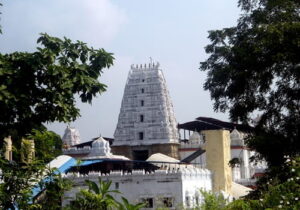
Situated in the nine-acre Thekkinkadu Maidan at the heart of Thrissur city, Vadakkumnathan is one of the oldest temples in Kerala, dedicated to Lord Shiva, featuring monumental towers on all four sides and a koothambalam (traditional performance stage) for Kerala arts. Mural paintings depicting various scenes from the Mahabharata adorn the temple interior, and the shrines and koothambalam display intricate wood carvings. Declared a National Monument under the Ancient Monuments and Archaeological Sites and Remains (AMASR) Act, the Archaeological Survey of India also recommended the temple for UNESCO World Heritage Site consideration in 2012. The annual Thrissur Pooram festival, featuring the world’s largest elephant procession, takes place on the Thekkinkadu Maidan surrounding this temple.
2. Guruvayur Sri Krishna Temple
Located in Guruvayur town, often called the “Dwarka of the South,” this is one of the most significant Vaishnava pilgrimage destinations in India, dedicated to Lord Guruvayurappan — a four-armed manifestation of Lord Krishna holding a conch, discus, mace, and lotus. The presiding deity represents Lord Vishnu in his child (Bal Krishna) form. The temple opens at 3:00 AM with the Nirmalyam ritual, considered highly auspicious. The Guruvayur Ekadasi festival and the ten-day Guruvayur Uthsavam (opening with an elephant race) are the temple’s principal annual celebrations. The adjacent Mammiyur Mahadeva Temple, a short walk away, is considered a mandatory complementary stop — local tradition holds that a Guruvayur visit is incomplete without paying respects to Mammiyur’s Lord Shiva, known for its exquisite mural paintings.
3. Thrissur Pooram
Held annually at Thekkinkadu Maidan in April or May, Thrissur Pooram has been celebrated since the 18th century and is widely considered the most colourful and spectacular temple festival in Kerala — and the world’s largest and grandest elephant procession. Two groups, led by the Paramekkavu Bhagavathy Temple and Thiruvambady Sri Krishna Temple, compete in spectacular displays of decorated elephants, traditional panchavadyam percussion, and ceremonial umbrellas under a single sky, with the event culminating in a spectacular fireworks display. The 2026 main day falls on 26 April.
4. Athirapally Waterfalls
Located approximately 60 km from Thrissur city on the Chalakkudy River in the Western Ghats, Athirapally is Kerala’s largest waterfall — dramatic enough to feature in numerous Malayalam, Tamil, and Hindi film productions. The falls are at their most powerful during and immediately after monsoon, with the nearby Vazhachal Falls (a rushing cascade through dense green forest) providing an additional scenic stop on the same route. Bamboo rafting on the Chalakkudy River is a popular adventure activity in the area.
5. Kerala Kalamandalam
Located in Cheruthuruthy, approximately 29 km from Thrissur, Kerala Kalamandalam is the state’s premier classical arts institution, teaching Kathakali, Koodiyattam, Mohiniyattam, and other traditional Kerala art forms. A campus walk reveals performance spaces, practice halls, and the daily rhythm of serious artistic training — a genuinely distinctive cultural attraction for visitors interested in Kerala’s living arts tradition. The Kerala Sangeetha Nataka Akademi, Kerala Sahitya Akademi (with a library of over 150,000 books), and Kerala Lalithakala Akademi are also headquartered in Thrissur, cementing the city’s role as a working cultural machine rather than a museum-piece capital.
6. Shakthan Thampuran Palace
Situated near the Vadakkumnatha Temple in the heart of Thrissur city, Shakthan Thampuran Palace was reconstructed in 1795 by the Maharaja of Cochin in a nalekettu style, fusing Kerala and Dutch architectural elements. The palace is a magnificent emblem of the region’s royal heritage.
7. Basilica of Our Lady of Dolours
A grand Roman Catholic Minor Basilica with impressive interiors and beautiful murals, and its distinctive Bible Tower visible on the Thrissur skyline. Together with the Our Lady of Lourdes Syro-Malabar Catholic Metropolitan Cathedral, these two famous churches anchor Thrissur’s significant Christian heritage.
8. Puthur Zoological Park
Opened to the public on 28 February 2026, the brand-new 336-acre Puthur Zoological Park became Thrissur’s most significant recent attraction addition, marking a meaningful wildlife dimension to the district’s tourism portfolio.
9. Peechi Dam and Wildlife Sanctuary
Located approximately 23 km from Thrissur city, Peechi Dam is surrounded by lush greenery and offers boating facilities within its scenic reservoir setting, alongside the Peechi-Vazhani Wildlife Sanctuary’s forested surroundings for nature walks and birdwatching.
10. Kodungallur
Located approximately 35 km from Thrissur, Kodungallur (ancient Muzirs) is historically significant as the presumed landing point of Apostle Thomas in 52 CE — one of the world’s earliest Christian communities. The town also features the ancient Kodungallur Bhagavathy Temple and archaeological remains reflecting its prominence as an ancient trading port.
Temples of Thrissur District
| Temple | Location | Deity | Key Feature |
| Vadakkumnathan Temple | Thrissur city centre | Lord Shiva | National Monument; Thrissur Pooram venue; Mahabharata murals |
| Guruvayur Sri Krishna Temple | Guruvayur town | Lord Guruvayurappan (Bal Krishna) | “Dwarka of the South”; one of most significant Vaishnava shrines |
| Paramekkavu Bhagavathy Temple | Swaraj Round, Thrissur | Goddess Vaishnavi (Durga) | One of two Thrissur Pooram principal participants |
| Thiruvambady Sri Krishna Temple | Shoranur Road, Thrissur | Lord Unni-Krishna (infant form) | Second Thrissur Pooram participant; Bhadrakali co-deity |
| Mammiyur Mahadeva Temple | Guruvayur | Lord Shiva | Mandatory Guruvayur co-visit; famous mural paintings |
| Triprayar Sri Rama Temple | Triprayar | Lord Rama | Only Kerala temple dedicated to Lord Bharata nearby |
| Arattupuzha Sree Sastha Temple | Arattupuzha, ~15 km from Thrissur | Lord Ayyappa/Sastha | World’s largest elephant procession (Arattupuzha Pooram) |
Weather in Thrissur District
November to February — Best Time: Cool, pleasant weather ideal for temple visits, cultural institution exploration, and day trips to Athirapally; Thrissur attracts the largest number of domestic tourists in Kerala during this period.
April to May — Thrissur Pooram Season: The festival’s date varies annually (2026 main day: 26 April). Heat and humidity are considerable, but for festival enthusiasts, witnessing the world’s grandest elephant procession is a once-in-a-lifetime experience that justifies the discomfort.
June to September — Monsoon: Heavy rainfall transforms the Western Ghats waterfalls, with Athirapally at its most spectacular during this period, though bamboo rafting may be restricted.
Things to Do in Thrissur District (2026)
Thrissur Pooram Experience — Witness the world’s largest elephant procession at Thekkinkadu Maidan (26 April 2026), booking accommodation well in advance as the festival transforms the entire city.
Vadakkumnathan Temple Heritage Walk — Explore the National Monument’s murals, koothambalam, and Mahabharata-depicting mural paintings, ideally in the early morning before heat and crowds build.
Guruvayur Pilgrimage — Combine the 3 AM Nirmalyam ritual or morning darshan with a visit to the adjacent Mammiyur Mahadeva Temple for the complete traditional Guruvayur experience.
Athirapally Falls Day Trip — Travel 60 km for Kerala’s largest waterfall and combine with Vazhachal Falls and Chalakkudy River bamboo rafting for a complete Western Ghats nature day.
Kerala Kalamandalam Cultural Visit — Explore the traditional arts campus at Cheruthuruthy, witnessing Kathakali and Koodiyattam training in progress.
Puthur Zoological Park (2026) — Visit this brand-new 336-acre zoo opened in February 2026, the district’s most recent major attraction.
How to Reach Thrissur District
By Air: Cochin International Airport is the nearest, approximately 60-80 km away.
By Train: Thrissur Railway Station is the main rail gateway, well connected to all major Kerala cities and long-distance routes across India.
By Road: Thrissur is approximately 80 km north of Kochi and well connected by national highways and state transport buses to cities across Kerala and beyond.
Conclusion
Thrissur district earns its “Cultural Capital of Kerala” designation with genuine, working substance — a temple at the city’s physical heart that hosted Tipu Sultan’s cookware and saw Adi Shankara’s parents pray for their extraordinary son, a festival whose elephant procession defies easy description, three of the world’s major religions entering India through this single district’s coastline, and institutions of classical art still producing Kerala’s finest Kathakali and Koodiyattam performers. No other Kerala district packs this density of living culture, active devotion, and natural splendour into a single, compact destination.
FAQs About Thrissur District, Kerala
Q1. What is Thrissur district famous for?
A: Thrissur is famous as the “Cultural Capital of Kerala,” home to the Thrissur Pooram (world’s largest elephant procession), the Vadakkumnathan Temple (a National Monument and one of Kerala’s oldest Shiva temples), the Guruvayur Sri Krishna Temple (“Dwarka of the South”), Athirapally Waterfalls, and Kerala Kalamandalam.
Q2. When is the Thrissur Pooram festival in 2026?
A: The Thrissur Pooram 2026 main day falls on 26 April. Held annually at Thekkinkadu Maidan in April or May, the festival has been celebrated since the 18th century and is widely described as the world’s largest and most spectacular temple festival, featuring the planet’s grandest elephant procession.
Q3. Why is Thrissur called the gateway for three religions?
A: Thrissur district is believed to be where Christianity, Islam, and Judaism each entered the Indian subcontinent. The Apostle Thomas is recorded to have arrived near Thrissur (ancient Muzirs/Kodungallur) in 51-52 CE, and the country’s first mosque — Cheraman Juma Masjid — opened in 629 CE in the region.
Q4. What is the Vadakkumnathan Temple’s historical significance?
A: According to legend referenced in the Brahmanda Purana, Vadakkumnathan is the first temple built by Parashurama, the sixth avatar of Vishnu, constructed at the exact spot where Lord Shiva chose to seat himself in Kerala. The temple has been declared a National Monument, features Mahabharata murals, and was recommended for UNESCO World Heritage Site status by the ASI in 2012.
Q5. When is the best time to visit Thrissur district?
A: November to February offers the most pleasant, cool weather for sightseeing, temple visits, and day trips to Athirapally Falls. April to May is ideal for experiencing the Thrissur Pooram festival despite the heat, while June to September’s monsoon makes Athirapally and other Western Ghats waterfalls most dramatic.