Belagavi (Belgaum) District, Karnataka: Top Attractions, History, Temples, Weather & Things to Do
Belagavi — known as Belgaum until relatively recently — sits in the northern foothills of the Western Ghats, in the cultural transition zone where Karnataka meets Maharashtra and Goa. Earlier called “Venugrama” or the “Bamboo Village,” Belagavi’s antiquity is clearly traceable to the 2nd century CE, and the city’s old town area, with its cotton and silk weavers, stands gloriously beside the modern, tree-lined British Cantonment that earned it recognition as Karnataka’s “second capital” for its administrative and architectural grandeur.
The city’s defining monument, Belgaum Fort, was erected by the Ratta Dynasty in the 12th-13th century and subsequently passed through the hands of the Vijayanagara Empire, the Adil Shahi Sultans of Bijapur, the Marathas under Shivaji Maharaj, and finally the British — each leaving distinct architectural fingerprints on its walls, bastions, and the religiously diverse complex of Hindu temples, Jain basadis, and mosques that coexist within its precincts. Belagavi’s proximity to Maharashtra and Goa has produced a genuinely unique cultural blend — Kannada, Marathi, and Konkani traditions woven together in the city’s festivals, cuisine, and customs, earning it the affectionate nickname “Kunda Nagari” for its signature sweet, the Belgaum Kunda.
Belagavi (Belgaum) District, Karnataka — Quick Overview
| Feature | Details |
| State | Karnataka |
| District Headquarters | Belagavi city (formerly Belgaum) |
| Earlier Name | Venugrama (“Bamboo Village”) |
| Region | Northern foothills of Western Ghats |
| Borders | Maharashtra (N, NW); Goa (W) |
| Famous For | Belgaum Fort, Kamal Basti, Gokak Falls, Kapileshwar Temple, Kittur Fort |
| Known As | “Sugar Bowl of Karnataka”; “Kunda Nagari” |
| Dynasties | Ratta, Vijayanagara, Adil Shahi (Bijapur), Maratha, British |
| Key Rivers | Markandeya, Ghataprabha, Malaprabha |
| Nearest Airport | Belagavi Airport, Sambra (~10 km east of city) |
| Railway Station | Belagavi Railway Station (South Western Railway) |
| Best Time to Visit | October to March |
| Summer Temperature | up to 40°C (April-June) |
History of Belagavi District
The Ratta Dynasty Foundation
Belagavi’s legacy traces back to the Ratta Dynasty, which had lineage connections to the Rashtrakuta Dynasty. The Belagavi Fort, erected by the Rattas in the 12th-13th century, stands as a testament to the city’s strategic significance — at its peak, the fort complex reportedly housed 108 Jain Temples and 101 Shiva Temples before later rulers dismantled many of these structures, repurposing some of the stones in subsequent construction, leaving remnants on the fort’s walls as historical reminders.
Successive Dynastic Rule
Following the Rattas, Belagavi came under the Vijayanagara Empire, then the Adil Shahi Sultans of Bijapur — under whose rule Yakub Ali Khan played a crucial role in strengthening the fort further, adding a deep moat, bastions, massive walls, and parapets. The Marathas, under Shivaji Maharaj, subsequently took control before the British East India Company assumed administration, each dynasty contributing distinct architectural elements that remain visible today.
Mahatma Gandhi’s Imprisonment
Belgaum Fort holds a significant place in India’s freedom struggle: Mahatma Gandhi was imprisoned here during the independence movement, and the fort also served as a jail during this period more broadly — a detail that adds profound historical weight to what is otherwise a monument celebrated for its architectural and religious diversity.
Cultural Synthesis — Kannada, Marathi, and Konkani
Due to its proximity to Maharashtra and Goa, Belagavi has acquired the cultural flavour of these neighbouring states and blended it seamlessly with local Kannada culture, creating a rich, unique heritage manifested in its festivals, gastronomy, and customs. This tri-cultural fusion is visible everywhere — from the local dialect to the cuisine, with Ganesh Chaturthi, Navaratri, and Diwali all celebrated with vibrant processions, music, and dance that reflect Maharashtra’s and Karnataka’s combined festival traditions.
Kittur and Rani Chennamma’s 1824 Rebellion
Approximately 50 km from Belagavi, the town of Kittur holds major historical significance as the seat of the Desai Marathas of Kittur and Rani Chennamma — a Lingayat woman warrior who led a rebellion against the British East India Company in 1824, becoming one of India’s earliest documented freedom fighters and a celebrated figure in Karnataka’s resistance history.
Top Attractions in Belagavi District
Belgaum Fort
Recognised by the Karnataka government as a State Heritage Monument, Belgaum Fort is the city’s most significant historical landmark — an ancient, pre-Muslim architectural monument where mosques and temples coexist in remarkable harmony, even though much of the original structure no longer survives. At the entrance stand two shrines, one dedicated to Lord Ganpati and the other to Goddess Durga. Safa Masjid, one of two mosques inside the fort, is considered the finest of the city’s 25-30 mosques, with minarets, domes, and arches reflecting a distinctive fusion of Indo-Saracenic and Deccan architectural styles. Two circular pillars in the Jamia hall are believed to originate from older temples, bearing Kannada inscriptions in Nagari script alongside exquisite Persian calligraphic decorations. The adjoining Fort Lake (Kote Kere) offers a serene escape with a floating cafeteria, pedal and motor boats, well-maintained gardens, and a peaceful ambiance that complements the fort’s historical intensity.
Kamal Basti (Kamal Basadi)
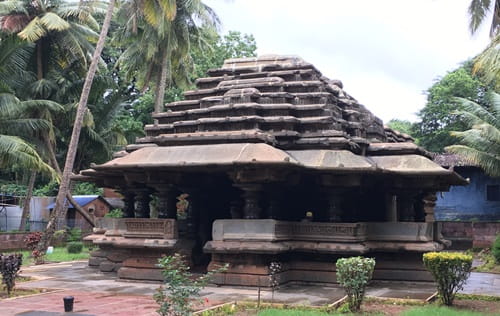
One of two Jain basadis within the fort walls, Kamal Basti was built in the late Chalukyan style in 1204 CE by Bichi Raja, housing a Neminatha idol carved from black stone. The temple’s masterpiece is the “Mukhamantapa,” featuring a beautifully executed lotus carved into the ceiling — the design from which the temple takes its name (Kamal meaning “lotus”). Outside Kamal Basti stands another, more ruined Jain temple, adding further depth to the fort’s Jain architectural heritage.
Kapileshwar Temple — “Dakshina Kashi”
One of the oldest temples in Belagavi, the Kapileshwar Temple is dedicated to Lord Shiva and considered the “Southern Kashi” (Dakshina Kashi). According to devotional tradition, the journey to visit all 12 Jyotirlingas scattered across India remains incomplete unless it begins with a visit to Kapileshwara. The Shivalinga here is said to be self-originated (swayambhu), with inscriptions in Kamal Basti referencing the temple and suggesting it may have been established as early as 1000 CE. As in Kashi itself, devotees are permitted close access to the Shivalinga. A rare cluster of Banyan, Peepal, and Ficus trees grows within the temple compound, and the site draws massive devotee crowds during Mahashivratri and the holy month of Shravan. The temple is open daily from 5:00 AM to 9:00 PM.
Gokak Falls
Located 60 km from Belagavi city on the Ghataprabha River, Gokak Falls is one of the district’s most spectacular natural attractions — turbulent waters gushing over rocks and plunging 52 metres (170 feet). A 170-metre-long hanging rope suspension bridge built over the falls allows visitors to walk directly above the cascade, feeling the wind pushed by the rushing river below — a genuinely thrilling experience that makes Gokak Falls one of Karnataka’s most memorable waterfall destinations.
Godchinamalaki Falls (Markandeya Falls)
Located 15 km from Gokak in Belagavi district, Godchinamalaki Falls is based on the Markandeya River, cascading down a deep green valley in two separate steps — the first falling from approximately 25 metres, followed by a brief recess, then a second drop of about 20 metres. The entire spot reverberates with the constant gurgling sound of cascading water, making it a particularly atmospheric waterfall trek.
Yellur Fort (Rajhansgad Yellur Fort)
Perched atop a hill 16 km from Belagavi, built by the Ratta Dynasty rulers and subsequently controlled by the Marathas, Peshwas, Hoysalas, and Bahamanis among others, Yellur Fort offers stunning views of the valley below, glossy carpeted meadows, and verdant paddy fields. Within its walls stand a small Shiva temple and a rustic well, adding devotional and historical interest to the panoramic hilltop experience.
Kittur Fort and Palace
Approximately 50 km from Belagavi, Kittur Fort and Palace was held by the Desai Marathas of Kittur and is inseparably linked to the legacy of Rani Chennamma, the Lingayat woman warrior who led her 1824 rebellion against British rule from this very seat — making it an essential stop for visitors interested in India’s early resistance history.
Military Mahadev Temple
Located on Camp Road in Belgaum, the Military Mahadev Temple is one of the city’s oldest temples, founded in 1955 by Lieutenant General S.M. Shrinagesh, then General Officer Commander-in-Chief Southern Command, and continues to be built and maintained by the Indian Army. Situated within a lush green park, the temple includes a play area for children and is believed to be dedicated to the soldiers of the country.
Saundatti (Yellamma/Renuka Temple)
Located approximately 70-78 km from Belagavi, Saundatti is home to the celebrated ancient temple of Goddess Renuka, also known as the Yellamma Temple, situated atop a mountain formerly called Siddhachal Parvat, 5 km from the town. Built in the Chalukyan and Rashtrakuta architectural style with carvings reflecting Jain influence, the temple was constructed by Bomappa Naik of Raybag in 1514 CE. The temple premises also house shrines to Lord Ganesh, Mallikarjun, Parshuram, Eknath, and Siddeshwar. Devotees travel from Maharashtra, Goa, and Andhra Pradesh alongside Karnataka pilgrims, particularly during the twice-yearly Jatras (temple fairs), with the government having taken over temple management in 1975 to provide facilities including Dharmashalas and health centres.
Sri Ramakrishna Mission Ashram
Located within the Belgaum Fort compound along the Malaprabha River, this calm, quiet ashram serves as a significant retreat and worship site for followers of Swami Vivekananda. The building was originally the residence of Sri Haripada Mitra, where Swami Vivekananda himself stayed for nine days in October 1892 — the site has been preserved in its original form, with only minor renovations.
Temples of Belagavi District
| Temple | Location | Deity | Key Feature |
| Kapileshwar Temple | Belgaum City, near Shahpur Flyover | Lord Shiva | “Dakshina Kashi”; self-originated Shivalinga; possibly dates to 1000 CE |
| Kamal Basti (Kamal Basadi) | Inside Belgaum Fort | Neminatha (Jain) | Built 1204 CE; famous 72-petal lotus ceiling carving |
| Yellamma (Renuka) Temple | Saundatti, ~70-78 km from Belagavi | Goddess Renuka/Yellamma | Built 1514 CE; Chalukyan-Rashtrakuta style; twice-yearly Jatras |
| Military Mahadev Temple | Camp Road, Belgaum | Lord Shiva | Founded 1955; maintained by Indian Army |
| Avarkhod Hanuman Temple | Avarkhod village | Lord Hanuman | Quiet village shrine with historical roots |
| Shri Hari Mandir | Belagavi | Lord Vishnu | Serene contemplative sanctuary |
| Maruti Temple | Belagavi | Lord Hanuman | One of city’s notable shrines |
Weather in Belagavi District
October to March — Best Time: Pleasant, balmy weather with plenty of sunshine and cool temperatures, ideal for exploring forts, temples, waterfalls, and hill stations without the discomfort of heat or rain. The lush post-monsoon greenery adds particular charm to the city’s hills and parks during this period.
April to June — Summer: Temperatures can reach as high as 40°C, making this period less comfortable for sightseeing, though it remains suitable for visiting cooler nearby hill stations.
July to October — Monsoon: Heavy rainfall with humidity, though many tourists specifically prefer this period to witness the district’s waterfalls — including Gokak Falls and Godchinamalaki Falls — at their most resplendent and dramatic.
Things to Do in Belagavi District (2026)
Belgaum Fort Heritage Walk — Explore the religiously diverse fort complex, examining Safa Masjid’s Indo-Saracenic architecture, Kamal Basti’s lotus ceiling, and the fort’s connection to Mahatma Gandhi’s imprisonment.
Gokak Falls Suspension Bridge Crossing — Walk the 170-metre hanging rope bridge directly above the cascading falls for a genuinely thrilling natural experience.
Kapileshwar Temple Pilgrimage — Time a visit for Shravan month or Mahashivratri to experience the “Dakshina Kashi” temple’s full devotional atmosphere and self-originated Shivalinga.
Kittur Fort and Rani Chennamma Heritage Circuit — A day trip to Kittur to trace the legacy of one of India’s earliest woman freedom fighters.
Saundatti Yellamma Temple Jatra — For devotees, timing a visit around the temple’s twice-yearly fairs offers the fullest cultural and religious experience.
Yellur Fort Hilltop Trek — Climb to this Ratta-era fort for panoramic valley views, paddy field vistas, and a quiet Shiva temple within its walls.
Sample Belgaum Kunda and Local Cuisine — Treat yourself to the city’s signature sweet (earning it the nickname “Kunda Nagari”) alongside Jolada Roti, Enne Gai, and other local Karnataka-Maharashtra-Goa fusion delicacies.
How to Reach Belagavi District
By Air: Belagavi Airport at Sambra is approximately 10 km east of the city, with domestic flight connectivity.
By Train: Belagavi Railway Station, one of the oldest in the region, falls under South Western Railway and provides regular connectivity to major Karnataka and neighbouring state cities.
By Road: Belagavi is well connected by government and private buses from major Karnataka cities, with its border location making it equally accessible from Maharashtra and Goa.
Conclusion
Belagavi (Belgaum) embodies Karnataka’s tri-state cultural fusion at its most vivid — a 12th-century Ratta fort where mosques, Jain basadis, and Hindu temples have coexisted for centuries, a “Dakshina Kashi” Shiva shrine considered essential to the 12 Jyotirlinga pilgrimage circuit, and the rebellion seat of Rani Chennamma, one of India’s earliest woman freedom fighters. From Gokak Falls’ suspension-bridge thrill to the Belgaum Kunda’s sweet local flavour, Belagavi offers travellers a genuinely complete cross-section of Karnataka’s northern Western Ghats heritage.
FAQs About Belagavi (Belgaum) District, Karnataka
Q1. Is Belagavi the same place as Belgaum?
Yes. Belagavi is the official renamed version of Belgaum — the city and district were known as Belgaum until relatively recently, when the name was officially changed to Belagavi, its original Kannada form. Both names refer to the exact same district and attractions.
Q2. What is Belgaum Fort famous for?
Belgaum Fort, built by the Ratta Dynasty in the 12th-13th century, is famous for housing Hindu temples, Jain temples, and mosques coexisting within its walls, including the ornate Kamal Basti Jain temple and the architecturally striking Safa Masjid. Mahatma Gandhi was imprisoned here during India’s freedom struggle, and the fort is now a designated State Heritage Monument.
Q3. Why is the Kapileshwar Temple called “Dakshina Kashi”?
The Kapileshwar Temple in Belagavi is called “Dakshina Kashi” (Southern Kashi) because devotional tradition holds that the journey to visit all 12 Jyotirlingas scattered across India remains incomplete unless it begins with a visit to this temple. Its Shivalinga is believed to be self-originated, and inscriptions suggest the temple may date back to 1000 CE.
Q4. Who was Rani Chennamma and what is her connection to Belagavi district?
Rani Chennamma was a Lingayat woman warrior and ruler of Kittur, located approximately 50 km from Belagavi, who led a rebellion against the British East India Company in 1824. She is celebrated as one of India’s earliest freedom fighters, and Kittur Fort and Palace remains an important heritage site associated with her legacy.
Q5. When is the best time to visit Belagavi district?
October to March is the recommended period, offering pleasant, cool weather ideal for exploring forts, temples, and waterfalls. While many tourists prefer the July-October monsoon season specifically to see Gokak Falls and other waterfalls at their most dramatic flow, summer (April-June) temperatures can reach 40°C, making it the least comfortable period for sightseeing.