Ariyalur District, Tamil Nadu: Gangaikonda Cholapuram, Temples, Fossils, History & Travel Guide
Ariyalur sits quietly at the geographical heart of Tamil Nadu, and that centrality is not accidental. This is Chola country — the ancient landscape where one of the greatest empires of medieval India built its temples, administered its territory, and left behind architectural masterpieces that UNESCO has since declared world heritage. The Gangaikondacholisvarar Temple at Gangaikondacholapuram, within the district, is the second great Brihadeeswarar temple of the Chola empire — sister monument to the more famous one at Thanjavur — and it has been waiting for the attention it deserves for decades.
Beyond the UNESCO temple, the district holds an extraordinary density of ancient Chola-era shrines across its villages — temples that carry 40, 50, even 60 inscriptions from successive Chola, Pandya, Hoysala, and Vijayanagara periods. A 453-hectare bird sanctuary that records the largest congregation of waterbirds among all tanks in Tamil Nadu. A unique paleontological landscape where marine fossils of prehistoric organisms surface from the ground, reminding visitors that this limestone-rich territory was once under the sea. A Jesuit missionary’s legacy from the 18th century. And the Varatharaja Perumal Temple at Jayankondam — one of the 108 Divya Desam Vishnu temples of the Vaishnava tradition.
Ariyalur is known industrially as the “Land of Cements” — its rich limestone deposits underpin one of Tamil Nadu’s most significant cement production regions. For the traveller, those same limestone deposits create the geological conditions for an unusually rich fossil record. Ariyalur’s identity is thus simultaneously ancient, medieval, and geological.
Ariyalur District, Tamil Nadu — Quick Overview
| Feature | Details |
| State | Tamil Nadu |
| District Headquarters | Ariyalur town |
| District Formed | 2007 (carved from Perambalur district) |
| Area | 1,949 sq km |
| Location | Central Tamil Nadu |
| Borders | Perambalur (W), Cuddalore (E), Thanjavur & Nagapattinam (S), Villupuram (N) |
| Rivers | Vellar (N), Kollidam/Coleroon (S) |
| Famous For | Gangaikonda Cholapuram (UNESCO World Heritage temple), Karaivetti Bird Sanctuary, marine fossil sites, Chola-era temples |
| Also Known As | Land of Cements (cement industry hub) |
| Nearest Airport | Tiruchirappalli International Airport (TRZ) — ~75 km |
| Railway Stations | Ariyalur, Jayankondam, Sethiyathope |
| Best Time to Visit | September to March |
| Summer Temperature | 30°C – 42°C |
| Winter Temperature | 20°C – 30°C |
| Languages Spoken | Tamil (primary) |
| Key Taluks | Ariyalur, Jayankondam, Sendurai, Udayarpalayam, Andimadam, T Palur |
History of Ariyalur District
The Chola Empire — Heart of Tamil Nadu
Ariyalur district occupies the core of what was once the ancient Chola kingdom — the region known in medieval records as Cholamandalam. The Chola dynasty, which rose to extraordinary power between the 9th and 13th centuries CE, made this landscape the administrative and cultural centre of their empire. The Vellar and Kollidam rivers that bound the district to north and south formed natural arteries of Chola administration.
The ancient village now called Paluvur (also known historically as Mannuperumpaluvur, Periyapaluvur, and Melaipaluvur) within the district was the capital of the Paluvettaraiyar chiefs — feudatories of the Chola kings from the time of Aditya Chola I through Rajendra Chola I. Rulers including Kumaran Kandan, Kumaran Maravan, Kandan Amudan, and Maravan Kandan administered this territory as powerful regional lords within the Chola system.
The district’s most significant historical marker is Gangaikondacholapuram — literally “the city of the Chola who conquered the Ganges.” Rajendra Chola I, who ruled from approximately 1014 to 1044 CE and whose military campaigns extended as far as the Gangetic plains and Southeast Asia, built this city as a new capital to replace his father Rajaraja I’s capital at Thanjavur. The Gangaikondacholisvarar Temple he built here was deliberate architectural one-upmanship on his father’s Brihadeeswarar — similar in conception and nearly as grand in execution.
Post-Chola Medieval Period
After the decline of the Chola dynasty in the 13th century, the Ariyalur region passed through Pandya, Vijayanagara, and later Nayak administration. The accumulation of inscriptions in the district’s temples tells this story — temples that began as Chola constructions received additions, repairs, and land grants from Pandya, Hoysala, and Vijayanagara rulers across three centuries, each leaving their own epigraphic record on the walls.
The arrival of European missionaries added another layer. Constantine Beschi (1680–1747) — an Italian Jesuit priest who came to Ariyalur and took the Tamil name Virama Munivar — became one of the most accomplished Tamil scholars of his era. His Tamil writings, including the epic poem Tembavani, are considered masterpieces of Tamil Christian literature. His legacy in the district is concentrated at Elakurichi, where a pilgrim centre preserves his memory and a 1763 stone inscription.
Geological Significance
The Ariyalur group of geological formations — named specifically after this district — is internationally recognised in paleontology. The limestone and shale strata of Ariyalur preserve an extraordinary record of Late Cretaceous marine organisms (approximately 66–72 million years ago), including ammonites, echinoids, bivalves, and other invertebrates. The fossils document the period when this part of peninsular India was covered by a shallow sea. The Ariyalur Fossil Park brings this dimension of the district’s identity into public view.
Top Attractions in Ariyalur District
Gangaikondacholapuram — UNESCO World Heritage Temple
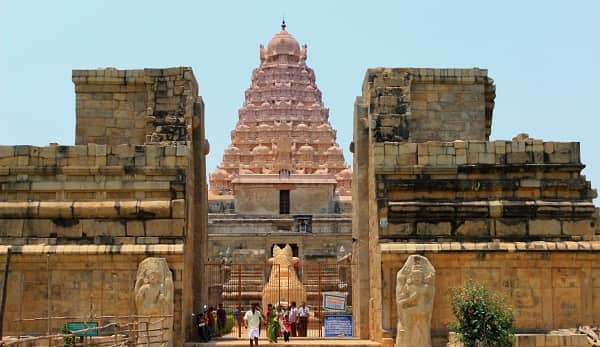
The centrepiece of Ariyalur’s heritage identity and one of the most magnificent temples in India, the Gangaikondacholisvarar Temple at Gangaikondacholapuram is a UNESCO World Heritage Site (inscribed as part of the Great Living Chola Temples in 1987, extended 2004). Built by Rajendra Chola I in the first half of the 11th century CE, it was the principal temple of a city that served as the Chola imperial capital for approximately 250 years.
The temple’s vimana (tower) rises approximately 55 metres — slightly shorter and more slender than the Thanjavur Brihadeeswarar but with a distinctive northward curving profile that architectural historians have long noted for its unique formal beauty. The base is adorned with exceptional sculptural panels: Nataraja, Ardhanareeshvara, Durga Mahisasuramardini, Bhikshatana Shiva, and others — among the finest Chola-period stone sculptures in Tamil Nadu.
The Nandi pavilion houses an enormous monolithic Nandi statue. The well within the complex holds water believed to have been brought from the River Ganga itself by Rajendra Chola’s victorious army returning from the north — from which the city and temple take their name. Bronze images, inscriptions across every surface, and the extraordinary spatial experience of a temple built at imperial scale for an imperial capital make Gangaikondacholapuram essential viewing for anyone serious about South Indian art and architecture.
Unlike the Thanjavur Brihadeeswarar, which draws enormous tourist crowds, Gangaikondacholapuram sees relatively few visitors for a UNESCO World Heritage Site — which makes the experience more contemplative and the sculptures more accessible for examination.
Karaivetti Bird Sanctuary — Vettakudi
The Karaivetti Bird Sanctuary at Vettakudi is a 453.71-hectare wetland complex — essentially a large irrigation tank — that has been notified as a wildlife sanctuary since 1997. The tank receives water from the Mettur Dam from September onwards, supplemented by the northeast monsoon from October through January.
What makes Karaivetti nationally significant is the scale of its avian congregation. It records the largest gathering of waterbirds among all irrigation tanks in Tamil Nadu, and has been documented with over 188 species. The critically notable visitor is the Bar-headed Goose — one of the world’s highest-flying migratory birds, which crosses the Himalayas from Central Asia to winter in southern India. Spotting Bar-headed Geese at Karaivetti is one of the ornithological highlights of the district. Other regular species include Painted Storks, Asian Open-billed Storks, Grey Pelicans, Spoonbills, various heron and egret species, and dozens of wader and duck species.
The best months are October through March when water levels are high and the migratory populations have arrived. The sanctuary has been actively developed by the Tamil Nadu Tourism Department for birdwatcher access.
Vettakudi-Kanniyai Bird Sanctuary
A smaller 40-hectare wetland sanctuary near Ariyalur, Vettakudi-Kanniyai is a complementary birdwatching destination to Karaivetti. Winter months bring pelicans, herons, egrets, and storks in good numbers, and the smaller scale of the site makes it easier to observe at close quarters.
Ariyalur Fossil Park
The Ariyalur district sits on some of India’s most significant paleontological territory. The Ariyalur Group of geological formations — formally named after this district in international geological nomenclature — preserves Late Cretaceous marine fossils approximately 66–72 million years old. Ammonites, echinoids (sea urchins), bivalves, and other invertebrate fossils emerge from the limestone and shale outcrops across the district.
The Fossil Park brings this extraordinary geological heritage into a visitor-accessible format, displaying well-preserved specimens in situ and in exhibition contexts. For students, researchers, and curious travellers, the park offers a genuinely rare encounter with prehistoric marine biodiversity — a reminder that the dry limestone plateau of central Tamil Nadu was once a warm shallow sea.
Soundaresvarar Temple, Kamarasavalli
Built during the reign of Sundara Chola (approximately 962 CE), the Soundaresvarar Temple at Kamarasavalli stands on the banks of the Kollidam River. The temple preserves more than 40 inscriptions from the Chola, Pandya, and Hoysala periods — making it one of the densest epigraphic archives in the district. Beautiful bronze images and sculptures survive within the temple, and the riverside setting adds to its atmosphere. The multilayered history visible in a single temple — across three dynasties and four centuries — makes Kamarasavalli a compelling stop for anyone seriously engaged with medieval South Indian history.
Varatharaja Perumal Temple, Jayankondam — Divya Desam
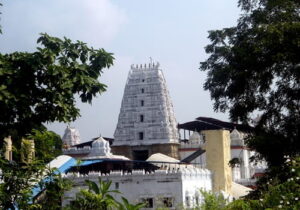
The Varatharaja Perumal Temple in Jayankondam is one of the 108 Divya Desams — the sacred Vishnu shrines celebrated in the Nalayira Divya Prabandham of the Alvar saints. Dedicated to Lord Varatha (a form of Vishnu), the temple represents the district’s Vaishnava heritage alongside its dominant Shaiva temple tradition. The temple displays impressive Dravidian architecture and draws pilgrims from across Tamil Nadu undertaking Divya Desam pilgrimage circuits.
Paluvur and the Paluvettaraiyar Temples
The village of Paluvur — known in its ancient avatars as Mannuperumpaluvur — was the capital of the Paluvettaraiyar chiefs, the powerful feudatories of the Chola kings. The Sundaresvarar Temple here dates to the period of Aditya Chola I (the earliest Chola emperor). Inscriptions and architectural details make Paluvur an important stop for those tracing the early Chola period before the great imperial expansion under Rajaraja and Rajendra.
Elakurichi — Virama Munivar Legacy
The pilgrim centre at Elakurichi carries the legacy of Constantine Beschi — the Italian Jesuit priest who came to Ariyalur in the early 18th century, mastered Tamil, and composed the epic Tembavani (The Unfading Garland) which is regarded as a masterpiece of Tamil Christian literature. Beschi worked in the region from approximately 1710 to 1742. The centre at Elakurichi preserves a stone inscription dated 1763, and the church here draws Christian pilgrims from across Tamil Nadu.
Vikkiramangalam — Jain and Buddhist Sculptures
The village of Vikkiramangalam preserves exceptional Jain and Buddhist sculptures from the Chola period — among the most unusual art-historical survivals in the district. The Shiva temple here dates to the reign of Rajendra Chola I. The coexistence of Hindu, Jain, and Buddhist sculptural traditions within a single village’s heritage reflects the inclusive cultural patronage of the early medieval Chola period.
Thirumazhapadi — Vaithiyanaatha Swami Temple
The Vaithiyanaatha Swami Temple at Thirumazhapadi traces its antiquity to the Sangam period — pre-dating the great Chola empire itself. The temple was worshipped and sung about by all three major Devaram Nayanmars: Appar, Sambandar, and Sundarar — the three great Shaiva poet-saints of the 7th century whose hymns form the core of the Tevaram canon. The temple also appears in the hymns of Ayyadigal Kadavarkon, identified with the Pallava king Simhavarman (540–558 CE). A temple of this antiquity and literary resonance is genuinely rare anywhere in Tamil Nadu.
Temples of Ariyalur District
| Temple | Location | Deity | Key Feature |
| Gangaikondacholisvarar Temple | Gangaikondacholapuram | Lord Shiva | UNESCO World Heritage Site; built by Rajendra Chola I; 11th century; 55m vimana |
| Soundaresvarar Temple | Kamarasavalli, Kollidam bank | Lord Shiva | Built 962 CE; 40+ Chola-Pandya-Hoysala inscriptions; fine bronzes |
| Varatharaja Perumal Temple | Jayankondam | Lord Vishnu (Varatha) | One of 108 Divya Desam temples; major Vaishnava pilgrimage site |
| Sundaresvarar Temple | Paluvur | Lord Shiva | Built by Aditya Chola I; ancient Paluvettaraiyar capital |
| Vaithiyanaatha Swami Temple | Thirumazhapadi | Lord Shiva (Vaidyanatha) | Sangam period antiquity; sung by Appar, Sambandar, Sundarar; Pallava connection |
| Siva Temple | Vikkiramangalam | Lord Shiva | Rajendra Chola I period; coexists with Jain & Buddhist sculptures in village |
| Siva Temple | Kilaiyur (Avani Kandarvapuram) | Lord Shiva (Avani Gandharva Isvara) | Chola period; mercantile town of ancient trade guilds |
| Elakurichi Church | Elakurichi | Catholic (Jesuit) | Virama Munivar (Constantine Beschi) legacy; 1763 stone inscription |
Weather in Ariyalur District — Season by Season
Ariyalur has a semi-arid tropical climate. It is inland and lacks the coastal moderation of nearby Cuddalore or Nagapattinam. The northeast monsoon (October–December) is the primary rainfall season.
September to March — Best Time to Visit
The ideal window. September brings the earliest post-south-west-monsoon relief, and by October the landscape is green and the Karaivetti tank is filling with both water and migratory birds. November through January is the coolest and most comfortable period — temperatures between 20°C and 28°C — perfect for temple exploration, fossil park visits, and birdwatching. February and March remain pleasant before summer heat builds.
October to January — Peak Birdwatching
The northeast monsoon fills Karaivetti and Vettakudi-Kanniyai from October onwards, and the peak migratory bird congregation is typically November through January. Bar-headed Geese, Painted Storks, and other migratory species are most reliably present during this window.
April to June — Summer
The harshest months. Temperatures climb to 38–42°C. Temple visits are best confined to early morning (before 9 AM) and late afternoon (after 4:30 PM). The Gangaikondacholapuram site is exposed with limited shade in the outer grounds.
June to September — Southwest Monsoon
The district receives moderate southwest monsoon rainfall. The tanks and rivers fill, agricultural activity is at its peak, and the countryside is vibrantly green. Temple sites are accessible but the unpaved approach roads to some rural temples can become muddy.
Things to Do in Ariyalur District (2026)
Spend a Full Morning at Gangaikondacholapuram — Arrive at opening (typically 6 AM) before the heat and the handful of other visitors arrive. Walk the entire outer enclosure systematically, studying the sculptural panels on the vimana base before entering the inner sanctum. Allow 2 to 3 hours minimum.
Birdwatch at Karaivetti between November and January — Arrive at sunrise. Binoculars are essential. A local birdwatching guide from Ariyalur town dramatically improves the experience by identifying species and knowing exactly where the Bar-headed Geese are roosting that morning.
Visit the Fossil Park — An hour-long educational stop that provides genuine geological perspective on the limestone landscape all around. Particularly rewarding for children and for anyone with any interest in natural history.
Do the Temple Circuit — Kamarasavalli, Paluvur, Thirumazhapadi — These three temples together span from the Sangam period (Thirumazhapadi) through the early Chola feudatory period (Paluvur) to the Sundara Chola mid-imperial period (Kamarasavalli). As a half-day circuit, they provide a compressed but genuinely informative history of Chola religious patronage across four centuries.
Visit Vikkiramangalam — The combination of a Rajendra Chola Shiva temple with Jain and Buddhist sculptures in the same village is unusual and historically significant. A short stop that rewards anyone interested in the coexistence of religious traditions in medieval Tamil Nadu.
Explore Elakurichi — For visitors with an interest in Indian Christian history or Tamil literary traditions, the Virama Munivar centre at Elakurichi adds a distinctive 18th-century layer to the district’s largely ancient Hindu heritage circuit.
How to Reach Ariyalur District
By Air: Tiruchirappalli International Airport (TRZ) is the nearest airport, approximately 75 km from Ariyalur town. It connects to Chennai, Bengaluru, Mumbai, Dubai, and Colombo.
By Train: Ariyalur Railway Station is on the Chennai–Thanjavur–Trichy main line. Multiple trains connect Ariyalur to Chennai (approximately 4 hours), Trichy (approximately 1.5 hours), and other major cities. Jayankondam has its own station.
By Road: NH 81 and various state highways connect Ariyalur to Trichy (approximately 75 km), Chidambaram, and Cuddalore. TNSTC buses run frequently to Trichy, Chennai, and nearby district towns.
Practical Tips for Visitors (2026)
- Gangaikondacholapuram has minimal food and water facilities within the site. Carry what you need.
- Temple timings at Gangaikondacholapuram are typically 6 AM to 12 PM and 4 PM to 8 PM — verify locally before visiting.
- A local guide at Gangaikondacholapuram is strongly recommended. The iconographic complexity of the sculptural programme is impossible to appreciate without explanation.
- For Karaivetti birdwatching, contact the Tamil Nadu Forest Department or local birdwatching groups in Ariyalur in advance for guide arrangements.
- Carry cash throughout — rural temple villages and the Fossil Park have no digital payment facilities.
- The district’s cement industry creates significant road-freight traffic on some highways — allow extra travel time, particularly on routes toward Trichy.
Conclusion
Ariyalur is a district that the mainstream travel industry has not caught up with yet — and for the archaeological, ornithological, and paleontological traveller, that is a genuine advantage. The Gangaikondacholapuram temple, standing at the quality level of the Thanjavur Brihadeeswarar but seeing a fraction of its visitors, can be experienced here with unhurried attention. The Karaivetti tank during peak birdwatching season is one of the finest wildlife spectacles in Tamil Nadu and is known primarily to serious birders. The fossils emerging from the limestone landscape remind even the casual visitor that history goes much further back than any empire.
Ariyalur is Chola country, but it is also older than the Cholas, newer than its temples, and more complex than any single identity. That complexity is what makes it worth seeking out.
FAQs About Ariyalur District, Tamil Nadu
Q: What is Ariyalur district famous for?
A: Ariyalur is famous for the Gangaikondacholisvarar Temple at Gangaikondacholapuram — a UNESCO World Heritage Site built by Rajendra Chola I in the 11th century CE. The district is also known for Karaivetti Bird Sanctuary (one of Tamil Nadu’s most important wetland bird sites), marine fossil deposits (the Ariyalur Group of geological formations), and a dense concentration of Chola-era temples.
Q: What is the Gangaikondacholapuram temple?
A: The Gangaikondacholisvarar Temple is a UNESCO World Heritage Site built by the Chola emperor Rajendra Chola I in the first half of the 11th century CE. It served as the principal temple of Gangaikondacholapuram — the Chola imperial capital built to celebrate Rajendra’s military campaigns across northern India. The temple’s 55-metre vimana and its exceptional sculptural panels make it one of the finest achievements of Chola-period art and architecture.
Q: When is the best time to visit Ariyalur?
A: September to March is the best period. October to January is specifically the best window for birdwatching at Karaivetti, when Bar-headed Geese and other migratory species are present in peak numbers. Temple visits are most comfortable in the cooler months of November through February.
Q: How far is Ariyalur from Trichy?
A: Ariyalur town is approximately 75 km from Tiruchirappalli (Trichy). The journey by road takes approximately 1.5 hours. Trichy’s international airport is the nearest air gateway to the district.
Q: What makes Ariyalur’s geology special?
A: The Ariyalur Group of geological formations — formally named in international geological nomenclature after this district — preserves one of India’s most significant Late Cretaceous fossil records, approximately 66–72 million years old. Marine organism fossils including ammonites, echinoids, and bivalves are found in the limestone strata, documenting the period when this part of peninsular India lay beneath a shallow sea. The Ariyalur Fossil Park makes this heritage accessible to visitors.