Kishanganj District, Bihar: Top Attractions, History, Temples, Weather & Things to Do
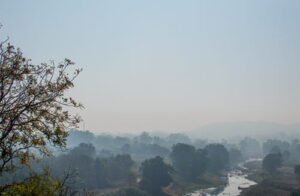
Standing in Thakurganj on a clear winter morning, you can see the Himalayas. That sentence should not be true of a Bihar district — and yet it is. Kishanganj sits in the extreme northeast corner of the state, pressed against Nepal to the north and West Bengal to the east, occupying a geographical pocket where the Himalayan foothills are close enough on a clear day to be unmistakable against the sky.
This is also the only district in Bihar that produces tea. The gardens at Belwa, barely 10 km from Kishanganj city, unfurl across the landscape like a piece of Darjeeling that somehow drifted south into the plains. The Mahananda river cuts the district in two. Ancient forts crumble quietly on its eastern bank. Migratory birds fill an oxbow lake in winter. And a month-long fair held since 1950 draws cattle traders from across the country every January.
Kishanganj is genuinely unlike any other district in Bihar.
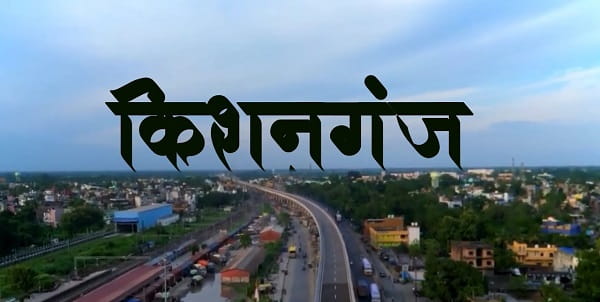
Kishanganj District, Bihar — Quick Overview
| Feature | Details |
| State | Bihar |
| District Headquarters | Kishanganj city |
| Administrative Division | Purnea Division |
| Location | Extreme northeastern corner of Bihar |
| Borders | Nepal (N), West Bengal — Darjeeling & Uttar Dinajpur (E), Araria (W), Purnea (SW) |
| Former Name | Alamganj (Mughal era); earlier known as Nepalgarh |
| Famous For | Only tea-producing district in Bihar, Khagra Mela, Kachuudah Lake, Himalayan views |
| Primary River | Mahananda (divides district into two parts) |
| Nearest Airport | Bagdogra International Airport (IXB), West Bengal — ~90 to 150 km |
| Railway Station | Kishanganj Railway Station (KNE) — Northeast Frontier Railway |
| Best Time to Visit | October to April |
| Summer Temperature | 28°C – 41°C |
| Winter Temperature | Below 1°C (nights) to 22°C (days) |
| Languages Spoken | Surjapuri (primary), Hindi, Urdu, Bengali |
| Key Blocks | Kishanganj, Thakurganj, Pothia, Bahadurganj, Kochadhaman, Dighalbank |
History of Kishanganj District
Ancient Origins — Mithila Kingdom and the Videhas
Kishanganj’s ancient history connects it to the Mithila region — one of the great cultural and intellectual centres of the late Vedic period (approximately 1100–500 BCE). The Mithila Kingdom, ruled by the legendary Janakas, was among the major political and spiritual forces of the Indian subcontinent during this era. This heritage is deeply embedded in the cultural identity of northeastern Bihar as a whole. The region subsequently came under the influence of the Maurya and Gupta empires, though archaeological work in Kishanganj specifically remains limited and the ancient record is incomplete.
Mughal Period — From Nepalgarh to Alamganj to Kishanganj
The most vivid historical chapter of Kishanganj belongs to the Mughal era. The area was then part of Nepal and known as Nepalgarh. On the instructions of Mughal Emperor Shah Alam, a general named Mohammed Raza captured the fort at Nepalgarh, and the region was renamed Alamganj — a name reflecting its Mughal administrative identity.
The current name carries an interesting origin story. During the tenure of the Nawab of Khagada, Mohammed Fakiruddin, a Hindu saint arrived in the town. He was tired and wished to rest — but when he learned the town was called Alamganj, he refused to enter. Not wishing to offend the saint, Nawab Fakiruddin renamed a portion of the town Krishna-Kunj, which over time evolved into Kishanganj. The ruins of the Nawab’s fort still stand on the outskirts of Kishanganj city.
Colonial Period and District Formation
During British colonial administration, Kishanganj was an important sub-division of Purnea district. The area at Khagra served as the administrative headquarters during the Nawab’s rule and remained significant through the British period. Kishanganj was finally constituted as an independent district in 1990, having remained part of Purnea district until then.
Today, Kishanganj is the only Muslim-majority district in Bihar, a demographic fact that has shaped a unique socio-cultural environment where Islamic traditions, Surjapuri folk customs, and Hindu temple practices coexist in the same streets and riverside ghats.
Top Attractions in Kishanganj District
Tea Gardens of Belwa — Bihar’s Only Tea Estates
Nothing in Bihar prepares you for the tea gardens of Belwa. About 10 km from Kishanganj city on the Kishanganj–Thakurganj road, acres of tea bushes stretch across the landscape in neat, managed rows — a visual that belongs to Assam or Darjeeling, not to the Bihar plains. The Thakurganj and Pothia blocks in particular have seen significant tea estate development, and the combination of Himalayan proximity, suitable soil, and adequate rainfall has made production commercially viable.
Walking through the gardens in the early morning, watching the plucking process, and understanding how a crop associated entirely with northeastern India came to thrive in Bihar is its own kind of education. For photographers, the contrast between the flat Bihar plains and suddenly lush plantation greenery is striking. Combine this stop with a drive further north toward Thakurganj for the full effect — on a very clear winter morning, you can see the Himalayan peaks on the horizon.
Kachuudah Lake — Migratory Bird Sanctuary
Located about 40 km from Kishanganj city, Kachuudah Lake is a horseshoe-shaped oxbow wetland spreading across approximately 150 hectares. The lake takes its name from Eichhornia (water hyacinth) — locally called Jal Kachoo — which floats heavily across the surface. It receives water from the Mahananda river during floods and is otherwise primarily rainfed.
Between November and March, the lake transforms into a temporary home for significant numbers of migratory birds. The Bihar Tourism Department has invested in beautification and development of the area around the lake specifically to promote this attraction. For birdwatchers visiting northeastern Bihar, Kachuudah is the district’s most rewarding nature destination. The Mahananda Wildlife Sanctuary in adjacent West Bengal also falls within a few hours’ drive for those who want to extend the wildlife experience.
Mahananda River — Ghats and Picnic Spots
The Mahananda is one of the defining physical features of Kishanganj. It divides the district into two parts, is a major tributary of the Ganga, and has a complicated relationship with the communities along its banks — locally called the “sorrow of Kishanganj” because it regularly floods and washes away crops and villages during monsoon.
Outside monsoon, the ghats along the Mahananda are genuinely attractive. Bagalbari Ghat, about 8 km from the district headquarters on the Bahadurganj road, is a popular picnic spot. Udra Ghat at Belwa, 15 km away on the Thakurganj road, draws locals and visitors on New Year’s Day and is home to a Maa Kali Mandir that sits right on the riverbank. The late afternoon light on the Mahananda, with fishermen on flat-bottomed boats and birds working the shallows, is the kind of scene that a landscape photographer finds instinctively.
Kishanganj Fort Ruins
On the outskirts of Kishanganj city, the ruins of the fort built by Nawab Mohammed Fakiruddin of Khagada still exist in a state of quiet deterioration. The fort is not restored or maintained as a heritage site in any organised way, but what remains speaks to the Mughal-era administrative history of the region — the transition from Nepalgarh to Alamganj to Kishanganj that played out in these walls. Informational leaflets at the site (where available) explain the fort’s layered history including its capture from Nepal during the Mughal period.
Khagra Mela — Historic January Fair
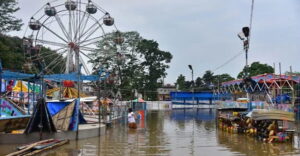
Started in 1950 by Syed Ata Hussain as an agricultural exhibition (Krishi Pradarshini), the Khagra Mela grew into one of the largest cattle fairs in India. Inaugurated every year on January 26 and running through the end of February, the fair is centred at Ruidhasa Maidan — the historic ground that also served as the administrative centre during the Nawab’s era.
Today the Khagra Mela is a month-long carnival of commerce and community. Cattle — camels, cows, bullocks from across the country — are the main draw for serious traders. But the fair also fills with shops selling clothes, toys, bangles, and traditional food, most operating on the cheerfully democratic “Har Ek Maal” fixed-price model. If your travel dates fall between late January and late February, attending the Khagra Mela is not optional — it is an experience that defines what the district actually is for the people who live in it.
Dighalbank — The Pandava Tree and the Nepal Border
About 39 km north of Kishanganj city on the Bahadurganj-to-Nepal border road, Dighalbank sits on the northern edge of the district right against the Nepal boundary. Its most unusual claim is a Semal tree in the compound of the local police station — believed by local tradition to be the tree on which the Pandava prince Arjuna hung his Gandiva bow during the Agyatvas (period of anonymous exile). Whether one engages with that tradition as mythology or history, the tree itself is ancient and impressive. The border location also gives this remote corner of the district a cross-cultural atmosphere that visitors from further afield tend to find genuinely distinctive.
Asurgarh Fort Ruins
About 18 km south of Kishanganj city on the eastern bank of the Mahananda river, the ruins of Asurgarh are among the district’s oldest historical fragments. Local legend connects the site to five brothers from the Vikramaditya period — Asura, Benu, Barijan, Nanha, and Kanha — each of whom built a fortified residence named after himself. Of these, Asurgarh and Barijangarh (8 km south of Bahadurganj) are the most visible ruins. The sites have never been formally excavated, and both await proper archaeological attention.
Ruidhasa Khanquah
In the heart of Kishanganj city on Khanquah-Baghicha Road, the Ruidhasa Khanquah is one of the district’s most significant Islamic heritage sites. An ancient religious centre where a Muslim saint resided centuries ago, the Khanquah preserves the saint’s grave and continues to function as a place of devotion. Hundreds of devotees visit regularly. The Khanquah’s presence in the city centre is part of what gives Kishanganj its distinctly layered religious atmosphere — a place where a Khanquah, a Digamber Jain Mandir, the Har Gauri Temple, and a Buddhist statue in Nehru Shanti Park all occupy the same urban fabric.
Temples and Religious Sites of Kishanganj District
| Site | Location | Deity / Tradition | Key Feature |
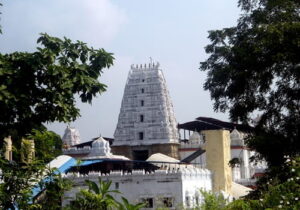
| Har Gauri Temple (Hargauri Dham) | Thakurganj | Lord Shiva & Goddess Parvati (conjoined idol) | Unique conjoined Shiva-Parvati idol; thousands visit on Shivratri |
| Barijaan Surya Mandir | Bahadurganj road, on Borijan riverbank | Sun God (Surya) | Ancient sun temple on the nearly-extinct Borijan river |
| Maa Kali Mandir | Udra Ghat, Belwa — 15 km from HQ | Goddess Kali | Riverside temple; popular New Year picnic and worship spot |
| Tulshia Shiva Temple | Tulshia, ~32 km northwest of Kishanganj | Lord Shiva | Village temple near the Nepal border; 6 km from Dighalbank |
| Shri Digamber Jain Mandir | Thakurwadi Road, Kishanganj city | Jain tradition | City-centre Jain temple serving the local trading community |
| Ruidhasa Khanquah | Khanquah-Baghicha Road, Kishanganj | Islamic Sufi tradition | Ancient Sufi centre with saint’s grave; active pilgrimage site |
| Nehru Shanti Park Buddha Statue | Near Kishanganj Railway Station | Lord Buddha | Large Buddha statue in the park; symbolises the district’s multi-faith identity |
Weather in Kishanganj District — Season by Season
Kishanganj’s climate is significantly influenced by its proximity to the Himalayan foothills and the Bay of Bengal weather systems. It receives very high annual rainfall — approximately 2,250 mm per year — with nearly 80% falling during the monsoon months. This gives the district its characteristic lushness and also makes it one of the wetter corners of Bihar.
October to April — Best Time to Visit
This is the ideal window and covers a wide range of experiences. October and November bring post-monsoon clarity — the landscape is intensely green, rivers are in good shape for visits without being dangerous, and the air quality improves sharply. December and January are the coldest months; nights can drop to near-freezing or below, and morning fog is common. However, January is also when the Khagra Mela runs — a compelling reason to visit in that specific window. February and March offer the best balance of pleasant temperatures and clear skies; these are also the months when Himalayan views from Thakurganj are most likely to be clear. April brings warming temperatures but remains manageable before the summer heat builds.
June to September — Monsoon
The monsoon arrives with force. Kishanganj is one of the rainiest districts in Bihar — the Mahananda regularly floods, low-lying areas including parts of the Kachuudah lake wetland go under water, and rural road access becomes unreliable. The tea gardens are at their most verdant during this period and are visually dramatic. But most formal sightseeing becomes difficult and the river ghats are unsafe for casual visitors.
May — Summer Peak
May is harsh. Temperatures can touch 41°C and the humidity is already building ahead of the monsoon. This is the one month that the district’s tourism office effectively recommends avoiding.
Things to Do in Kishanganj District (2026)
Drive the Belwa Tea Garden Circuit — Take the Kishanganj–Thakurganj road and stop at the tea estates around Belwa. Walk through the gardens, watch the plucking if the season is right, and continue north toward Thakurganj for the Himalayan view on a clear day.
Birdwatch at Kachuudah Lake — Plan a November to March visit to the oxbow lake for migratory bird activity. Arrive in the morning. There are no formal hides or visitor facilities, so bring what you need.
Attend the Khagra Mela — If you are anywhere in Bihar or West Bengal in late January, the Kishanganj fair is worth a day. The cattle, the fixed-price stalls, the fairground atmosphere, and the sheer scale of the gathering make it one of eastern India’s most distinctive January events.
Walk the Mahananda Ghats — Visit Bagalbari Ghat or Udra Ghat in the late afternoon. The combination of the river, the fishing activity, and the birdsong at dusk is the best of what rural Bihar offers without requiring any planning.
Do a Heritage Walk in the City — Kishanganj city itself holds the fort ruins, the Ruidhasa Khanquah, the Digamber Jain Mandir, Nehru Shanti Park with its Buddha statue, and Kargil Park — a circuit that takes half a day and tells the district’s multi-faith story in compact form.
Explore Dighalbank and the Nepal Border — The 39 km drive north takes you through some of the district’s most rural landscape and deposits you at a border area with a genuine cross-cultural atmosphere and the Pandava-legend Semal tree at the local police station.
Use Kishanganj as a Transit Base — The district is exceptionally well positioned as a base for excursions. Darjeeling is 150 km away. Gangtok is 170 km. The Terai region of Nepal is immediately to the north. Travellers heading into the Northeast often pass through anyway — staying an extra day to see the tea gardens and the lake costs nothing extra and adds a great deal.
How to Reach Kishanganj District
By Air: Bagdogra International Airport (IXB) in West Bengal’s Darjeeling district is the nearest major airport, approximately 90 to 150 km away depending on the route. It connects to Delhi, Kolkata, Mumbai, Guwahati, and a few international destinations. From Bagdogra, taxis or local transport can reach Kishanganj.
By Train: Kishanganj Railway Station (KNE) is on the Northeast Frontier Railway line. It has direct connections to major cities including New Delhi, Kolkata, Mumbai, Patna, Guwahati, Bengaluru, and Chennai. The Garib Nawaz Express originates from here. The Rajdhani Express between Delhi and Guwahati also halts at Kishanganj. Thakurganj has its own smaller railway station further north.
By Road: National Highway 31 (now NH 27) runs alongside the railway line and connects Kishanganj with Purnea and West Bengal. Regular state and private bus services operate to Siliguri, Darjeeling, Patna, Kolkata, and northeast destinations. Within the district, E-rickshaws and auto-rickshaws are the most practical local transport in the city; for outlying attractions like Kachuudah Lake and the tea gardens, hiring a private vehicle for the day is the most practical option.
Practical Tips for Visitors (2026)
- Carry physical rupees. Thakurganj, Dighalbank, and most rural sites operate on cash; digital payment infrastructure is limited outside the city centre.
- For Himalayan views from Thakurganj, winter mornings between December and February offer the best clarity. By mid-morning, haze usually builds.
- Wear sturdy closed shoes in the tea gardens — the paths between rows are uneven and muddy after rain.
- Visit Har Gauri Temple (Hargauri Dham) in the early morning or late afternoon — midday sees the heaviest crowds.
- The Mahananda river ghats should be avoided entirely during peak monsoon (July–August) when water levels and currents are dangerous.
- The district is predominantly Surjapuri-speaking. Hindi and Urdu are widely understood in the city; English is spoken by hotel staff and professionals.
Conclusion
Kishanganj earns its place on a Bihar itinerary with a single, persuasive fact: it is unlike any other district in the state. Tea gardens, Himalayan views, a river that bisects the landscape with both beauty and destructive force, an ancient cattle fair that has run every January since 1950, an oxbow lake that fills with migratory birds every winter, Mughal fort ruins on the eastern riverbank, and a cultural fabric woven from Surjapuri, Bengali, Maithili, Hindi, Urdu, and the occasional Nepali phrase heard at the northern border — none of that exists anywhere else in Bihar.
It is not a polished destination. The infrastructure is what it is. But for a traveller who responds to texture, layering, and the particular pleasure of a place that has not yet been standardised into a tourism product, Kishanganj in 2026 is one of Bihar’s most rewarding stops.
FAQs About Kishanganj District, Bihar
Q: What is Kishanganj famous for?
A: Kishanganj is famous for being the only tea-producing district in Bihar, for the Khagra Mela cattle fair (held every January–February), for Kachuudah Lake’s migratory bird population, and for being the only district in the state from where Himalayan peaks are occasionally visible on clear winter mornings.
Q: How far is Kishanganj from Darjeeling?
A: Kishanganj is approximately 150 km from Darjeeling. The drive typically takes 3 to 4 hours via Siliguri and the hill road. Many travellers use Kishanganj as an entry or exit point when visiting Darjeeling and the Northeast.
Q: What is the best time to visit Kishanganj?
A: October to April is the best overall window. For Khagra Mela, plan for late January to late February. For migratory birds at Kachuudah Lake, November to March is ideal. For Himalayan views, December to February offers the clearest air.
Q: Is Kishanganj the only place in Bihar with tea gardens?
A: Yes. Kishanganj — particularly the Thakurganj and Pothia blocks and the Belwa area — is the only region in Bihar where tea is commercially cultivated. The climate and soil conditions near the Himalayan foothills make it viable in a way that is not replicated anywhere else in the state.
Q: How do I reach Kishanganj from Patna?
A: The most practical route from Patna is by train. Kishanganj Railway Station (KNE) has direct rail connections to Patna Junction; the journey takes approximately 5 to 7 hours depending on the service. By road, the distance is roughly 400 km via NH 31/NH 27 — a 7 to 8 hour drive.