Khordha District, Odisha: Bhubaneswar, Paika Rebellion, Temples, Chilika & Travel Guide
Khordha is the administrative heart of Odisha. Bhubaneswar — the state capital, temple city, and fastest-growing smart city in eastern India — sits entirely within this district. That single fact makes Khordha one of the most visited districts in the country, though most of its visitors don’t think of themselves as visiting “Khordha” at all. They come to Bhubaneswar’s ancient Kalinga temples, to Dhauli where Ashoka renounced war, to Udayagiri and Khandagiri’s Jain rock-cut caves, to Chilika Lake’s migratory birds. They are in Khordha throughout.
But Khordha as a district has an identity entirely its own, distinct from the temple city’s well-documented attractions. It is the district where India’s Paika warriors staged what many historians in Odisha call the first organised armed resistance to British colonial rule — the Paika Rebellion of 1817, forty years before the 1857 Sepoy Mutiny. The Khordha Fort, the Paika warriors’ last stronghold, is often described as “the last independent fort of India.” The village of Mangalajodi on the northern banks of Chilika Lake is internationally recognised as one of Asia’s most extraordinary birdwatching sites. The Atri Hot Springs carry medicinal reputation and an ancient Shiva temple. Barunei Hill rises above the district’s western plains with its own pilgrimage tradition and its own Paika memory.
Khordha District, Odisha — Quick Overview
| Feature | Details |
| State | Odisha |
| District Headquarters | Khordha town |
| State Capital in District | Bhubaneswar (capital of Odisha) |
| District Formed | 1 April 1993 (from former Puri district); renamed Khordha in 2000 |
| Area | 2,813 sq km |
| Borders | Cuttack (N & E), Puri (S), Ganjam (W), Nayagarh (NW); Chilika Lake (SE) |
| Famous For | Bhubaneswar temples (Lingaraja, Mukteshwara), Paika Rebellion, Chilika Lake, Mangalajodi birdwatching, Dhauli, Khandagiri-Udayagiri caves |
| Historical Significance | Odisha’s capital 1568–1803; site of Paika Rebellion 1817; “Last Independent Fort” |
| Key Rivers | Daya, Kuakhai |
| Nearest Airport | Biju Patnaik International Airport, Bhubaneswar (within the district) |
| Railway Station | Khordha Road Junction (divisional HQ, East Coast Railway); Bhubaneswar Station |
| Best Time to Visit | October to March |
| Summer Temperature | 28°C – 42°C |
| Winter Temperature | 12°C – 28°C |
| Languages Spoken | Odia (92%), Urdu, Telugu, Hindi, Bengali |
History of Khordha District
Ancient Kalinga and the Bhubaneswar Temple Building Era
The land within present-day Khordha district carries one of the oldest layers of recorded Indian civilisation. Sisupalgarh, located near present-day Bhubaneswar, has been identified by archaeologists as a major urban center of the ancient Kalinga kingdom — possibly Tosali or Kalinganagari itself, based on Ashokan edicts at Dhauli. Excavations at Sisupalgarh (initiated in 1948 and continued in 2005–2009) uncovered a fortified square city approximately 1,190 m by 1,150 m, enclosed by earthen ramparts up to 9 metres high, with eight gateways aligned with cardinal directions.
The Kalinga War of approximately 261 BCE — fought on what is now the plains near Dhauli — was the bloodiest battle of Ashoka’s reign and the one that precipitated his conversion to Buddhism and adoption of the policy of Dhamma. Ashoka’s rock edicts at Dhauli, carved into polished rock, are among the earliest surviving examples of Indian royal inscriptions.
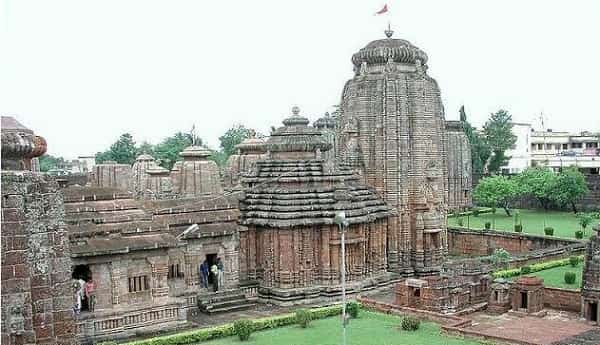
The temple-building period of Bhubaneswar began in the 7th century CE and continued for over five centuries under successive dynasties — the Shailodbhavas, Somavamsis, and Eastern Gangas. At its peak, Bhubaneswar was said to contain 7,000 temples in the sacred zone of Ekamra Vana. Approximately 700 survive today, making it one of the densest concentrations of temple architecture anywhere in the world. The Lingaraja Temple (11th century), the Rajarani Temple (11th century), and the Mukteshwara Temple (10th century) represent the apex of Kalinga architectural achievement.
The Khordha Kingdom and the Last Independent Fort
Khordha town itself ascended to historical importance in the late 16th century when Ramachandra Deva chose it as the capital of his kingdom, establishing the Khordha dynasty. The location was strategic — protected by Barunei Hill on one side and dense forest on the other. The Khordha kingdom survived repeated Maratha and Mughal attacks and maintained its independence long after surrounding kingdoms fell. When the British East India Company moved into Odisha in September 1803, they arrived at Puri and Cuttack with relatively little resistance — but Khordha presented a different challenge. The district and its fort were not fully under British occupation until 1827, even after the formal annexation of 1803.
The Paika Rebellion of 1817 — “The First War of Independence”
The Paika Rebellion of 1817–1818, led by Bakshi Jagabandhu Vidyadhar (military chief of the Khordha kingdom), originated specifically in Khordha soil. The Paikas were a class of hereditary military retainers who had served the Khordha kings since the 16th century in exchange for rent-free land (Jagir). When the British imposed regular land revenue collection on these Jagir lands and deprived the Paikas of their hereditary military role, discontent became explosive.
Bakshi Jagabandhu launched the uprising in March 1817, and the rebellion rapidly spread across Odisha — drawing in tribal communities, zamindars, and the general population. It was eventually suppressed, and Bakshi Jagabandhu surrendered in 1825. The Odisha government has formally proposed that the Paika Rebellion be recognised as India’s First War of Independence (predating 1857 by forty years), and in 2018 the Government of India released a commemorative coin and postage stamp in its memory. The question of formal recognition remains politically active. The Paika Nrutya — a traditional martial dance that mimics the combat techniques of the Paika warriors — is performed across the district as a living cultural inheritance of this resistance tradition.
Top Attractions in Khordha District
Bhubaneswar — The Temple City
Bhubaneswar is located within Khordha district and is the state capital, making the district arguably the most culturally important in Odisha. Its temple heritage alone justifies a dedicated visit of 2–3 days.
Lingaraja Temple — The finest surviving Kalinga architecture temple, built in the 11th century and dedicated to Lord Shiva as Harihara (a composite of Shiva and Vishnu). The 55-metre deul (tower) is the defining image of Bhubaneswar. Non-Hindus are not permitted entry but can view the temple from a raised platform outside the northern gate.
Mukteshwara Temple (10th century) — A gem of Kalinga architecture despite its compact scale. The elaborately carved torana (arched gateway) is one of the finest examples of stone carving in Odisha. The temple is named for the liberation (mukti) from sin that Lord Shiva is believed to grant here.
Rajarani Temple (11th century) — An unusual temple with no presiding deity and significant sculptural programme showing directional guardians and erotic carvings. The name derives from the golden sandstone (rajarania) used in its construction.
Ananta Vasudeva Temple (13th century) — The only major Bhubaneswar temple dedicated to Lord Vishnu, situated on the banks of Bindu Sagar. The temple is noted for its fine sculptures and is one of the few temples where the inner sanctum is open to all visitors.
Bindu Sagar Lake — The sacred tank from which all major temples of Bhubaneswar draw ritual water, ringed by dozens of smaller shrines. According to tradition, the water of Bindu Sagar contains drops from every sacred river in India.
Nandankanan Zoological Park — Located on the northern bank of Kanjia Lake, Nandankanan is famous for being the first zoo in India to breed white tigers in captivity and for its gharial and saltwater crocodile conservation programme. The botanical garden, rope safari, and lake setting make it one of the finest zoological parks in eastern India.
Dhauli Giri Hill and Shanti Stupa
South of Bhubaneswar on the banks of the Daya River — the river whose tributary waters reportedly ran red with blood in the Kalinga War — Dhauli Giri Hill carries Ashoka’s major rock edicts, carved directly into a polished rock face approximately 2,300 years ago. The edicts articulate Ashoka’s conversion to non-violence and his policy of Dhamma (righteous governance). A carved elephant emerging from the rock at the base of the hill marks the site.
The Shanti Stupa (Peace Pagoda) above the rock edicts was built in 1972 through a joint project of the Nippon Buddha Sangha and the Kalinga Nippon Buddha Sangha — a Japanese Buddhist initiative creating peace stupas at Buddhist sites worldwide. The white stupa with its reliefs of scenes from the Buddha’s life is a dramatic architectural presence on the hilltop, visible from a distance.
Udayagiri and Khandagiri Caves
Twin hills facing each other across a road approximately 6 km from central Bhubaneswar, Udayagiri and Khandagiri contain rock-cut caves from the 1st century BCE — associated with the Jain king Kharavela who ruled Kalinga around 170 BCE. His Hathigumpha (Elephant Cave) inscription at Udayagiri — 17 lines in Brahmi script — is one of the most important historical inscriptions in India, detailing Kharavela’s conquests and donations to Jain monasteries.
Rani Gumpha (Queen’s Cave) at Udayagiri is a two-storeyed complex with detailed sculptural reliefs of dance and procession scenes. The Ganesa Gumpha has a carving of elephants flanking the entrance that is particularly accomplished. Khandagiri across the road has fewer caves but provides panoramic views of Bhubaneswar from the hilltop and has an active Jain temple on the summit.
Hirapur Yogini Temple (Chausathi Yogini)
Located at Hirapur, 18 km from Bhubaneswar, the Chausathi Yogini Temple is one of the rarest religious monuments in India — a circular, hypaethral (open-to-the-sky) tantric temple from the 9th century CE, housing 64 black granite Yogini figures arranged around the inner wall, each within her own niche. The central figure is Goddess Kali standing on a human head. The temple represents the Kapalika/Shakta tantric tradition at its most concentrated architectural expression. Very few circular Yogini temples survive in India; the Hirapur example is among the finest.
Chilika Lake and Mangalajodi
Chilika Lake — Asia’s largest brackish lagoon at approximately 1,100 sq km — forms the southern boundary of Khordha district. The lake is a Ramsar Wetland of International Importance and one of India’s most significant wildlife sites, supporting populations of the endangered Irrawaddy dolphin (visible near Satapada point) and over 160 species of migratory birds in winter.
Mangalajodi, a small village on the northern bank of Chilika within Khordha district, is India’s most remarkable community-based birdwatching success story. Until the 1990s, the village’s residents were hunters who depleted the lake’s bird populations. A conservation initiative transformed the community into professional wildlife guides and protectors. Today Mangalajodi hosts over 300,000 migratory birds from October to February — flamingos, Northern Pintails, Black-tailed Godwits, teals, and numerous other species — and the local community’s involvement in both protection and guiding is a model cited internationally. Visiting at dawn by boat through the marshy wetlands is one of the finest wildlife experiences in eastern India.
Atri Hot Springs and Hatakeshwara Temple
Located at the village of Baghamari, approximately 42 km from Bhubaneswar, Atri has a perennial sulphur hot spring whose waters are traditionally believed to possess therapeutic properties for skin diseases. The spring flows from a rock formation and has been used medicinally since ancient times. Adjacent to the spring is the Hatakeshwara Temple dedicated to Lord Shiva, adding a pilgrimage dimension to what is also a popular local picnic destination.
Barunei Hill
About 5 km from Khordha town, Barunei Hill rises above the district’s flat plains with the Maa Barunei Temple at its base — one of the presiding goddess temples of Khordha, associated with the Shakti tradition and visited by large numbers of pilgrims. The hill is also intimately connected with the Paika Rebellion history — it was at Barunei that the Paika warriors regrouped during their resistance against the British. The hill trail leads to a Sita Kunda spring and offers panoramic views of the Odisha coastal plains.
Khordha Fort Ruins
On a low hill within Khordha town, the ruins of the Khordha Fort — “the last independent fort of India” — stand as a significant historical site associated with the Paika Rebellion. The fort served as the seat of the Khordha kingdom from the late 16th century until its fall to the British in 1803. Memorials to the Paika warriors have been erected here, and the site has deep emotional resonance for the people of Odisha.
Temples and Religious Sites of Khordha District
| Site | Location | Deity / Tradition | Key Feature |
| Lingaraja Temple | Bhubaneswar Old Town | Lord Shiva (Harihara) | 11th century; 55m deul; finest Kalinga architecture surviving |
| Mukteshwara Temple | Bhubaneswar | Lord Shiva | 10th century; famous torana gateway; gem of Kalinga carving |
| Rajarani Temple | Bhubaneswar | (No presiding deity) | 11th century; named after rajarania stone; erotic sculptures |
| Ananta Vasudeva Temple | Bhubaneswar (Bindu Sagar) | Lord Vishnu | 13th century; only major Vaishnava temple in Bhubaneswar |
| Hirapur Yogini Temple | Hirapur, 18 km from Bhubaneswar | 64 Yoginis (Tantric Shakta) | 9th century; circular open-sky tantric temple; 64 black granite figures |
| Maa Barunei Temple | Barunei Hill base, ~5 km from Khordha | Goddess Barunei (Shakti) | Presiding goddess of Khordha; Paika Rebellion historical association |
| Jagannath Temple | Khordha town | Lord Jagannath | Local Jagannath temple; annual Rath Yatra |
| Hatakeshwara Temple | Atri village | Lord Shiva | Adjacent to medicinal hot springs; combined pilgrimage-nature site |
Weather in Khordha District — Season by Season
Khordha has a tropical coastal climate — hot and humid summers, a heavy monsoon (June to October), and a short but pleasant winter.
October to February — Best Time to Visit
The clear recommendation. October brings post-monsoon clarity with temperatures around 24–30°C. November through January is the best period for temple visits, cave exploration, Dhauli, and crucially for Mangalajodi birdwatching — migratory bird populations peak from November to January. December and January are the coolest months (12–22°C) and the most pleasant for outdoor activity. February is also excellent.
March to May — Pre-Monsoon Heat
Temperatures rise rapidly to 35–42°C by April and May. Outdoor temple and hill visits should be planned for early morning. The Chilika lake excursions and Nandankanan Zoo remain accessible but uncomfortable in midday heat.
June to September — Monsoon
The Odisha coast receives heavy monsoon rainfall. Temples and caves remain accessible but some forest roads and rural sites become difficult. The Barunei waterfalls are at their best in the monsoon. Chilika Lake expands significantly.
Things to Do in Khordha District (2026)
Spend Two Full Days in Bhubaneswar’s Temple Circuit — Start with the Mukteshwara Temple for its carved torana at sunrise, then walk to Lingaraja, view it from the north platform, continue to Rajarani and Bindu Sagar. Day two: Khandagiri-Udayagiri caves in the morning, Dhauli and Shanti Stupa in the afternoon.
Dawn Boat Safari at Mangalajodi — Book through the Mangalajodi Ecotourism Trust at least a day in advance. Arrive before first light for the optimal experience of thousands of birds on the water in early morning mist. The local community guides speak basic English and know exactly where each species congregates.
Visit Hirapur Yogini Temple — A 30-minute drive from Bhubaneswar. The circular arrangement of 64 black granite Yogini figures in their niches is unlike any other religious monument in the country. Allow 1 hour.
Trek Barunei Hill — A manageable 2–3 hour excursion from Khordha town combining temple, hilltop views, and Paika Rebellion historical memory.
Atri Hot Springs Half-Day — Combine the Hatakeshwara Temple, a dip in the therapeutic sulphur springs, and the picnic atmosphere of Baghamari village for a different kind of Odisha experience.
Nandankanan for Wildlife — Allow a full morning at the zoo. Arrive at opening to catch the white tigers and gharials before the midday crowds. The botanical garden and Kanjia Lake boat rides extend the visit pleasantly.
How to Reach Khordha District
By Air: Biju Patnaik International Airport in Bhubaneswar is within the district, connecting to Delhi, Mumbai, Kolkata, Bengaluru, Hyderabad, and Chennai. It is the main eastern India gateway for visitors to Odisha.
By Train: Bhubaneswar Railway Station and Khordha Road Junction (a major divisional headquarters of East Coast Railway) connect the district to all major Indian cities. The Chennai–Kolkata mainline passes through the district.
By Road: NH 16 (Chennai–Kolkata) and multiple state highways connect Khordha to Puri (60 km), Cuttack (30 km), and other Odisha districts.
Practical Tips for Visitors (2026)
- Non-Hindus cannot enter the Lingaraja Temple inner sanctum — a raised viewing platform north of the temple provides the best exterior view.
- For Mangalajodi, book through the Mangalajodi Ecotourism Trust directly; avoid informal operators.
- Bhubaneswar temple circuit is best done in two mornings (temples open early and close for afternoon sessions).
- Carry insect repellent near Chilika Lake and Barunei Hill — mosquito activity picks up after dusk.
- The Atri road from Bhubaneswar goes through forested areas — follow local advice on road conditions after heavy rain.
Conclusion
Khordha is the district that holds Odisha together — its capital, its most famous temples, its most celebrated natural site, and its most proudly remembered act of resistance against colonial rule all sit within the same administrative boundary. For any visitor to Odisha, significant portions of their experience will happen in Khordha whether they plan for it or not. The more interesting question is whether they seek out what makes Khordha specifically Khordha: the Paika warriors’ memory at Barunei Hill, the 9th-century tantric circle at Hirapur, the birdwatchers’ paradise at Mangalajodi, and the medicinal springs at Atri. Those are the experiences that go beyond the standard temple trail.
FAQs About Khordha District, Odisha
Q: Is Bhubaneswar in Khordha district?
A: Yes. Bhubaneswar — the capital of Odisha, the Temple City, and a major IT hub — is located within Khordha district. All of Bhubaneswar’s temples, caves, and monuments are technically in Khordha district, making it one of the most heritage-rich districts in India.
Q: What is the Paika Rebellion and why is it important?
A: The Paika Rebellion of 1817 was an armed uprising led by Bakshi Jagabandhu Vidyadhar of Khordha against British colonial rule — specifically against the loss of Jagir (hereditary land) rights and oppressive revenue policies. It is considered by Odisha’s historians and government as India’s first organised armed resistance against colonial rule, predating the 1857 Sepoy Mutiny by 40 years. The Odisha state government has formally proposed its recognition as India’s First War of Independence.
Q: What is Mangalajodi and why is it famous for birdwatching?
A: Mangalajodi is a village on the northern bank of Chilika Lake in Khordha district. It is internationally recognised as one of Asia’s premier birdwatching sites, hosting over 300,000 migratory birds between October and February. What makes it additionally remarkable is its story of community conservation — the village transformed from a hunting community to professional wildlife guardians and guides, making it a celebrated model of ecotourism.
Q: When is the best time to visit Khordha district?
A: October to February is the best period. Birdwatching at Mangalajodi peaks November to January. Temple visits are most comfortable from October to March. The Chilika Lake Irrawaddy dolphins are visible year-round but boat conditions are best in winter.
Q: What is the Hirapur Yogini Temple?
A: The Chausathi Yogini Temple at Hirapur (18 km from Bhubaneswar) is a 9th-century circular, open-to-the-sky tantric temple housing 64 black granite Yogini figures arranged in niches along the inner wall. It represents the Shakta tantric tradition and is one of the rarest and finest examples of Yogini temples surviving in India.