Srisailam, Nandyal District, Andhra Pradesh: Top Attractions, History, Temples, Weather & Things to Do
Srisailam stands as one of India’s most sacred and dramatically situated pilgrimage destinations, perched on a plateau within the Nallamala Hills above the deep Krishna River gorge in Nandyal district, Andhra Pradesh. The temple town holds the extraordinarily rare distinction of housing both a Jyotirlinga (one of the twelve sacred Shiva lingams) and a Shakti Peetha (one of the 51 sites associated with the goddess Sati) at the very same location — a religious significance so profound that, per ancient tradition, those who fail to visit Srisailam are said to forfeit the merit of all their pilgrimages, while a single visit purifies devotees of even the most serious transgressions.
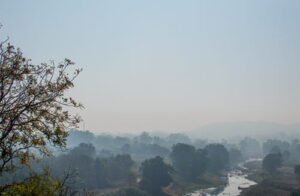
Beyond its devotional weight, Srisailam sits within the heart of the Nagarjunsagar-Srisailam Tiger Reserve, India’s largest tiger reserve, and is connected to the Krishna River by a spectacular Ghat Road descending through 27 hairpin bends carved directly into the Nallamala Hills. The temple complex itself, predominantly built during the Vijayanagara period, has drawn devotion and patronage across centuries from rulers including the Reddy kings, the Vijayanagara emperors, and most famously Chhatrapati Shivaji Maharaj.
Srisailam, Nandyal District — Quick Overview
| Feature | Details |
| State | Andhra Pradesh |
| District | Nandyal |
| Religious Status | Jyotirlinga + Shakti Peetha (one of very few sites with both) |
| Main Temple | Sri Bhramaramba Mallikarjuna Swamy Temple |
| Location | Nallamala Hills, above Krishna River gorge |
| Famous For | Mallikarjuna Jyotirlinga, Patala Ganga, Akka Mahadevi Caves, 27-hairpin-bend Ghat Road |
| Wildlife Reserve | Nagarjunsagar-Srisailam Tiger Reserve (India’s largest) |
| Architectural Period | Predominantly Vijayanagara era |
| Nearest Airport | Hyderabad (Rajiv Gandhi International Airport) |
| Best Time to Visit | October to March |
| Major Festival | Maha Shivaratri (massive Brahmotsavam celebration) |
History of Srisailam
1. Ancient Origins and Puranic Significance
Srisailam’s sacred status is documented across multiple Hindu Puranas, with the site believed to have been a centre of worship since ancient times. The temple’s name derives from “Sri” (auspicious) and “Saila” (hill/mountain), reflecting its hilltop sanctity. Tradition holds that Lord Shiva himself, in the form of Mallikarjuna, and Goddess Parvati, as Bhramaramba, chose to reside here, making Srisailam one of the rare sites in India where both a Jyotirlinga and a Shakti Peetha coexist at a single location.
2. Dynastic Patronage Across Centuries
The temple complex visible today is predominantly the result of construction and expansion during the Vijayanagara period, though earlier dynasties — including the Reddy kings of coastal Andhra — also contributed to its development and patronage. The site’s significance was such that it drew devotion from rulers across South India, with successive contributions enhancing the temple’s architecture, gopurams (towering gateways), and surrounding mandapas over centuries.
3. Chhatrapati Shivaji’s Connection
Among the most celebrated devotees associated with Srisailam is Chhatrapati Shivaji Maharaj, the founder of the Maratha Empire, who is documented to have visited the temple and contributed to its upkeep — connecting this South Indian Jyotirlinga directly to the broader pan-Indian Maratha devotional network that also embraced shrines like Tuljapur’s Bhavani Temple in Maharashtra.
4. Modern Administrative Placement
Srisailam today falls within Nandyal district, part of the broader reorganisation of Andhra Pradesh’s administrative boundaries in recent years (Nandyal itself having been carved from the erstwhile Kurnool district). The temple remains under the Andhra Pradesh state government’s temple administration framework, drawing millions of pilgrims annually.
Top Attractions in Srisailam
1. Sri Bhramaramba Mallikarjuna Swamy Temple
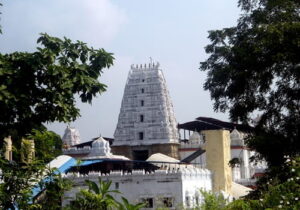
The centrepiece of Srisailam, this temple houses both the Mallikarjuna Jyotirlinga (one of the twelve Jyotirlingas of Lord Shiva) and the Bhramaramba Devi shrine (one of the 51 Shakti Peethas) within the same complex — a religious convergence found at very few sites in India. The temple’s massive stone walls, ornate gopurams, and intricately carved mandapas reflect predominantly Vijayanagara-era architecture, with the sanctum drawing continuous streams of devotees seeking darshan of both the Jyotirlinga and the Devi simultaneously.
2. Patala Ganga
Located at the base of the steep descent from the temple town toward the Krishna River, Patala Ganga marks the point where devotees traditionally take a holy dip before ascending to the temple for darshan — a ritual purification considered an essential part of the complete Srisailam pilgrimage. A ropeway connects Patala Ganga to the temple complex above, easing the steep climb for pilgrims.
3. Akka Mahadevi Caves
Named after the 12th-century Kannada mystic poet and saint Akka Mahadevi, who is believed to have meditated in this cave system, the Akka Mahadevi Caves offer a combination of spiritual significance and natural limestone cave exploration, accessible via a boat journey across the Krishna River reservoir followed by a forest trek — making it one of the more adventurous pilgrimage-adjacent excursions in the region.
4. The 27-Hairpin-Bend Ghat Road
The dramatic Ghat Road connecting the plains to Srisailam’s hilltop plateau descends and ascends through 27 sharp hairpin bends carved into the Nallamala Hills, offering travellers a genuinely thrilling and scenic journey with sweeping views across the forested gorge below — widely regarded as one of South India’s most memorable mountain road experiences.
5. Nagarjunsagar-Srisailam Tiger Reserve
Srisailam sits within India’s largest tiger reserve by area, the Nagarjunsagar-Srisailam Tiger Reserve, which spans dense Nallamala forest harbouring tigers, leopards, sloth bears, and diverse birdlife alongside the temple town’s pilgrimage infrastructure — a rare combination of intense religious tourism and genuine wilderness conservation existing side by side.
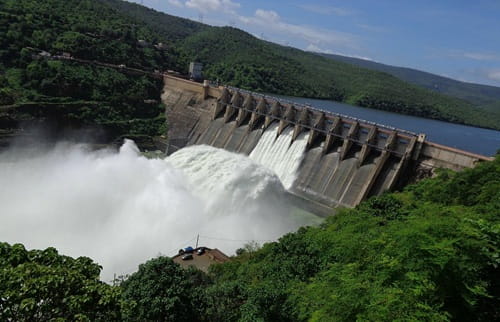
6. Srisailam Dam
A major hydroelectric and irrigation project on the Krishna River near the temple town, Srisailam Dam offers visitors scenic reservoir views and stands as a significant engineering landmark complementing the area’s spiritual tourism, with the dam’s backwaters forming part of the broader Nallamala forest and tiger reserve ecosystem.
7. Sakshi Ganapathi Temple
Traditionally the first stop for pilgrims arriving at Srisailam, the Sakshi Ganapathi Temple is dedicated to Lord Ganesha, who is believed to act as a “witness” (sakshi) recording the devotee’s pilgrimage — visitors customarily pay respects here before proceeding to the main Mallikarjuna Swamy Temple.
Temples and Sacred Sites of Srisailam
| Temple/Site | Significance | Key Feature |
| Sri Bhramaramba Mallikarjuna Swamy Temple | Jyotirlinga + Shakti Peetha | Rare dual-status sacred site; Vijayanagara architecture |
| Sakshi Ganapathi Temple | Lord Ganesha (witness deity) | Traditional first stop for pilgrims |
| Patala Ganga | Sacred bathing point | Ritual purification before temple darshan |
| Akka Mahadevi Caves | 12th-century mystic saint’s meditation site | Combines spirituality with cave exploration |
Weather in Srisailam
October to March — Best Time: Pleasant, cool weather across the Nallamala Hills plateau makes this the ideal period for the temple darshan, the Ghat Road journey, and exploring the surrounding tiger reserve and caves.
Maha Shivaratri (February/March) — Peak Pilgrimage Season: This is Srisailam’s most significant annual festival period, with the temple’s Brahmotsavam drawing enormous crowds of devotees from across South India; advance planning is essential during this window.
April to June — Summer: Hot conditions typical of the Andhra Pradesh interior plateau, with the forested Nallamala setting offering somewhat more moderate temperatures than the surrounding plains.
July to September — Monsoon: Significant rainfall feeds the Krishna River and surrounding forest, making the Ghat Road journey particularly scenic though requiring extra caution on the hairpin bends.
Things to Do in Srisailam (2026)
Darshan at Sri Bhramaramba Mallikarjuna Swamy Temple — Experience both the Jyotirlinga and Shakti Peetha in a single sacred complex, ideally combined with a ritual dip at Patala Ganga beforehand.
Drive the 27-Hairpin Ghat Road — Undertake this dramatic mountain journey for sweeping Nallamala forest and gorge views, particularly atmospheric during early morning or post-monsoon months.
Boat to Akka Mahadevi Caves — Combine a Krishna River reservoir crossing with a forest trek to this historically significant meditation cave site.
Wildlife Exploration in Nagarjunsagar-Srisailam Tiger Reserve — Arrange permitted excursions into India’s largest tiger reserve, surrounding the temple town’s pilgrimage core.
Maha Shivaratri Pilgrimage — Time a visit for this major annual festival to experience the temple’s grandest Brahmotsavam celebration, though crowds are at their peak.
Visit Srisailam Dam — Take in the scenic reservoir views of this significant Krishna River hydroelectric project.
How to Reach Srisailam
By Air: Hyderabad’s Rajiv Gandhi International Airport offers the most practical air connection, with onward road travel required to reach Srisailam.
By Road: Srisailam is accessible via the dramatic Ghat Road through the Nallamala Hills, with regular bus services connecting the temple town to Hyderabad, Kurnool, and other major Andhra Pradesh and Telangana cities.
By Train: The nearest significant railway connections lie in the broader Kurnool-Nandyal region, with road transfer required for the final approach into the hills.
Conclusion
Srisailam delivers one of India’s most uniquely concentrated pilgrimage experiences — a single temple complex housing both a Jyotirlinga and a Shakti Peetha, set within a dramatic Nallamala Hills landscape that also happens to be home to India’s largest tiger reserve. Whether the draw is the Mallikarjuna Swamy darshan, the thrilling 27-hairpin Ghat Road, or the meditative Akka Mahadevi Caves, Srisailam rewards both devout pilgrims and adventurous travellers with a genuinely rare combination of sacred and wild South Indian terrain.
FAQs About Srisailam, Nandyal District
Q1. What makes Srisailam religiously significant?
A: Srisailam houses both a Jyotirlinga (Mallikarjuna, one of twelve sacred Shiva lingams) and a Shakti Peetha (Bhramaramba, one of 51 sites associated with goddess Sati) at the same location — an extremely rare dual religious status found at very few sites in India.
Q2. Which district is Srisailam located in?
A: Srisailam is located in Nandyal district, Andhra Pradesh, set within the Nallamala Hills above the Krishna River gorge.
Q3. What is the 27-hairpin-bend Ghat Road at Srisailam?
A: The Ghat Road connecting the plains to Srisailam’s hilltop temple plateau descends and ascends through 27 sharp hairpin bends carved into the Nallamala Hills, offering a dramatic and scenic mountain journey widely regarded as one of South India’s most memorable road experiences.
Q4. What wildlife reserve surrounds Srisailam?
A: Srisailam sits within the Nagarjunsagar-Srisailam Tiger Reserve, India’s largest tiger reserve by area, home to tigers, leopards, sloth bears, and diverse birdlife across dense Nallamala forest — making the area a rare combination of intense religious pilgrimage and genuine wildlife conservation.
Q5. When is the best time to visit Srisailam?
A: October to March offers the most pleasant weather for temple darshan and exploring the surrounding hills. Maha Shivaratri (February/March) is the most significant pilgrimage period, featuring the temple’s grandest Brahmotsavam celebration, though it draws the largest crowds of the year, requiring advance planning.