Shahabad District, Bihar: Top Attractions, History, Temples, Weather & Things to Do
Shahabad is one of Bihar’s most historically significant former districts — a vast administrative territory bounded by the Ganges to the north and the Son River to the east, headquartered at Arrah, which once formed the entire westernmost stretch of present-day Bihar. The name itself, Persian for “city of the king,” traces back to 1529 CE, when Mughal Emperor Babur camped at Arrah after defeating local Afghan rulers and proclaimed his sovereignty over Bihar from this spot — a moment commemorated by the very name later applied to the entire district.
Though Shahabad was administratively bifurcated into Bhojpur and Rohtas districts in 1972 (with Rohtas later further subdivided into Rohtas and Kaimur/Bhabua), the historic Shahabad identity remains deeply embedded in the region’s cultural memory, centred on Arrah — a city whose role in the 1857 Siege of Arrah during the Indian Rebellion makes it one of the most historically resonant locations in eastern India’s colonial-era resistance narrative. From the legendary Ashram of sage Vishwamitra, Rama’s guru according to the Ramayana, to the 7th-century observations of Chinese pilgrim Xuanzang, to the heroism of Veer Kunwar Singh during 1857, Shahabad’s historic territory compresses millennia of Indian history into a single Bhojpuri-speaking cultural region.
Shahabad District (Historic), Bihar — Quick Overview
| Feature | Details |
| State | Bihar |
| Historic Headquarters | Arrah (Ara) |
| Status Today | Bifurcated in 1972 into Bhojpur and Rohtas districts |
| Cultural Region | Bhojpuri-speaking (westernmost Bihar) |
| Boundaries | Ganges River (north); Son River (east) |
| Name Origin | Persian “Shahabad” — “city/abode of the king” (named by Babur, 1529 CE) |
| Famous For | 1857 Siege of Arrah, Veer Kunwar Singh, Aranya Devi Temple, Vishwamitra Ashram legend |
| Notable Persons | Babu Jagjivan Ram, Ustad Bismillah Khan, Sher Shah Suri’s legacy, Meira Kumar |
| Nearest Airport | Patna (Jay Prakash Narayan International Airport) |
| Railway Station | Arrah Junction (on East Indian Railway main line) |
| Best Time to Visit | October to March |
History of Shahabad District
1. Ancient Magadha and the Vishwamitra Legend
In ancient times, Shahabad formed part of the great kingdom of Magadha, which also encompassed portions of present-day Patna and Gaya districts. According to the Hindu epic Ramayana, sage Vishwamitra — the Guru of Lord Rama — had his Ashram somewhere in this region, and it was here that Rama is believed to have killed the demoness Tarka. The Mahabharata also references the area as the home of the powerful demon Bakra, whose daily sustenance of human flesh was supplied by the villages of Bakri or Chakrapur (also called Ekchakra) — the ancient name by which Arrah itself was once known.
2. Xuanzang’s 7th-Century Visit and the Buddhist Question
The Chinese pilgrim Xuanzang (Hiuen Tsang), travelling through the region in the 7th century CE, visited a place he called Mo-ho-so-lo, identified with the present-day village of Masarh, 10 km west of Arrah on the Arrah-Buxar road. Xuanzang found the inhabitants to be entirely Brahmins who did not respect the law of Buddha — an observation that, combined with the archaeological scarcity of Buddhist monuments in Shahabad compared to neighbouring Gaya district, suggests Buddhism never gained significant hold here despite the district’s inclusion in Emperor Ashoka’s empire. Xuanzang nonetheless recounted that a stupa had been built in Arrah by Ashoka, commemorating the spot where Buddha converted a group of cannibalistic “demons of the desert.”
3. Post-Gupta Period — Cheros and the Rajputs of Bhojpur
Following the fall of the Gupta dynasty, the district fell into the hands of aboriginal tribes and petty chieftains, with the Cheros emerging as the most dominant power, ruling over the greater portion of the territory. Subsequently, Rajputs from Ujjain in Malwa arrived under their king Raja Bhoj — the figure from whom the term “Bhojpur” (the present-day district name covering much of historic Shahabad) is directly derived.
4. Babur’s 1529 Camp and the Naming of Shahabad
In 1529 CE, after his victory over local Afghan rulers, Mughal Emperor Babur camped at Arrah to proclaim his sovereignty over Bihar. In his memoir, the Baburnama, Babur refers to the town he camped in as “ārī” or “āre,” and the Shahabad District Gazetteer records local tradition identifying his camp location near the present-day Judge’s Court. Babur’s personal memoirs even record him riding out from camp to observe local water lilies, noting their seeds resembled pistachio nuts. In commemoration of this assertion of sovereignty, the place was called Shahabad — “the city of the Emperor” — a name that later extended first to the Sarkar (administrative unit) and eventually to the entire district.
5. Mughal-Era Conflicts and the Bhojpur Rajas
During Akbar’s reign, Arrah was granted as a jagir (feudal land grant), first to Mir Mu’izzul-Mulk, who faced rebellion from rival nobles in 1580. The Raja of Bhojpur subsequently rebelled against Emperor Jahangir, and his successor Raja Pratap was put to death by Shah Jahan, with the Queen forced into marriage with a Muslim courtier — effectively ending the Bhojpur royal family, though sporadic local resistance continued through the final years of Mughal rule.
6. The 18th Century — Maratha Incursions and Zamindar Resistance
The 18th century brought significant turbulence: a 1744 battle at Jagdispur saw the rebellious general Mustafa Khan defeated and killed, followed by a major Maratha incursion under Raghuji Bhonsle in 1745. In 1762, when Mir Qasim, Nawab of Bengal, marched to Shahabad to assert authority, local zamindars resisted and fled to seek refuge with the Nawab of Awadh. In 1764, Nawab Shuja-ud-Daula’s army caused widespread devastation across Shahabad before entrenching at Buxar — setting the stage for the pivotal Battle of Buxar that same year, which granted the British East India Company diwani rights over Bengal, Bihar, and Orissa.
7. The 1857 Siege of Arrah and Veer Kunwar Singh
Shahabad’s most celebrated historical chapter is the Siege of Arrah during the Indian Rebellion of 1857. Kunwar Singh, the zamindar of Jagdishpur in Shahabad district, emerged as the primary leader of the local uprising, leading sepoy mutineers in a dramatic siege of the British “Little House” in Arrah, where a small garrison held out against overwhelming numbers before being relieved. Kunwar Singh’s leadership during this episode established him as one of Bihar’s most celebrated freedom fighters, and his legacy remains central to Arrah’s historical identity today.
Top Attractions in Shahabad’s Historic Territory (Arrah/Bhojpur)
1. Aranya Devi Temple
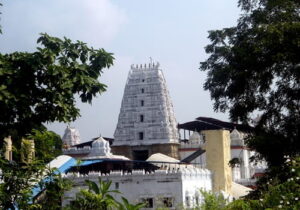
Located in the northeastern part of Arrah and established in 2005, the Aranya Devi Temple is one of the most famous temples in Bihar, dedicated to Goddess Aranyani — the deity of forests. Featuring intricate carvings and sculptures, the temple blends architectural beauty with mythological significance, situated in a serene setting ideal for meditation and prayer. Visit during Navratri and Chaitra Purnima for the fullest experience of the region’s rich devotional culture.
2. Mosque (Bibi Jaan Ki Masjid)
Spanning 69 acres, the Maulabagh Mosque was built in the 18th century by John Deane, the British collector of Shahabad, in memory of his wife. Adorned with a mixed Saracenic architectural style featuring three domes and eight minarets, this architectural masterpiece represents a unique testament to cross-cultural historical and religious synthesis during the colonial era.
3. Masarh — Xuanzang’s Mo-ho-so-lo
The village of Masarh, 10 km west of Arrah on the Arrah-Buxar road, is identified as the site Chinese pilgrim Xuanzang visited and described in the 7th century. Visitors can explore numerous small, old temples and Brahmanical statues here, and the site also attracts Jain devotees due to the presence of the Parashanatha Temple, reflecting the village’s layered Hindu and Jain religious heritage.
4. Veer Kunwar Singh Qila (Jagdishpur Fort)
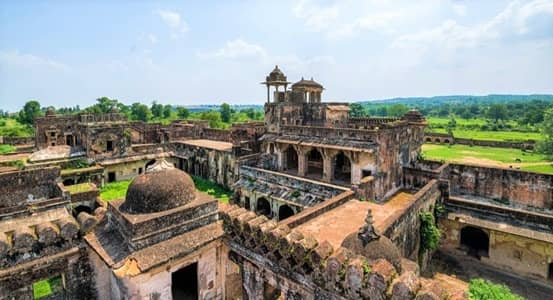
Connected directly to the legacy of 1857’s most celebrated Bihar freedom fighter, the Jagdishpur Fort associated with Kunwar Singh remains a significant heritage site documenting the region’s role in the Indian Rebellion.
5. Holy Saviour Church (St. Mary’s Church)
Constructed in 1911, this church dedicated to Mary, the mother of Jesus, is one of Arrah’s sacred and architectural marvels, distinguished by intricate detailing, striking red exteriors, and an elegant archway. Visit during Christmas and Easter to witness its full grandeur and active congregation.
6. Mahathin Mai Mandir
Dedicated to Mahthin Mai, a local deity revered for her courage and resistance against the old customs of the Harihoban Rajputs, this temple represents an important strand of Shahabad’s indigenous devotional tradition, distinct from the region’s better-known pan-Indian deities.
7. Arrah-Chhapra Bridge
Inaugurated by Bihar’s Chief Minister Nitish Kumar in 2017, this 6,300-foot engineering marvel is one of the longest multi-span extradosed bridges in India, connecting the bustling towns of Arrah and Chapra across the Ganga and offering panoramic views of the river along the route.
8. Ramna Maidan (Babu Veer Kunwar Singh Ramna Maidan)
Spread across 60 acres, Ramna Maidan is one of the largest urban parks in Arrah, featuring a stadium, park, and open fields ideal for outdoor activities and leisure walks — a multipurpose green space honouring the district’s most celebrated historical figure.
Temples of Shahabad’s Historic Territory
| Temple | Location | Deity | Key Feature |
| Aranya Devi Temple | Arrah (northeastern) | Goddess Aranyani | Established 2005; one of Bihar’s most famous temples |
| Parashanatha Temple | Masarh village | Jain Tirthankara | Attracts Jain devotees; near ancient Brahmanical statues |
| Mahathin Mai Mandir | Arrah | Local deity Mahthin Mai | Resistance against Harihoban Rajput customs |
| Rarheswar Shiv Mandir | Arrah | Lord Shiva | Notable city temple |
| Arrah Shiv Temple | Arrah | Lord Shiva | Notable city temple |
Notable Personalities from Shahabad’s Historic Territory
The historic Shahabad district has produced an extraordinary roster of national figures: Sher Shah Suri, founder of the Sur Dynasty who built the Grand Trunk Road; Ustad Bismillah Khan, the legendary shehnai maestro and Bharat Ratna recipient; Babu Jagjivan Ram, India’s fourth Deputy Prime Minister and the country’s longest-serving Union Minister; Meira Kumar, the first woman Speaker of the Lok Sabha; and Pravind Jugnauth, the present Prime Minister of Mauritius, whose great-grandfather hails from Shahabad — a remarkable testament to the region’s enduring influence well beyond Bihar’s borders.
Weather in Shahabad’s Historic Territory (Arrah/Bhojpur)
October to March — Best Time: The recommended window for visiting Arrah’s temples, the 1857 heritage sites, and the broader Bhojpur region, with comfortable temperatures ideal for sightseeing.
April to June — Summer: Hot and dry conditions typical of the Bihar plains, making outdoor exploration considerably less comfortable.
July to September — Monsoon: Significant rainfall from the Ganges and Son river systems; the region’s agricultural landscape — driven by sand and brick trade from the riverine plains — is at its most active during this period.
Things to Do in Shahabad’s Historic Territory (2026)
Aranya Devi Temple Pilgrimage — Time a visit for Navratri or Chaitra Purnima to experience the temple’s fullest devotional atmosphere.
1857 Heritage Circuit — Visit the sites connected to Veer Kunwar Singh and the Siege of Arrah, including Jagdishpur Fort, for a direct connection to one of India’s most significant local uprisings against British rule.
Masarh Heritage Walk — Explore the village Xuanzang documented in the 7th century, examining its old temples, Brahmanical statues, and the Jain Parashanatha Temple.
Walk the Arrah-Chhapra Bridge — Experience this engineering marvel’s panoramic Ganga views, among the longest multi-span extradosed bridges in India.
Evening at Ramna Maidan — Enjoy this 60-acre urban park, ideal for leisure walks and outdoor recreation within Arrah town.
Visit the Maulabagh Mosque — Examine its distinctive Saracenic architecture and reflect on its unusual colonial-era origin story as a memorial to a British collector’s wife.
How to Reach Shahabad’s Historic Territory (Arrah)
By Air: Jay Prakash Narayan International Airport, Patna, is the nearest airport, approximately 58 km from Arrah.
By Train: Arrah Junction sits on the East Indian Railway’s main line, well connected to Patna, Danapur, and major cities across eastern India.
By Road: Arrah is well-connected by road to Patna (approximately 58 km) and Danapur (approximately 39 km), with regular bus and taxi services operating across the region.
Conclusion
The historic Shahabad district — now living on through Bhojpur, Rohtas, and Kaimur — represents one of Bihar’s deepest layers of historical memory: a region named by a Mughal emperor’s proclamation of sovereignty, documented by a 7th-century Chinese pilgrim, and made legendary by an 1857 freedom fighter whose siege resistance remains etched into India’s independence narrative. From the Vishwamitra Ashram legend connecting it to the Ramayana, through Xuanzang’s Masarh observations, to Veer Kunwar Singh’s heroism at Jagdishpur, Shahabad’s Bhojpuri-speaking heartland offers travellers a genuinely profound cross-section of Indian history within a single, accessible western Bihar territory.
FAQs About Shahabad District, Bihar
Q1. What is Shahabad district known for historically?
A: Shahabad, headquartered at Arrah, is known for being named by Mughal Emperor Babur in 1529 CE after he proclaimed his sovereignty over Bihar from this location. The district is also famous for the 1857 Siege of Arrah, led by freedom fighter Veer Kunwar Singh, and for being part of the ancient kingdom of Magadha, with legendary connections to sage Vishwamitra in the Ramayana.
Q2. What happened to Shahabad district — does it still exist today?
A: The historic Shahabad district was bifurcated in 1972 into Bhojpur (headquartered at Arrah) and Rohtas (headquartered at Sasaram) districts. Rohtas was further subdivided in 1991 into Rohtas and Bhabua (Kaimur) districts. The Bhojpuri cultural and linguistic identity associated with old Shahabad continues to define the region today.
Q3. Why did Chinese pilgrim Xuanzang find Shahabad disappointing?
A: Xuanzang visited a place called Mo-ho-so-lo (identified with present-day Masarh village) in the 7th century CE and found that the inhabitants were entirely Brahmins who did not respect the law of Buddha. This observation, combined with the relative scarcity of Buddhist monuments in Shahabad compared to neighbouring Gaya district, suggests Buddhism never gained significant influence in this region despite its inclusion in Emperor Ashoka’s empire.
Q4. Who was Veer Kunwar Singh and why is he significant to Shahabad’s history?
A: Veer Kunwar Singh was the zamindar of Jagdishpur in Shahabad district who emerged as the primary leader of the local uprising during the 1857 Indian Rebellion, leading the dramatic Siege of Arrah against British forces. His leadership established him as one of Bihar’s most celebrated freedom fighters, and sites connected to his legacy, including Jagdishpur Fort, remain significant heritage destinations today.
Q5. What is the origin of the name “Shahabad”?
A: “Shahabad” derives from the Persian compound “Shah ābād,” meaning “city” or “abode of the king.” The name originated in 1529 CE when Mughal Emperor Babur camped at Arrah after defeating local Afghan rulers and proclaimed his sovereignty over Bihar, with the location subsequently named in commemoration of this assertion of royal authority.