Kanyakumari District, Tamil Nadu: Top Attractions, History, Temples, Weather & Things to Do
Kanyakumari occupies a position unique not just in Tamil Nadu but in all of India — the southernmost tip of the Indian mainland, also known as Cape Comorin, where the Arabian Sea, Bay of Bengal, and Indian Ocean converge in a spectacular meeting of three distinct waters that maintain their individual hues of turquoise blue, deep blue, and sea green even at the precise point of confluence. This is the only spot in India where visitors can witness sunset and moonrise occurring simultaneously over the ocean on full moon evenings, an effect that becomes especially grand on Chithra Pournami, when the sun and moon appear to face each other across the same horizon.
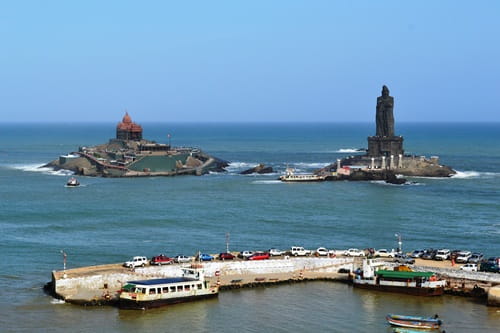
The district’s spiritual and cultural anchors include the ancient Kumari Amman Temple — one of the 108 Shakti Peethas, dedicated to the Virgin Goddess Devi Kanya Kumari — and the Vivekananda Rock Memorial, built on the very rock where Swami Vivekananda is believed to have attained enlightenment after swimming across from the mainland. Standing beside it, the 133-foot Thiruvalluvar Statue honours the celebrated Tamil poet-philosopher, while Suchindram’s Thanumalayan Temple, the Mathur Hanging Trough (one of Asia’s longest aqueducts), and the 9th-century rock-cut Chitharal Jain Monuments round out a district that compresses extraordinary natural, spiritual, and historical density into India’s southernmost corner.
Kanyakumari District, Tamil Nadu — Quick Overview
| Feature | Details |
| State | Tamil Nadu |
| District Headquarters | Nagercoil |
| Geographic Designation | Cape Comorin; southernmost tip of mainland India |
| Famous For | Vivekananda Rock Memorial, Kumari Amman Temple, Thiruvalluvar Statue, Triveni Sangam |
| Confluence Point | Arabian Sea, Bay of Bengal, Indian Ocean |
| Unique Phenomenon | Simultaneous sunset and moonrise on full moon days |
| Distance from Madurai | ~242 km |
| Distance from Chennai | ~707 km |
| Nearest Airport | Thiruvananthapuram International Airport |
| Best Time to Visit | October to March |
| Monsoon Caution | Heavy rainfall June-September; attraction closures possible |
History of Kanyakumari District
1. The Legend of Devi Kanya Kumari
The town and district derive their name directly from the Devi Kanya Kumari Temple, dedicated to the Virgin Goddess — an ancient 3,000-year-old temple considered one of the 108 Shakti Peethas of Hindu tradition. According to legend, the goddess wears a luminous ruby nose ring so brilliant that a ship’s captain once mistook its glow for the adjacent lighthouse, leading to the temple’s eastern entrance being kept closed to prevent confusion for sailors navigating the coast.
2. Swami Vivekananda’s Enlightenment
Among Kanyakumari’s most significant modern historical moments is the visit of Swami Vivekananda, who is said to have lived here and meditated for several days in 1892, swimming out to a rock formation in the sea where he achieved profound spiritual enlightenment. This event led directly to the construction of the Vivekananda Rock Memorial, built decades later on the precise rock where this transformative meditation occurred, making it one of modern India’s most significant spiritual pilgrimage sites.
3. Mahatma Gandhi’s Connection
The Gandhi Memorial Mandapam (Gandhi Mandapam) commemorates another pivotal historical connection — the site where the ashes of Mahatma Gandhi were kept before their immersion in the waters at Kanyakumari, linking the district directly to the final chapter of India’s independence movement’s most revered leader.
4. The Tsunami Memorial
A more recent and sobering historical marker, the Tsunami Memorial Park stands as a homage to those who tragically lost their lives in the devastating tsunami that struck Tamil Nadu’s coastline in December 2004, a disaster that profoundly affected Kanyakumari’s coastal communities.
Top Attractions in Kanyakumari District
1. Vivekananda Rock Memorial
Built on rocks in the sea at the southernmost tip of India, the Vivekananda Rock Memorial honours Swami Vivekananda and marks the spot where he is believed to have attained enlightenment. Reached by ferry from the mainland, the memorial offers visitors a spectacular sea-surrounded setting that has become one of Kanyakumari’s most defining landmarks, drawing both spiritual seekers and history enthusiasts alike.
2. Thiruvalluvar Statue
Standing tall at 133 feet on a small island rock formation 400 metres from the shore, the Thiruvalluvar Statue is a stone sculpture honouring the revered Tamil poet and philosopher Valluvar, symbolising the rich literary heritage of Tamil Nadu. Located beside the Vivekananda Rock Memorial, climbing to the statue’s viewing platform offers panoramic views of Kanyakumari’s coastline and the endless sea beyond.
3. Kumari Amman Temple (Bhagavathy Amman Temple)
An ancient 3,000-year-old temple considered one of the 108 Shakti Peethas, the Kumari Amman Temple is home to Goddess Devi Kanya Kumari, the Virgin Goddess, located near the Triveni Sangam. The temple’s most famous feature is the goddess’s ruby nose ring, said to shine with such brilliance it has historically been mistaken for the nearby lighthouse — leading to the eastern temple entrance traditionally remaining closed.
4. Triveni Sangam
The unique convergence point where the Arabian Sea, Bay of Bengal, and Indian Ocean meet, Triveni Sangam offers a spellbinding sight that personifies deep spiritual significance, drawing pilgrims from across the country who come specifically to witness and bathe at this sacred confluence. A View Tower nearby allows visitors to take in the full panoramic scope of this natural phenomenon.
5. Thanumalayan Temple, Suchindram
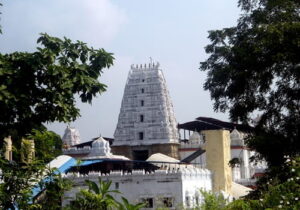
Located in the town of Suchindram near Kanyakumari, the Sthanumalayan Temple is dedicated to the trinity of Hindu deities — Brahma, Vishnu, and Shiva — boasting an exquisite blend of architectural styles that make it both an important pilgrimage site and a must-visit tourist destination. The temple’s vibrant sculptures and architectural beauty draw significant devotee and tourist footfall.
6. Padmanabhapuram Palace
Located approximately 35 km from Kanyakumari, this 16th-century wooden palace is renowned for its intricate carvings and distinctive Kerala-style architecture, offering visitors a deep dive into the region’s royal and cultural history that predates the modern district’s formation.
7. Vattakottai Fort
An 18th-century fortification offering a scenic vantage point with the sea on one side and the Western Ghats on the other, Vattakottai Fort is well maintained by the Archaeological Survey of India and includes a nearby beach that remains comparatively uncrowded compared to the main Kanyakumari beach areas.
8. Mathur Aqueduct (Hanging Trough)
Spanning the Pahrali River, the Mathur Hanging Trough is one of the longest and highest trough bridges in Asia, an impressive feat of engineering offering stunning views of the surrounding landscape — greenery, mountains, and the flowing river beneath create a genuinely memorable visual experience for visitors crossing or viewing the structure.
9. Chitharal Jain Monuments
Located in Chitharal village approximately 45 km from Kanyakumari, the Chitharal Jain Monuments (also called Chitharal Malai Kovil) are a group of ancient rock-cut Jain temples dating back to the 9th century, representing a testimony to the rich Jain heritage that once flourished in this southern Tamil Nadu region — an essential stop for history buffs and architecture enthusiasts.
10. Sunset and Sunrise Points
Kanyakumari is one of the rare locations in India offering views of both sunrise and sunset from the same general area, owing to its unique geographic position at the confluence of three seas. Sunset occurs daily at approximately 6:20 PM, with the Bay of Bengal’s waters glowing dramatically against the setting sun, while battery cars operate between the Vivekananda statue area and the sunset viewing point for visitor convenience.
11. Our Lady of Ransom Church
Built in the 15th century, this Gothic-architecture church dedicated to Mother Mary stands majestically against the ocean backdrop, with its gold cross, white spires, and stained glass windows enhancing its visual beauty — an important Christian heritage landmark within the predominantly Hindu pilgrimage landscape of Kanyakumari.
Temples of Kanyakumari District
| Temple | Location | Deity | Key Feature |
| Kumari Amman Temple | Kanyakumari town, near Triveni Sangam | Devi Kanya Kumari (Virgin Goddess) | One of 108 Shakti Peethas; 3,000 years old; ruby nose ring legend |
| Thanumalayan Temple | Suchindram | Brahma, Vishnu, Shiva (trinity) | Exquisite architectural blend; vibrant sculptures |
| Chitharal Jain Monuments | Chitharal village, ~45 km from Kanyakumari | Jain Tirthankaras | 9th-century rock-cut temples |
| Nagaraja Temple | Nagercoil, ~20 km from Kanyakumari | Lord Nagaraja (Serpent God) | Serene atmosphere; elaborate annual festival rituals |
| Lord Subramanya Temple (Kumara Koil) | Kanyakumari district, Western Ghats | Lord Murugan (Subramanya) | Tranquil hilltop setting amid forest |
Weather in Kanyakumari District
October to March — Best Time: Pleasant weather with comparatively lower humidity makes this the ideal window for sightseeing, beach activities, and temple visits, with cool ocean breezes enhancing the experience.
April to June — Moderate Season: Warm and humid conditions, though still manageable for travel and sightseeing without the discomfort of peak monsoon rainfall.
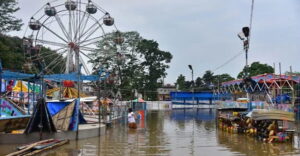
June to September — Monsoon: Heavy rainfall is common during this period; some attractions including the Vivekananda Rock Memorial and Thiruvalluvar Statue ferry services may face closures or restrictions during rough weather, and visitors should check schedules and consider the dry season for a more reliable experience.
Things to Do in Kanyakumari District (2026)
Witness Sunrise and Sunset at Triveni Sangam — Time visits for both dawn and dusk to fully experience the rare confluence of three oceans and the unique optical phenomena Kanyakumari is famous for.
Ferry to Vivekananda Rock Memorial and Thiruvalluvar Statue — Book early, especially during peak hours or holidays, to secure ferry tickets to these two iconic island landmarks.
Pilgrimage Circuit: Kumari Amman, Suchindram, and Nagaraja Temples — A focused devotional day covering the district’s three most significant temple destinations.
Explore Padmanabhapuram Palace — A half-day excursion examining 16th-century Kerala-style wooden architecture and intricate royal carvings.
Cross the Mathur Hanging Trough — Experience one of Asia’s longest and highest aqueduct bridges while taking in panoramic views of the Pahrali River valley.
Visit Chitharal Jain Monuments — Explore the 9th-century rock-cut Jain temples for a deep dive into the region’s lesser-known religious heritage.
How to Reach Kanyakumari District
By Air: Thiruvananthapuram International Airport is the nearest major airport.
By Train: Kanyakumari is well connected by rail, with regular services from major Tamil Nadu and South Indian cities.
By Road: Regular buses connect Kanyakumari to Thiruvananthapuram, Madurai, Coimbatore, Puducherry, and Chennai, with Kanyakumari Bus Stand at Puthugramam serving as the main transit hub.
Conclusion
Kanyakumari district delivers India’s southernmost tip in its full natural and spiritual grandeur — the rare three-ocean confluence at Triveni Sangam, the enlightenment site of Swami Vivekananda, an ancient Shakti Peetha temple, and architectural treasures spanning 9th-century Jain rock-cut shrines to 16th-century Kerala-style palaces and Asia’s longest aqueduct bridges. For travellers seeking the precise meeting point of land’s end and ocean’s vastness, combined with deep Tamil cultural and religious heritage, Kanyakumari remains one of South India’s most essential and unforgettable destinations.
FAQs About Kanyakumari District, Tamil Nadu
Q1. What is Kanyakumari district famous for?
A: Kanyakumari is famous for being the southernmost tip of mainland India, where the Arabian Sea, Bay of Bengal, and Indian Ocean converge. The district is renowned for the Vivekananda Rock Memorial, the 133-foot Thiruvalluvar Statue, the ancient Kumari Amman Temple (one of 108 Shakti Peethas), and its unique simultaneous sunset-moonrise phenomenon on full moon days.
Q2. What is the significance of the Vivekananda Rock Memorial?
A: The Vivekananda Rock Memorial honours Swami Vivekananda, who is believed to have swum to this rock formation in the sea and attained spiritual enlightenment here in 1892. The memorial was subsequently built on this exact rock at the southernmost tip of India and remains one of the most significant spiritual pilgrimage sites in the country.
Q3. Why is Kanyakumari unique for viewing sunrise and sunset?
A: Kanyakumari is one of the only places in India where, on full moon evenings, visitors can witness sunset and moonrise occurring simultaneously over the ocean — an effect that becomes especially grand on Chithra Pournami, when the sun and moon appear facing each other on the same horizon. The town’s unique geographic position at the confluence of three seas also allows for distinctive views of both sunrise and sunset.
Q4. What is the legend behind the Kumari Amman Temple’s ruby nose ring?
A: The presiding deity at Kumari Amman Temple, Devi Kanya Kumari (the Virgin Goddess), wears a ruby nose ring believed to shine with such brilliance that a ship’s captain once mistook its glow for the adjacent lighthouse. As a result, the temple’s eastern entrance has traditionally remained closed to avoid confusing sailors navigating the coastline.
Q5. When is the best time to visit Kanyakumari, and what should I know about monsoon travel?
A: October to March offers the most pleasant weather with comparatively lower humidity, ideal for sightseeing and beach activities. The monsoon season (June to September) brings heavy rainfall, and attractions including ferry services to the Vivekananda Rock Memorial and Thiruvalluvar Statue may face closures or limited availability during rough weather — the dry season is recommended for the most reliable and enjoyable visit.